

Eat Soba and Dance at Japan Village
Japan Village’s annual Summer Festival is a free Japanese event that brings together nearly 8,000 attendees for a day of food, games, and cultural performances.
Japan Village Brooklyn Summer Festival
Saturday, August 29, 2026 from 1:00 p.m. until 6:00 p.m.
Japan Village – 934 3rd Avenue, Brooklyn
Admission: Free
Japan Village’s annual Summer Festival is a free Japanese event that brings together nearly 8,000 attendees for a day of food, games, and cultural performances.
This year there will be two contests: a Wanko Soba-Eating contest and an Ouchi no Tonosama Dance contest. Participants have the chance to win round-trip tickets to Japan.
Event Schedule
1:00 p.m. Opening Ceremony
1:10 p.m. Yosakoi Dance
1:30 p.m. Yamagata Presentation — Hanagasa Ondo & more
1:50 p.m. Awa Odori Performance & Workshop
2:20 p.m. Aomori Presentation — Kuroishi Yosare & more
2:50 p.m. Watermelon Splitting Contest
3:30 p.m. Taiko Performance by Taiko Masala
3:50 p.m. Ouchi no Tonosama Dance Contest
4:20 p.m. Wanko Soba Noodle-Eating Contest
5:00 p.m. Bon Odori
5:40 p.m. Closing Ceremony
Wanko Soba-Eating Contest
Join this exciting Japanese soba noodle-eating competition! A beloved tradition from Morioka City in Iwate Prefecture, participants compete to eat as many small bowls of soba noodles as possible within one minute.
How to Participate in the Wanko Soba-Eating Contest
Register to apply to receive a spot in the raffle. Click here for the registration form.
12:30 p.m. — Raffle tickets will be distributed
3:00 p.m. — Raffle begins, during which competitors will be chosen for a seat in the contest
4:20 p.m. — Competition begins
The person who eats the most bowls of wanko soba in one minute will win round-trip tickets to Japan!
Ouchi no Tonosoma Dance Contest
Ouchi no Tonosama is a traditional folk dance from Yamaguchi City, located on the southwestern side of Honshu Island near Hiroshima. Meaning “the Lord of Ouchi,” the dance pays homage to Ouchi Hiroyo, a powerful daimyo who Yamaguchi City during the 14th Century. A well-read and cultured samurai, Ouchi is credited with building Yamaguchi City to reflect Kyoto’s elegance.
The dance contest begins at 3:50 p.m. No registration is necessary; simply join the dancers on stage. The best dancer wins round-trip tickets to Yamaguchi and a hotel voucher to Yuda Onsen, a historic hot spring, famous for its alkaline waters and white fox motifs. Legend has it that Buddhist priest witnessed a white fox dipping its injured paw into a pond each day. Curious, the priest investigated the pond and discovered that the water was warm and had healing powers. Thus, Yuda Onsen was born.
Eat, dance, and learn more about Japanese culture at Japan Village’s Summer Festival!
Enjoying JapanCulture•NYC? This site is supported by our community, and a $5/month membership helps offset the costs of keeping it running so we can continue spotlighting the people and events that make our community shine. Please click here to join.
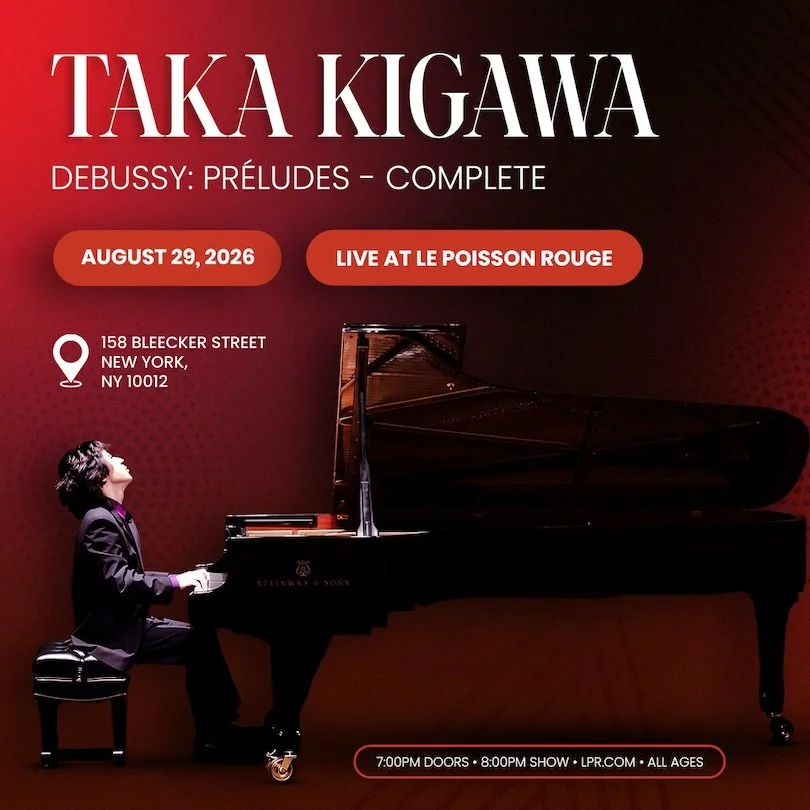
Pianist to Perform Debussy at LPR in NYC
This Saturday, August 29, Japanese pianist Taka Kigawa returns to (le) Poisson Rouge or another dazzling solo recital.
Taka Kigawa — Debussy: Préludes — Complete
Saturday, August 29 at 8:00 p.m. | Doors open at 7:00 p.m.
(le) Poisson Rouge – 158 Bleecker Street (between Thompson and Sullivan Streets)
Admission: $20 (Standing Room) & $25 (Table Seating) in advance | $25-$30 day of show
This Saturday, August 29, Japanese pianist Taka Kigawa returns to (le) Poisson Rouge or another dazzling solo recital.
For this special evening, Kigawa presents Claude Debussy’s Préludes — Complete, one of the most seminal and enchanting piano cycles of the twentieth century. A pioneering voice of modern music, Claude Debussy created a world of sound rich in color, atmosphere, and mystery—music that has long been central to Kigawa’s artistic identity. This is a rare opportunity to hear these extraordinary works performed live in their entirety.
Kigawa has earned widespread acclaim for his interpretations of Debussy’s Préludes, which he has presented extensively around the world. The New York Times praised his playing as “carefully shaded and texturally transparent,” adding that “he knows how to make this music sparkle,” particularly in “Feux d’artifice,” with its “fiery washes of sound.” The Times also noted his gift for capturing Debussy’s sense of mystery and nuance.
Argentina’s leading newspaper, La Nación, hailed Kigawa as “a phenomenal virtuoso,” citing the “perfection of hues, articulations, and rhythms” throughout Debussy’s Préludes.
A regular presence at LPR since its founding, Kigawa has consistently captivated audiences with his phenomenal artistry and refined technique, and this immersive performance of Debussy’s complete Préludes promises an unforgettable evening of sound, color, and imagination.
For more information and to purchase tickets, please visit (le) Poisson Rouge’s website.
Program
Claude Debussy: Préludes for Piano, Books I and II (Complete)
About Taka Kigawa
A native of Nagano, Japan, Taka Kigawa received a Bachelor of Arts from Shinshu University and a Master of Arts from Tokyo Gakugei (Liberal Arts) University, graduating with honors in Piano Performance. He has performed extensively as a recitalist and soloist in New York, with appearances in Weill Recital Hall at Carnegie Hall and Alice Tully Hall; Washington, D.C.; Boston; Cleveland; Paris; Milan; and Barcelona.
His New York City recital in 2010 was chosen as one of the best concerts of the year by The New York Times, and his New York City recital in August 2011 was picked as one of the most notable concerts in the 2011-2012 season by Musical America. Kigawa’s solo recitals at (le) Poisson Rouge over the past several years have all been resounding successes, receiving unqualified critical acclaim from both audiences and critics. His August 2012 recital at LPR, in which he performed J.S. Bach’s The Art of Fugue entirely from memory, broke the attendance record in the solo recital genre.
Enjoying JapanCulture•NYC? This site is supported by our community, and a $5/month membership helps offset the costs of keeping it running so we can continue spotlighting the people and events that make our community shine. Please click here to join.
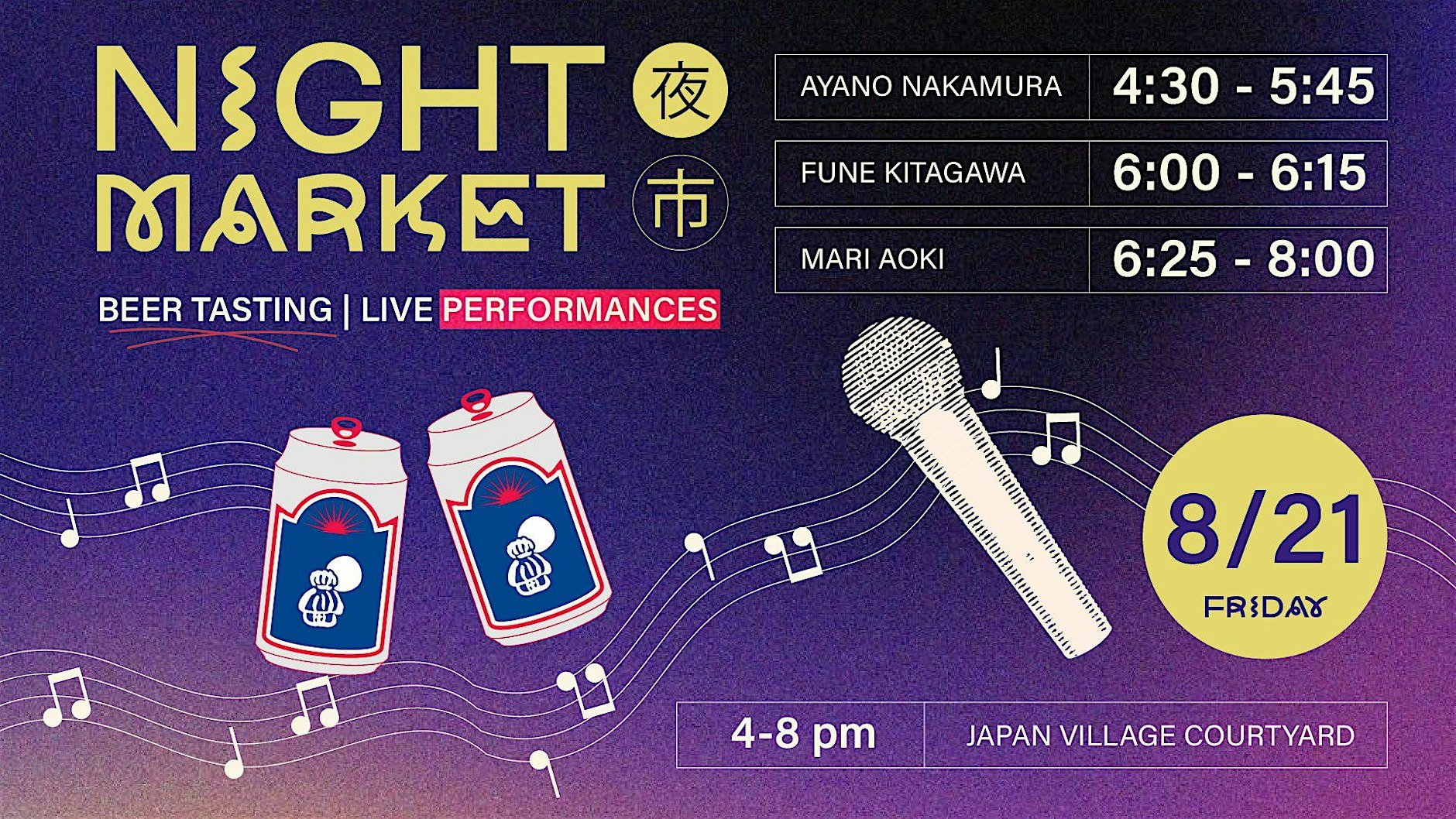
Night Market at Japan Village
Japan Village is hosting a vibrant evening of refreshing beer, food, live performances, and vendors
Night Market
Friday, August 21 from 4:00 p.m. until 8:00 p.m.
Japan Village Courtyard – 934 3rd Avenue, Brooklyn
Admission: Free
Japan Village is hosting a night market in its courtyard this Friday. Go for a vibrant evening of refreshing beer, food, live performances, and vendors.
Performers
Ayano Nakamura
Set I at 4:30 p.m. | Set II at 5:15 p.m.
Ayano Nakamura began writing songs and performing with bands in her teens, launching her live music career at an early age. After studying jazz at Mesar Haus Music School in Tokyo, she moved to New York in 2015 to pursue her musical journey. She is currently majoring in Jazz Vocal Performance at CCNY.
Fune Kitagawa
Set from 6:00 p.m. until 6:15 p.m.
Fune Kitagawa is an artist based in New York. Known for performing songs across a wide range of genres, she is fluent in Japanese, English, and Chinese. In addition to singing, she is a multi-instrumentalist who is dedicated to exploring diverse forms of musical expression.
Mari Aoki
Set I at 6:25 p.m. | Set II at 7:20 p.m.
Calling all J-Pop fanatics yearning to hear the soundtracks of your heartbreaks and core memories! Take a deep dive through your beloved eras of Femme J-Pop brought to you by Mari Aoki, pop R&B vocalist with Shun Lopez on cajon and Tomoya Ogawa on guitar. You’ll hear your City Pop favorites of the ‘80s, the edge of modernity with ‘90s/Y2K hits from Utada Hikaru and Sheena Ringo, some 2010s classics of Nishino Kana and Aiko, as well as Aoki’s original songs in Japanese.
For more information, please visit Japan Village’s website.
Enjoying JapanCulture•NYC? This site is supported by our community, and a $5/month membership helps offset the costs of keeping it running so we can continue spotlighting the people and events that make our community shine. Please click here to join.

MOONRISE Brings Japanese Artists to New York
Ryota Kikuchi (piano) and MAOSHO (piano, trumpet, and Tsugaru shamisen) to perform at Merkin Hall at Kaufman Music Center on September 19, 2026
MOONRISE Japan Artists – Ryota Kikuchi: Piano
Saturday, September 19 at 1:30 p.m.
MOONRISE Japan Artists – MAOSHO: Jazz & Shamisen
Saturday, September 19 at 7:00 p.m.
Merkin Hall at Kaufman Music Center – 129 W. 67th Street
Admission: $35 Prime | $25 General | $20 Seniors & Students
Disclosure: The author is providing public relations services for MOON and Mar Creation in support of the MOONRISE concert series and received compensation for this work. The event information presented here is based on materials provided by the organizers.
MOONRISE, an international artist development initiative dedicated to introducing Japanese artists to audiences in the United States and beyond, will present two performances at Merkin Hall at Kaufman Music Center on Saturday, September 19, 2026. The concerts will feature the innovative musical duo MAOSHO and acclaimed pianist Ryota Kikuchi, bringing contemporary and traditional Japanese artistry to one of New York City’s premier concert venues.
Presented by Moon and Mar Creation, the performances reflect MOONRISE’s ongoing commitment to creating opportunities for Japanese artists to engage with international audiences through live performance, cultural exchange, and artistic collaboration.
“MOONRISE exists to help Japanese artists reach the world—not simply by performing overseas, but by building meaningful cultural connections through music,” says Akie Osawa, producer of MOON. “We believe every performance is an opportunity to share Japan’s creativity, inspire dialogue, and create lasting relationships between artists and audiences.”
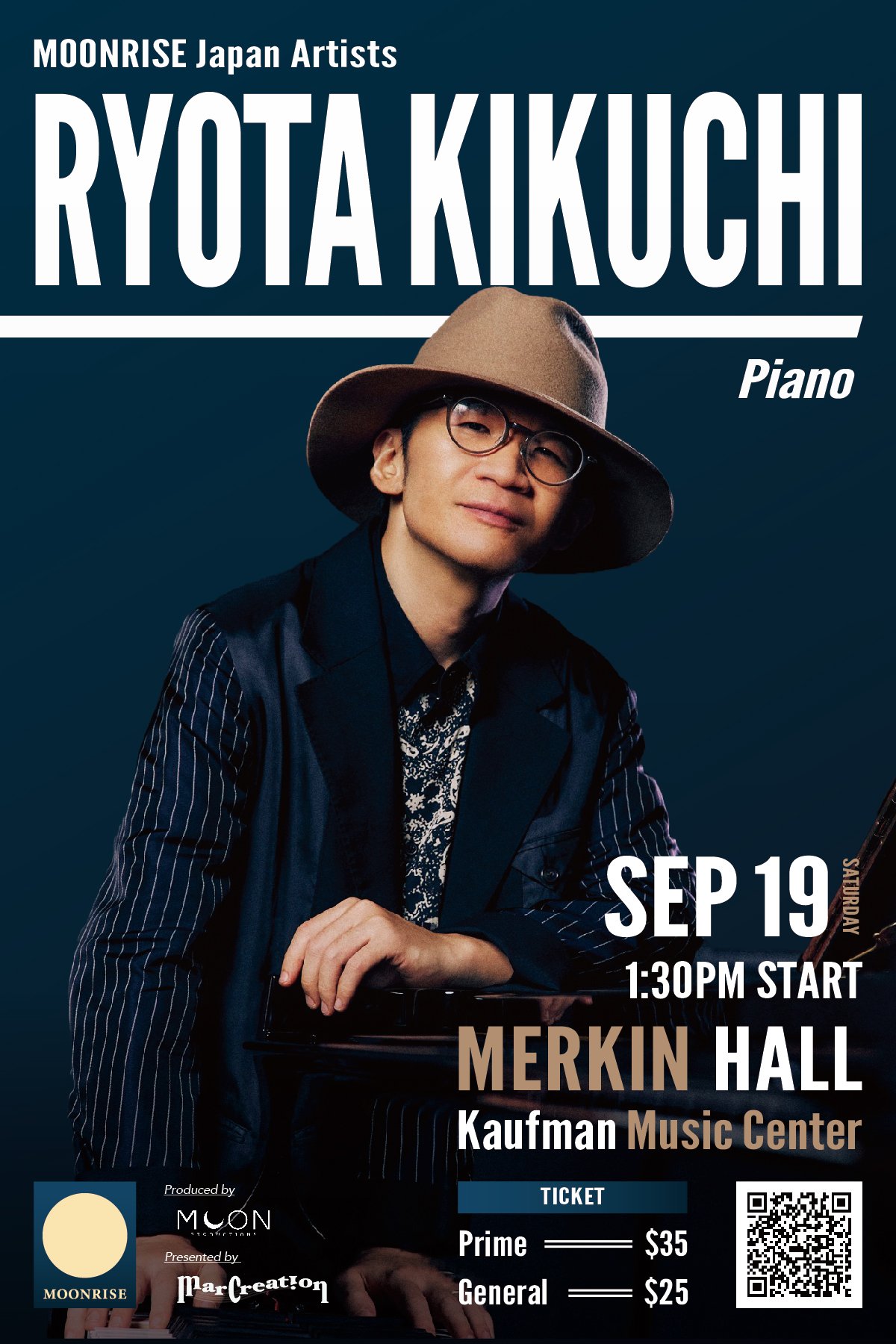
MOONRISE Japan Artists –Ryota Kikuchi: Piano
A pianist, composer, arranger, and YouTube creator, Ryota Kikuchi began playing the piano at the age of four. While still a student at Nihon University’s College of Art and Graduate School, Kikuchi composed music for various artists, and since he has worked on numerous TV programs, film scores, as well as anime and video game music. He gained attention for composing the music for the web commercial of the 2020 Tokyo Olympics. In November 2024, he became the first Japanese soloist to successfully perform all four of Gershwin’s concerto works in a single evening. His YouTube channel has more than 850,000 subscribers, and the total number of views has exceeded 400 million. Kikuchi’s unique style, built on the solid technical foundation cultivated through classical music, combined with outstanding improvisational and arrangement skills, allows him to perform across various genres, earning him high praise as a one-of-a-kind pianist. Learn more at his website.
“I’ve been fortunate to connect with people around the world through YouTube, and I’m excited to finally meet many of those listeners in person through live performance,” says Kikuchi. “I hope this concert will be a special opportunity to share music together and create unforgettable memories.”
PROGRAM
George Gershwin – “Rhapsody in Blue”
Ryuichi Sakamoto – “Merry Christmas, Mr. Lawrence”
Akira Ikufube – “Bon Odori”
Movie Music Medley
To purchase, please visit Kaufman Music Center’s website. As a special benefit, JapanCulture•NYC members will receive a promotional code for discounted tickets by email. If you'd like to learn more about membership, please visit our Membership page.
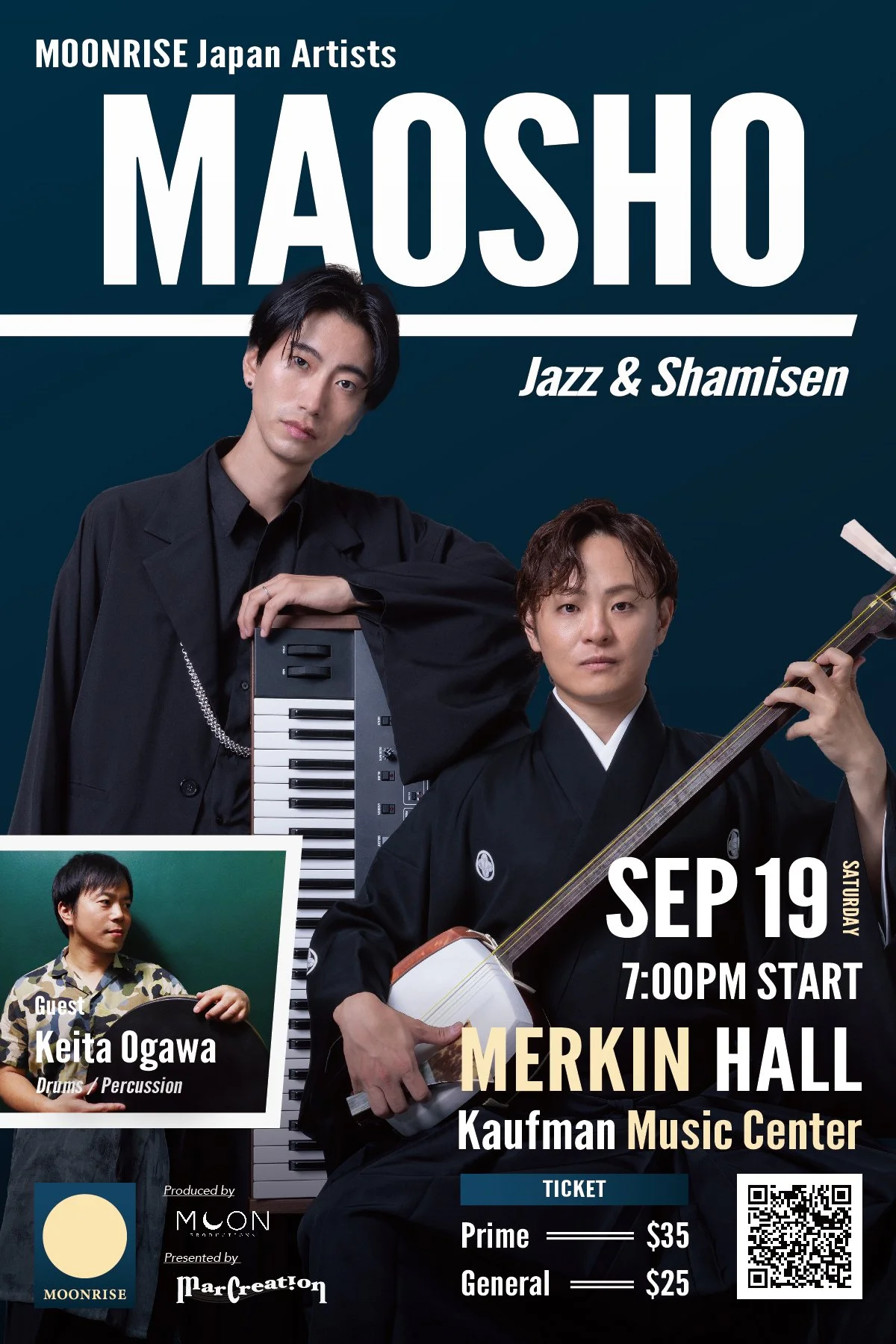
MOONRISE Japan Artists – MAOSHO: Jazz & Shamisen
Mao Sone is a jazz artist who masterfully performs on both piano and trumpet. Sho Asano is one of Japan’s leading shamisen performers and folk singers.
Traditional Japanese music and jazz come together in a bold and unique collaboration with MAOSHO. The powerful sound of Tsugaru shamisen, the spirit of Japanese folk song, and the freedom of jazz improvisation create an energetic and emotional performance. The duo received a standing ovation in 2025, when they first performed a series of concerts in New York City.
“Our music is a conversation between tradition and innovation,” says MAOSHO. “We hope audiences in New York will experience not only the sound of Japan, but also the universal joy of creating something new together.”
Joining MAOSHO on the Merkin Hall stage will be guest artist Keita Ogawa, one of the most versatile and sought-after percussionists in New York City.
PROGRAM
Mao Sone – “Sakura Sakura Fantasy”
Mao Sone – “HAYASHI”
Richard Rodgers – “My Favorite Things” (arr. Sho Asano)
Japanese Folk Song – “Yagibushi” (arr. Mao Sone)
To purchase tickets, please visit Kaufman Music Center’s website. As a special benefit, JapanCulture•NYC members will receive a promotional code for discounted tickets by email. If you'd like to learn more about membership, please visit our Membership page.
About Mao Sone
A native of Chiba Prefecture, Mao Sone was born into a musical family: His paternal grandmother was a Shamisen player, and his maternal grandmother was a former jazz cafe owner. After studying classical piano from a young age, Sone added trumpet at age eight. He made his professional debut in his senior year of high school, performing alongside Norio Maeda and Takeshi Inomata. He attended Berklee College of Music on a full-tuition scholarship, and after graduating at the top of his class in 2014, he became a member of the inaugural class of the Berklee Global Jazz Institute’s master’s program, completing his degree with the highest honors (Summa Cum Laude) in 2016.
Mao Sone is a rare and versatile multi-instrumentalist who has garnered international acclaim as a "Jazz Dual-Threat"—a virtuoso on both the trumpet and the piano. An accomplished performer, composer, and producer, he has established a unique presence in the global music scene through his innovative blend of tradition and modernity. Visit Sone’s website to learn more.
About Sho Asano
Influenced by his grandfather, Sho Asano began learning wadaiko, traditional Japanese drums, at age three and the Tsugaru shamisen at age five. Throughout his childhood, he regularly won shamisen competitions, breaking records as the youngest winner in various categories. In 2004, at the age of 14, Asano became the youngest winner of the highest tier of the Tsugaru-jamisen National Competition (now known as the Tsugaru-jamison World Competition). He released his debut album, Shofu, at age 17 and has performed extensively overseas, including a concert at the Kennedy Center.
Incorporating elements of Japanese folk songs, classical music, rock, jazz, pop, and flamenco, Asano’s performance style transcends genres. He has worked with a wide range of artists, collaborating with world-class musicians such as jazz legend Will Lee (bass), rising jazz star Marcus Gilmore (drums), and two-time Grammy Award winner Richard Stoltzman (clarinet). Hear Asano’s music on his YouTube channel.
About Keita Ogawa
New York-based drummer and percussionist Keita Ogawa is a prodigious talent, playing practically any percussion instrument with fluency and musicality. The three-time Grammy winner studied at Berklee College of Music, and he spent three months in Rio de Janeiro, immersing himself in learning Brazilian percussion from some of the country’s most respected musicians. His passion for crossing musical borders and cultures shows in his impressive list of collaborators since moving to the U.S.: Yo-Yo Ma, the Boston Symphony Orchestra, the Chicago Symphony Orchestra, the Maria Schneider Jazz Orchestra, and Charlie Hunter, Snarky Puppy, and Bokanté, among many others.
New York City is the final stop of a series of events for the MOONRISE project. Together, the performances of MAOSHO and Ryota Kikuchi showcase the diversity and vitality of contemporary Japanese music, offering New York audiences an opportunity to experience distinctive artistic voices that bridge tradition, innovation, and global cultural dialogue.
About Merkin Hall
Located within Kaufman Music Center on Manhattan’s Upper West Side, Merkin Hall is one of New York City’s leading venues for classical, contemporary, jazz, and cross-cultural performance. Known for its exceptional acoustics and intimate setting, the hall has presented internationally acclaimed artists and emerging voices from around the world, serving as a vibrant home for musical innovation and artistic excellence.
About MOON
Moon, Inc. specializes in concert production and artist management, organizing numerous performances annually. The company is led by representative director and producer Akie Osawa, who has a proven track record in discovering and nurturing young talent, such as violinists Ai Okumura and Rina Matsuda, pianist Aya Nagatomi, and bandoneon player Kazuma Miura. Osawa established Moon in 2020 and continues to support artists’ global development and cross-cultural collaborations with the focus of presenting Japanese performers on the world stage. Learn more at Moon’s website.
About MOONRISE
Launched by Moon in 2025, MOONRISE is an international artist development and cultural exchange initiative that supports Japanese artists in expanding their presence beyond Japan through performances, audience engagement, and artistic opportunities abroad. As part of Moon’s “Global Expansion Project for Performing Artists,” MOONRISE is centered around music, collaborating across diverse fields such as food, traditional culture, fashion, film, and technology, showcasing the beauty and talent of Japan through the collective strength of “All Japan.” The full vision of MOONRISE is not “from Japan to the world,” but “making Japan shine within the world.” By fostering connections between artists and international audiences, MOONRISE seeks to deepen cultural understanding and create new pathways for creative exchange.
About Mar Creation
Established in 2003, Mar Creation, Inc is a full-service resource for creative needs ranging from video and music production, graphic and web design, event planning and booking, PR, artist management, and film distribution. The organization has been involved with and supports various charitable events for AIDS, Japan earthquake/tsunami relief, and peace-making projects.
Enjoying JapanCulture•NYC? This site is supported by our community, and a $5/month membership helps offset the costs of keeping it running so we can continue spotlighting the people and events that make our community shine. Please click here to join.
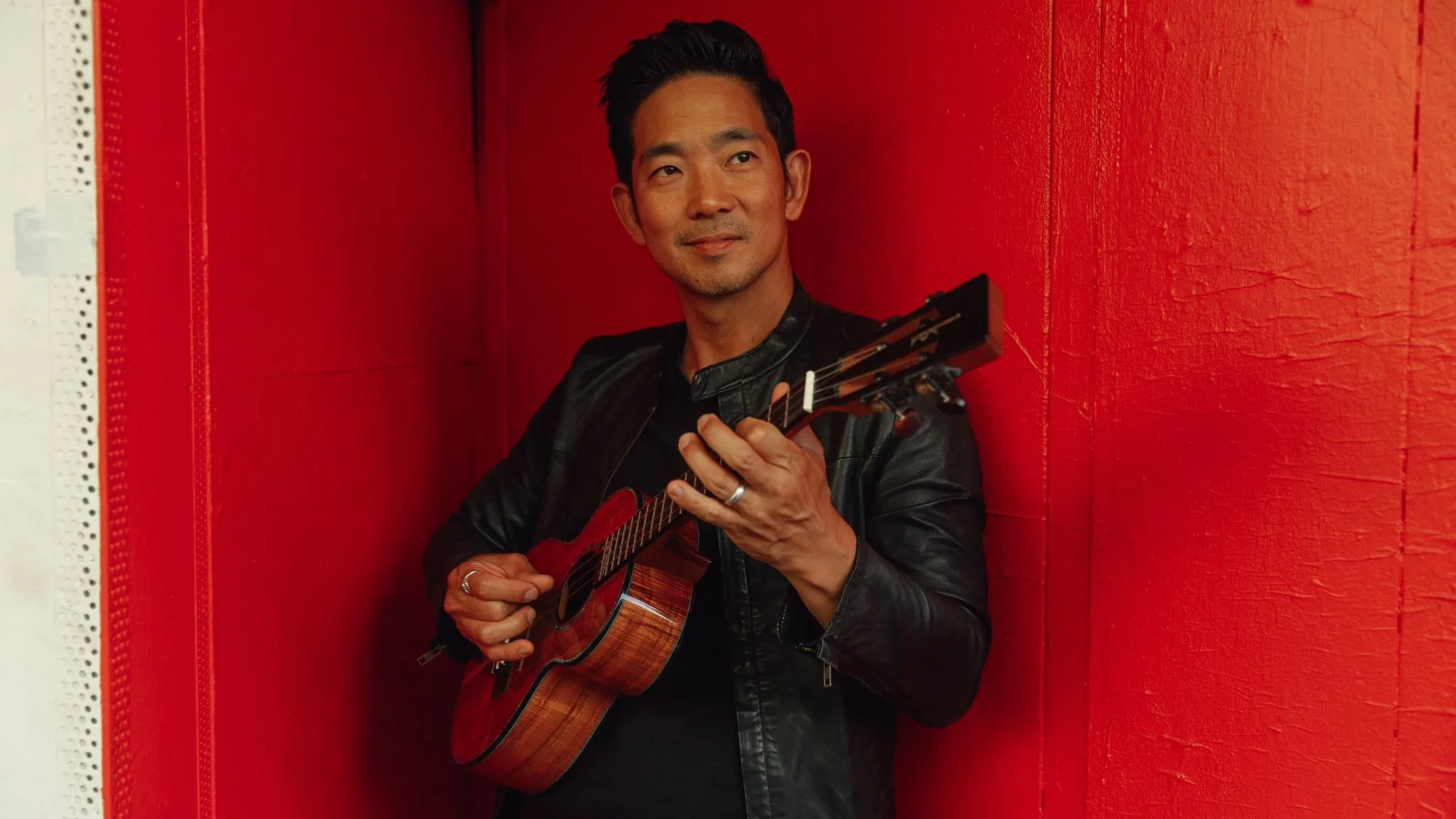
Jake Shimabukuro Returns to NYC
Ukulele virtuoso Jake Shimabukuro brings his innovative blend of rock, jazz, blues, and traditional Hawaiian music to NYC with a performance at Sony Hall.
Jake Shimabukuro
Friday, August 21 at 7:00 p.m. | Doors at 6:00 p.m.
Sony Hall – 235 W. 46th Street (between 7th and 8th Avenues)
Admission: $47 VIP Seating | $37 General Admission & Standing Room
Ukulele virtuoso Jake Shimabukuro brings his innovative blend of rock, jazz, blues, and traditional Hawaiian music to NYC with a performance at Sony Hall.
Tickets
To purchase tickets, please visit Sony Hall’s website. This is a general-admission event with cabaret-style seating available on a first come, first served basis. Sony Hall requires a minimum order of $20 per person at tables. This all-ages show will have a full dinner menu as well as a prix fixe menu available.
About Jake Shimabukuro
Honolulu, Hawaii, native Jake Shimabukuro began playing the ukulele at age four, developing a technique that expanded the capabilities of the instrument. He became a household name after his rendition of George Harrison’s “While My Guitar Gently Weeps” went viral on YouTube. The musician was near Strawberry Fields in Central Park, recording an interview for the New York-based show Ukulele Disco in 2006. Since then, Shimabukuro has released more than 20 albums, collaborated with countless legendary musicians, and toured globally. Learn more about him at his website.
Enjoying JapanCulture•NYC? This site is supported by our community, and a $5/month membership helps offset the costs of keeping it running so we can continue spotlighting the people and events that make our community shine. Please click here to join.

Three Japanese Films at AAIFF
JapanCulture•NYC is a proud Community Partner of the 49th Asian American International Film Festival!
JapanCulture•NYC is a proud Community Partner of the 49th Asian American International Film Festival!
Presented by Asian CineVision (ACV), the 49th Asian American International Film Festival (AAIFF) will take place Thursday, July 30 through Sunday, August 9 in New York and online. This year’s festival features a captivating array of films that delve into themes of love, relationships, grief, and complex emotions.
JapanCulture•NYC is supporting three Japanese films: AKASHI, Summer Project, and Mother’s Recipe. All three are coming-of-age dramas that are making their world premieres during AAIFF.
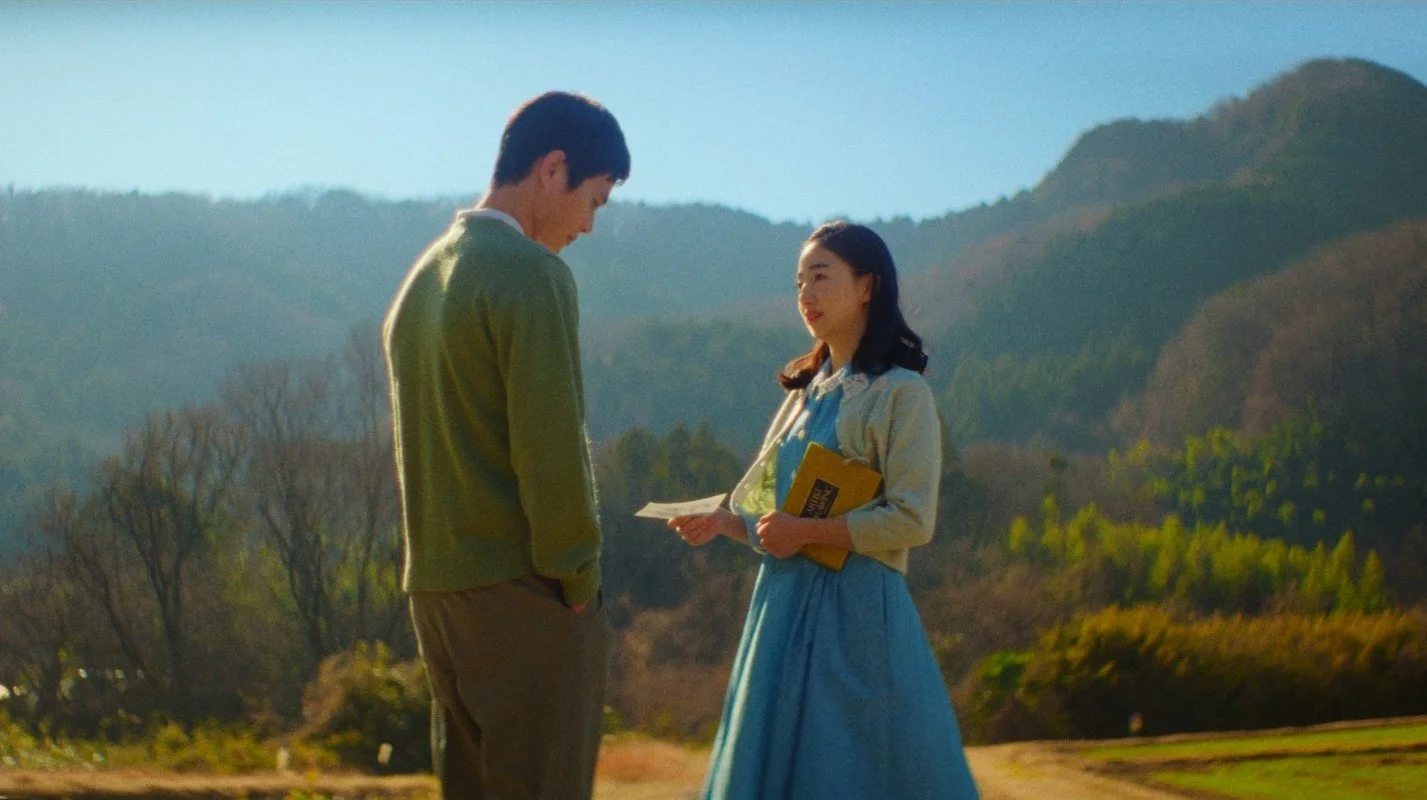
AKASHI
AKASHI
Saturday, August 1 at 11:00 a.m.
Asia Society – 725 Park Avenue at E. 70th Street
Admission: $19
Dir. Mayumi Yoshida | 100 minutes | Japanese with English subtitles | with Mayumi Yoshida, Hana Kino, Ryo Tajima, Chieko Matsubara, Kunio Murai | Content Warning: Strong language
World premiere
This film is part of an in-person shorts-feature combination screening and will be preceded by the short film One Last Walk. The screening will be followed by a Q&A.
When Kana, a Japanese artist living in Vancouver, returns to Tokyo for her grandmother’s funeral, she’s pulled between the life she chose and the one she left behind. As family expectations close in and an old love reappears, she uncovers a hidden romance from her grandfather’s past. Past and present begin to echo, and AKASHI becomes a quiet reflection on identity, memory, and the choices that shape who we become.
Born in Japan and raised on three continents, Mayumi Yoshida is a director, actor, and writer based in Vancouver, BC. Her background brings a unique “in-betweener” perspective to her storytelling. She is an alumna of WarnerMedia x Canadian Academy’s Writer/Director Program, TIFF Writer’s Studio, and Beyond Japan Filmmakers Program, where she was mentored by Hirokazu Koreeda. Her Juno-nominated music video, “Different Than Before,” won the Jury Award at SXSW.
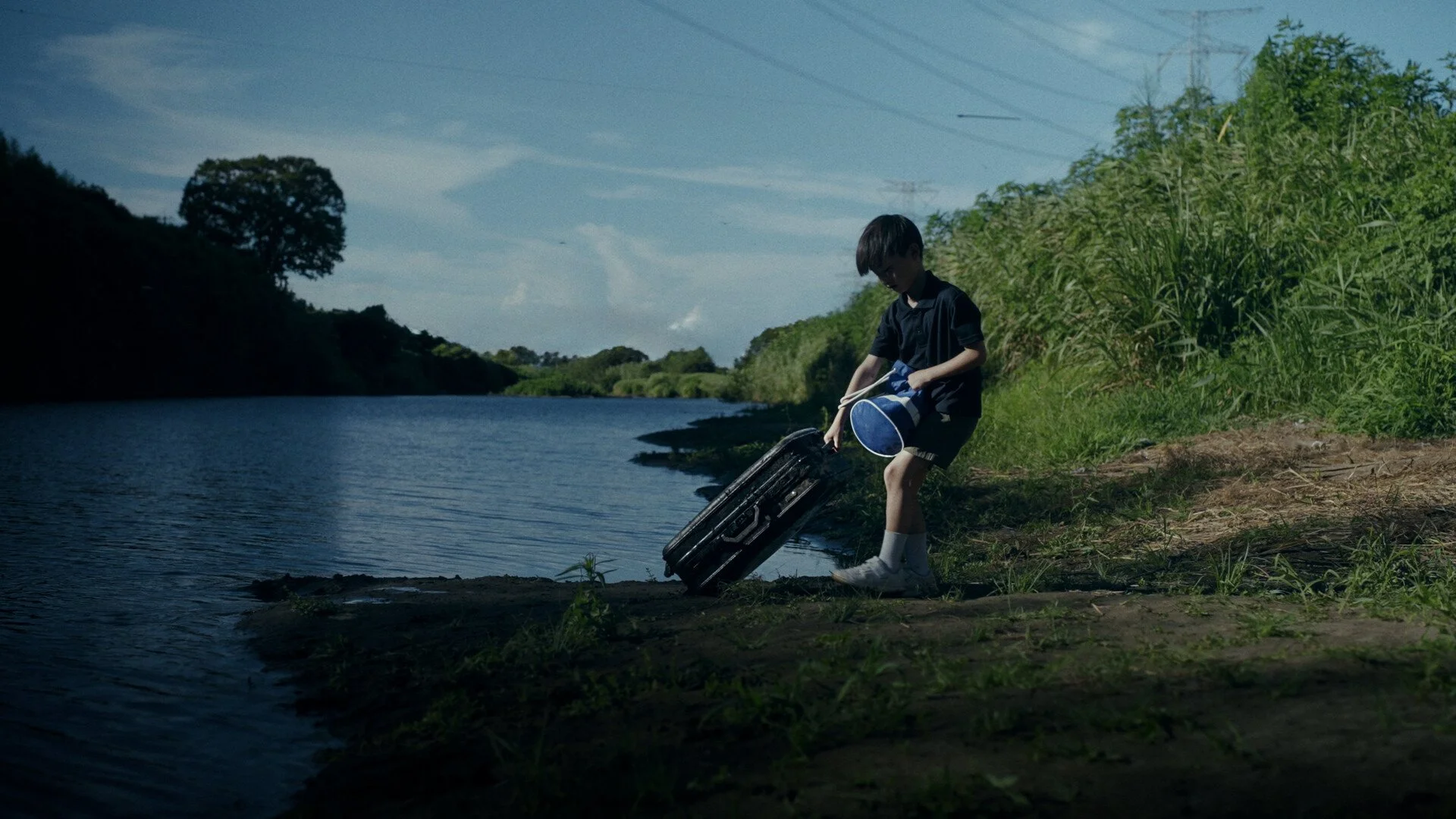
Summer Project
Summer Project
Friday, August 7 at 8:30 p.m.
Village East Angelika – 181-189 2nd Avenue (between 11th and 12th Streets)
This film will be screened in-person only.
Admission: $19
Dir. Yuki Hara | 15 minutes | Japanese with English subtitles | with Iori Sugimoto, Mutsuo Yoshioka, Misa Wada | Content Warning: Animal Abuse, Blood/Gore, Death, Violence
World Premiere
Akira, a quiet third-grader, can’t fit in with the popular kids and always watches them from outside the circle. One day, he discovers an old suitcase by the river. Inside is a human head. Desperate for friends, he takes it home, names it “Mr. Nakagawa,” and makes it his summer research project. The grim secret finally brings him companions: His classmates, thrilled by the head, throw themselves into a quest to find the missing body. It feels like the best summer of Akira’s life. But the happiness doesn’t last. As decay sets in, the boys’ innocent game twists into an irreversible nightmare.
Yuki Hara is a Japanese director, screenwriter, and producer specializing in horror and thrillers. In 2019, he gained global recognition writing, directing, and producing the series Scam, distributed internationally as a Netflix Original. The founder of Ghost Gate Films and a key creative at Yami, a horror studio backed by a major Japanese TV network, Hara produced the Warner Bros. feature Re/Member, Japan’s No.1 horror box office hit, and wrote and produced its 2025 sequel.
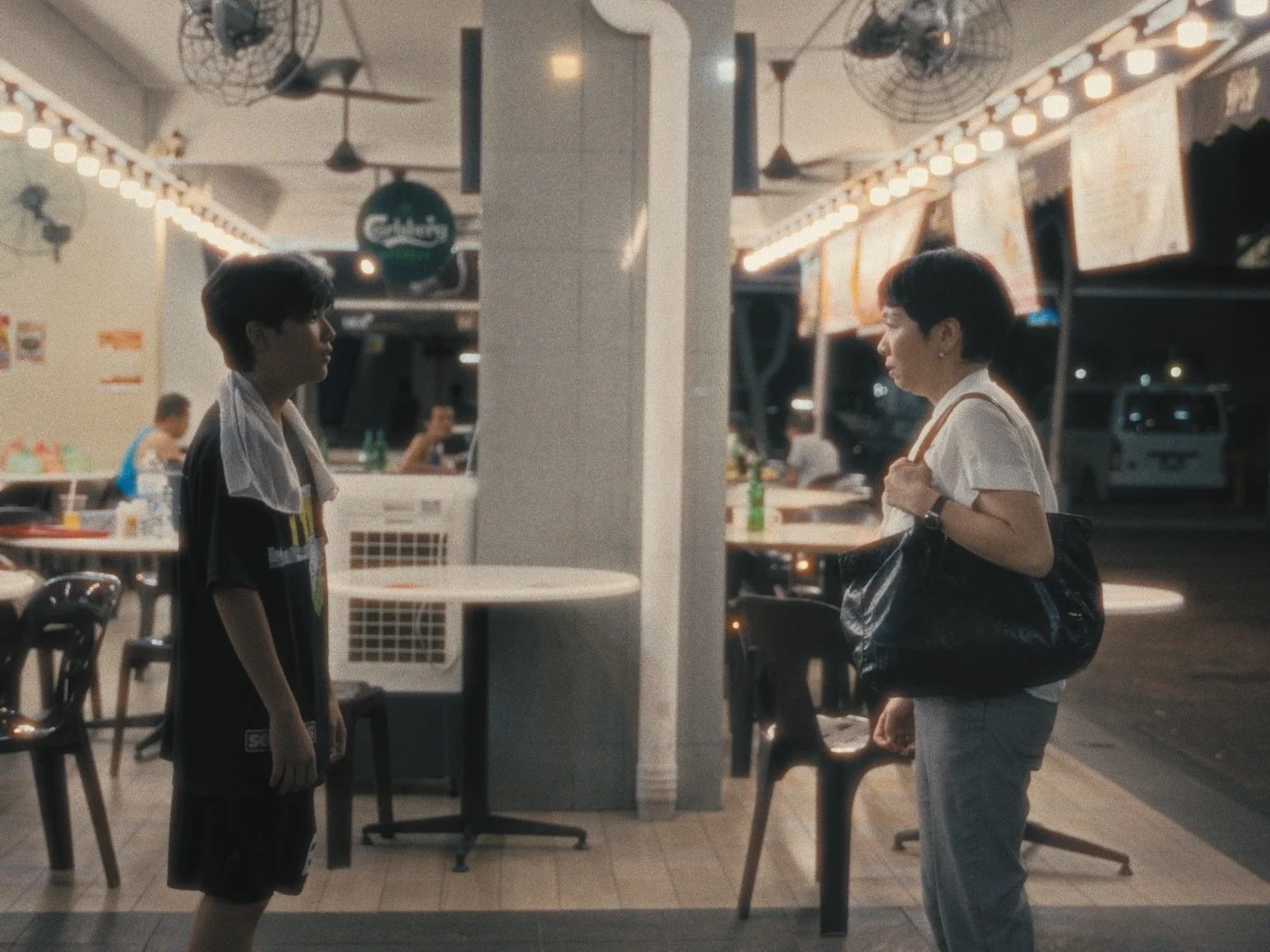
Mother’s Recipe
Mother’s Recipe
Saturday, August 8 at 2:30 p.m.
Village East by Angelika – 181-189 2nd Avenue (between 11th and 12th Streets)
Admission: Pay What You Can (Suggested: $15)
Individual Online Ticket: $11 | Household Online Ticket (Intended for those who wish to watch an online screening together with other members of their household): $15
This film will be screened in-person and online. There will be a Q&A with director Izumo Kawabe and lead actor Hyuga Kawabe following the in-person screening.
Dir. Izumo Kawabe | 12 minutes | Chinese (Singaporean Mandarin) and Japanese with English subtitles | Estovan Reizo, Hyuga Kawabe, Kumi Morizaki, Jaslyn Koh
World premiere
When a young Japanese boy, Yuya, is uprooted from his life in Japan and relocated to Singapore by his mother, he learns that the move is not temporary. Determined to return home, he runs away and begins working at a local food court to save enough money to go back. Alone in a foreign country where he cannot speak the language, Yuya is forced to navigate an unfamiliar world and discover what “home” truly means.
Izumo Kawabe is a 20-year-old Japanese director who grew up in Singapore. He began making films at the age of nine. Mother’s Recipe won Best Short Film in the U25 category at the Academy-Qualifying Short Shorts Film Festival & Asia, was selected for multiple festivals, and garnered more than 3.5 million total views from clips shared on social media platforms. He has worked with acclaimed Singaporean filmmaker Eric Khoo and is currently studying film production at NYU.
Mother’s Recipe is part of AAIFF’s Shorts:Ones to Watch: Filmmakers Under 21. Celebrate the future of AANHPI filmmaking with our youngest creatives as they take you on a journey through the modern conditions of youth and young adulthood. It's coming of age as they see it, through the lenses of period drama, documentary and more. The winner will receive a cash prize.
Tickets
In addition to a stellar lineup of films, the festival will feature Q&As, receptions, and VIP events, providing unique opportunities to connect with industry professionals and fellow film enthusiasts. Please visit AAIFF’s website for the full schedule of events and to purchase tickets. Ticket packages are available on Elevant for online and in-person screenings.
JapanCulture•NYC followers can use promo code AAIFF49_JCNYC to receive a discount!
About AAIFF
Established in 1978 by Asian CineVision, the Asian American International Film Festival is the nation’s first and longest running festival of its kind and the premier showcase for the best independent Asian, Asian diaspora, and Pacific Islander cinema. AAIFF is committed to film and media as a tool for social change and to supporting diversity and inclusion in the media arts.
About Asian CineVision
Founded in 1975 by grassroots media activists, Asian CineVision (ACV) has spent the past 50 years devoted to the development, exhibition, promotion, and preservation of Asian and Asian American experiences through film and media arts. ACV’s mission is to nurture and grow the community of makers and lovers of Asian and Asian American and diasporic independent Asian film, television, and digital. In addition to its flagship event, the Asian American International Film Festival, ACV runs the ACV Media Archives, a Fiscal Sponsorship program, the media publication Cinevue, the Asian American International Screenplay Competition and Reading, and the National Festival Tour.
Enjoying JapanCulture•NYC? This site is supported by our community, and a $5/month membership helps offset the costs of keeping it running so we can continue spotlighting the people and events that make our community shine. Please click here to join.

NY Mets to Host Dodgers on Japanese Heritage Night
Area Japanese and Japanese American organizations are once again teaming up with the New York Mets to host Japanese Heritage Night on July 24 vs the Los Angeles Dodgers
Japanese Heritage Night
Friday, July 24 at 5:45 p.m.
Citi Field – Flushing, Queens
Area Japanese and Japanese American organizations are once again teaming up with the New York Mets to host Japanese Heritage Night. Head to Citi Field this Friday, July 24 as The Amazin’s face two-time National League MVP Shohei Ohtani, World Series MVP Yoshinobu Yamamoto, Roki Sasaki and the defending World Series champion Los Angeles Dodgers.
The Japanese American Association of New York (JAA), the Japanese Chamber of Commerce and Industry (JCCI), The Nippon Club, Japan Society, the American Friends of the International House of Japan, the U.S.-Japan Council (USJC), Japan Society of Fairfield County, and the Japanese American National Museum (JANM) will host Japanese and Japanese American Community Night, celebrating the strong bond between the U.S. and Japan through our shared love of baseball.
To purchase tickets, please visit the Mets’ ticketing system. A portion of each ticket sold will be donated one of the participating organizations; you’ll be asked to indicate your choice at checkout.
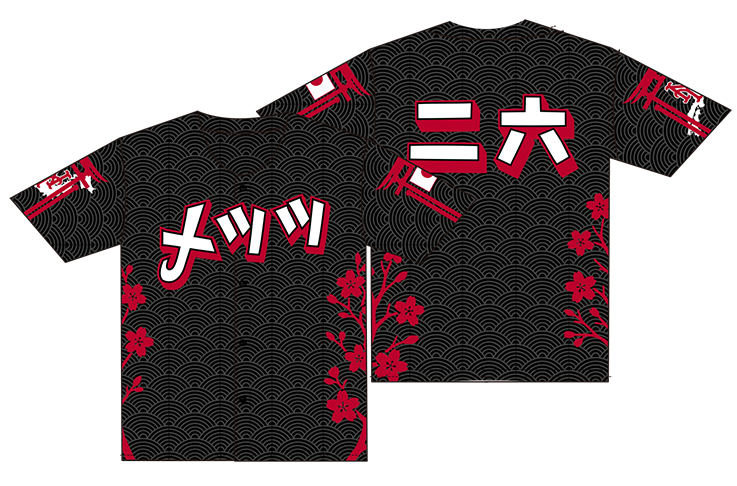
Fans who purchase through the link will receive a limited-edition Japanese Mets jersey. Please note: All jerseys will be size XL. To redeem the Japanese Mets Jersey, fans must enter through the Right Field Gate (located on Seaver Way between the Bullpen Gate and the Hodges Gate) before the end of 5th inning and have their tickets scanned.
Program
5:40 p.m. – Citi Field Gates Open
5:45 p.m. until 6:15 p.m. – Taiko drumming performance by Soh Daiko in Mets Plaza (between the 7 train subway station and outside the main gate)
6:30 p.m. until 6:40 p.n. – Taiko drumming performance by Soh Daiko at the Jackie Robinson Rotunda (inside the main gate)
6:40 p.m. until 6:55 p.m. – Honorary First Pitch by Hiroshi Kawano, Executive Chairman, MUFG Americas Holding Corporation, throwing to honorary catcher, Gary Moriwaki, Board Member, Japan Society New York followed by the Amazin' Awards
6:57 p.m. – National Anthem by Marina Kondo, actress and cast member of Ragtime on Broadway
All times subject to change by the New York Mets
Amazin' Awards
All eight organizations and their designated representatives will be introduced to the stadium in a ceremony at home plate.
The Japanese American Association of New York – Koji Sato, President
JCCI – Masaaki Maeda, Vice President & Assistant Secretary
The Nippon Club – Makoto Kageyama, Senior Manager, Head of Food Services
Japan Society – Joshua Walker, Outgoing President & CEO
Japanese American National Museum – Kathryn Bannai, Member of the Board of Trustees
U.S.-Japan Council – Darin Arita, New York Regional Co-Chair
International House of Japan – David Janes, President
Japan Society of Fairfield County – Jackie Alexander, President
In addition to Japanese Heritage Night and the remaining games of the Dodgers/Mets series this weekend, the Mets are offering tickets to premium select games at Citi Field the rest of the season. To purchase tickets, please visit the Mets’ ticketing system.
August 17-19 vs San Diego Padres
August 28-30 vs Houston Astros
September 4-6 vs San Francisco Giants
Enjoying JapanCulture•NYC? This site is supported by our community, and a $5/month membership helps offset the costs of keeping it running so we can continue spotlighting the people and events that make our community shine. Please click here to join.

Celebrate Ainu Culture in NYC
Celebrate Ainu culture with presentations, demonstrations, workshops, and film screenings at Japan Society
Ainu Summer Festival: The Stories, Culture, and Traditions of the Indigenous People of Northern Japan
Wednesday, July 22 and Thursday, July 23
Wednesday, August 12 and Thursday, August 13
Japan Society – 333 E. 47th Street (between 1st and 2nd Avenues)
For the first time, Japan Society is bringing more than 25 Ainu performers, artisans, and educators to the United States. Years in the making, this exciting series of events is a collaboration between Japan Society and the town of Biratori in Hokkaido. The events are co-programmed by filmmaker Naomi Mizoguchi, director of the film Ainu: Indigenous People of Japan.
The Ainu have a long history of persecution and erasure in their homeland, but their culture is now being revived with a renewed interest in their traditional art forms and cuisine.
Presentations and Demonstrations
Sinot: The Dances of the Sar River
Wednesday, July 22 and Wednesday, August 12 at 7:00 p.m.
Discover the cultural significance of traditional Ainu dance and its strong connection with nature. Followed by a reception.
Ipe: The Culinary Heritage of the Ainu
Thursday, July 23 at 7:00 p.m.
Learn about the sustainable food culture of Hokkaido, featuring an on-stage cooking demonstration and a tasting of select Ainu foods.
Ikarkar & Itak: Ainu Embroidery and Language
Thursday, August 13 at 7:00 p.m.
Explore the history of Ainu fabric art and learn about the projects currently underway to preserve their critically endangered language.
Workshops
Inuye=an ro!: Woodcarving Workshop
Thursday, July 23 at 4:00 p.m.
Learn intricate Ainu carving techniques from the Nibutani Craft Cooperative Association and take home your own creation.
Ikarkar=an ro!: Embroidery Workshop
Wednesday, August 12 at 4:00 p.m.
Discover specific appliqué stitching designs passed down through generations and take home your own embroidery.
Itak=an ro!: Language Workshop
Wednesday, August 12 at 5:30 p.m.
Take part in an introductory class to help preserve the critically endangered Ainu language.
Sinot=an ro!: Ainu Dance Workshop
Thursday, August 13 at 4:00 p.m.
Join a rare, interactive session to learn the basics of Ainu dance directly from Biratori performers.
Screenings
Ainu: Indigenous People of Japan
Wednesday, July 22 at 5:30 p.m. SOLD OUT
Thursday, July 23 at 5:30 p.m.
Thursday, August 13 at 5:30 p.m.
Filmmaker Naomi Mizoguchi started visiting Biratori in 2008 and felt a great urgency to record the Ainu’s history, language, and culture on film. In this work, four Ainu elders tell their stories in one of the only films that present modern-day Ainu life. Followed by a Q&A with Mizoguchi.
Ticketing
Presentations, demonstrations, and workshops are $20 for the public, $17 for students and seniors, and $15 for Japan Society members.
A Series Pass with access to all presentations is $60 for the public, $50 for students and seniors, and $45 for Japan Society members. Workshops are not included in the Series Pass and must be purchased separately.
For more information and to purchase tickets, please visit Japan Society’s website. To purchase tickets for individual events, please click the specific event’s thumbnail.
JapanCulture•NYC followers can use discount code ARTSAINU50 for a 50% discount upon checkout for any of the main auditorium events:
Sinot: The Dances of the Sar River
Ipe: The Culinary Heritage of the Ainu
Ikarkar & Itak: Ainu Embroidery and Language
Please note: Workshops are not included in the discount.
Tickets for all Ainu: Indigenous People of Japan screenings are free with RSVP.
About the Ainu
The Ainu are an indigenous people who have lived in the northern part of the Japanese archipelago, particularly Hokkaido, for centuries. They have inherited their own unique culture, including the Ainu language, which is different from Japanese. In 1869, Japan incorporated the Island of Hokkaido into its territory and integrated the Ainu into Japanese culture. As a result, various Ainu traditions, customs, names, language, and history were lost as part of this assimilation in the early Meiji era.
In 2019, the Japanese Diet passed a law to recognize the Ainu as an Indigenous People with their own unique language, religion, and culture. Currently, efforts are underway to revitalize the Ainu culture and language, which UNESCO has designated as a critically endangered language. Key to this movement is the small village of Nibutani, part of the Town of Biratori. Nibutani is home to the highest percentage of Ainu residents in Japan, and it was home to Shigeru Kayano (1926-2006), a leader who worked to keep Ainu culture alive and the first Ainu politician to sit in the Diet of Japan.
Enjoying JapanCulture•NYC? This site is supported by our community, and a $5/month membership helps offset the costs of keeping it running so we can continue spotlighting the people and events that make our community shine. Please click here to join.
JAA & AAA to Celebrate Japanese Folklore Legend
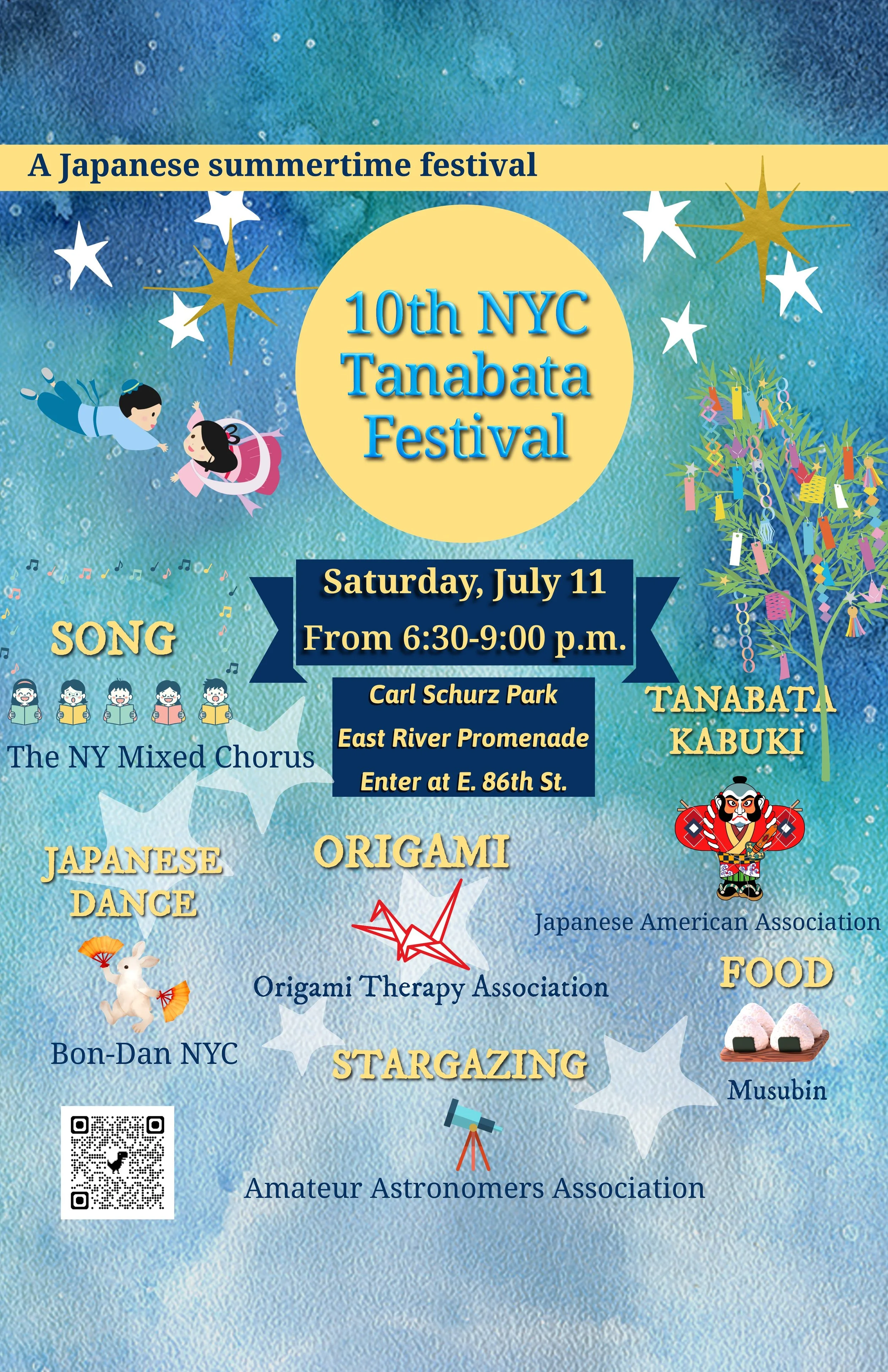
The Japanese American Association of New York and the Amateur Astronomers Association of New York, together with support from the Consulate General of Japan in New York, will hold the tenth annual stargazing Tanabata Festival.
10th Annual Tanabata Festival
Saturday, July 11 from 6:30 p.m. until 9:00 p.m.
Carl Schurz Park Esplanade – East River Promenade (enter at E. 86th Street and East End Avenue)
Admission: Free
The Japanese American Association of New York and the Amateur Astronomers Association of New York, together with support from the Consulate General of Japan in New York, will hold the tenth annual stargazing Tanabata Festival. AAA members with telescopes will show guests the night sky and tell the folk tale of Princess Orihime and Hikoboshi, who are represented by the stars Vega and Altair, which are prominent in the summer sky.
The Legend of Tanabata
Princess Orihime weaved night and day, so much so that her father, the Heavenly Emperor, arranged for his workaholic daughter to meet a handsome cowherd named Hikoboshi. It was love at first sight, and the couple married immediately. Busy being a devoted wife, Princess Orihime neglected her weaving, prompting the emperor to separate the young lovers and sending Hikoboshi to the other side of the Amanogawa, or the Milky Way.
Beside herself with loneliness, Princess Orihime cried and cried, beginning the rainy season with her tears. Her father couldn’t stand to see his daughter in this state, so he allowed her to visit her beloved one day a year, on the seventh day of the seventh month.
To honor the star-crossed lovers, the Japanese write their wishes on thin strips of paper called tanzaku and hang them from bamboo branches.
Write Your Wishes
Volunteers from the Origami Therapy Association will hand out tanzaku, upon which guests can write their wishes and tie them to bamboo branches. OTA will also teach participants how to fold different kinds of origami.
There will be live performances by The New York Mixed Chorus and Bon Dan-NYC as well as an amateur kabuki play about the legend of Tanabata. Food will be available for purchase from Musubin’. Enjoy a summer evening with JAA and the community.
This event is free and open to the public, so throw on your yukata and make a wish!
For more info, please visit the JAA’s Facebook Page.
Please note: The original post had the incorrect date. The date of the Tanabata Festival is Saturday, July 11, not July 9 as originally published. JapanCulture•NYC regrets the error.
Enjoying JapanCulture•NYC? This site is supported by our community, and a $5/month membership helps offset the costs of keeping it running so we can continue spotlighting the people and events that make our community shine. Please click here to join.
Japan Society to Showcase 30 Japanese Films in 12 Days
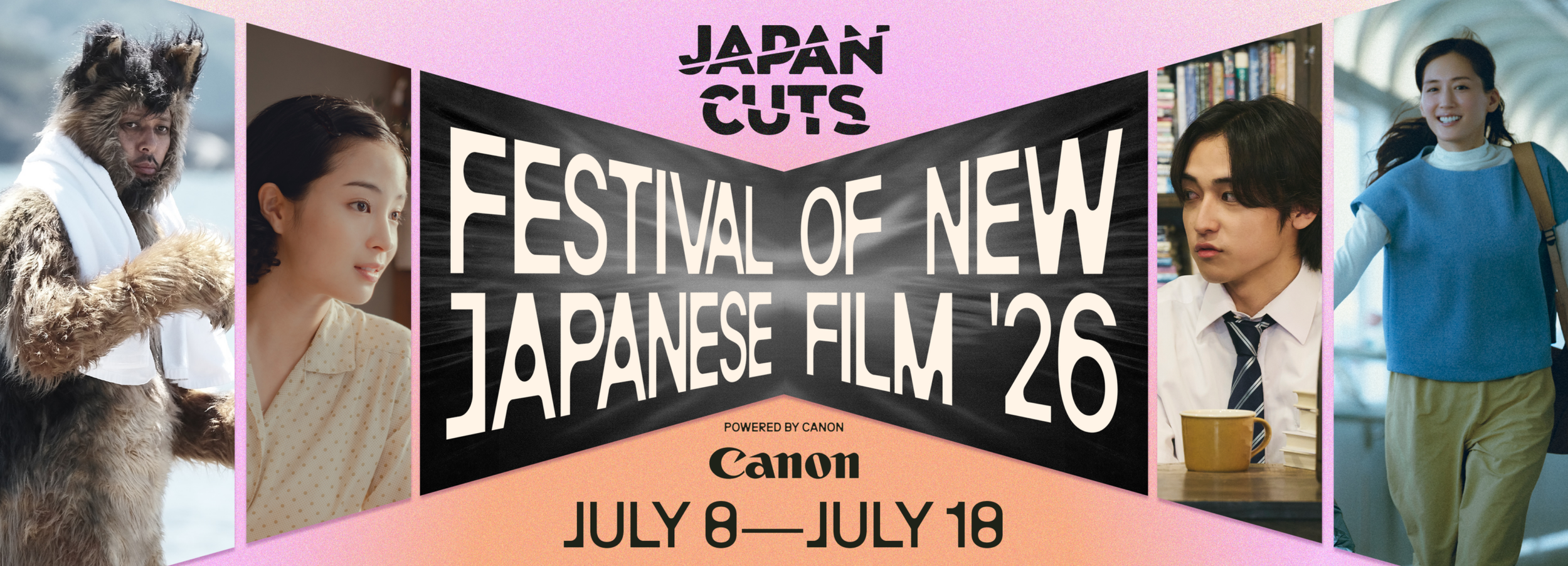
Japan Society screens more than 30 contemporary Japanese films in 12 days starting July 8, celebrating the 19th year of JAPAN CUTS: Festival of New Japanese Film
JAPAN CUTS: Festival of New Japanese Film 2026 Powered by Canon
Wednesday, July 8 through Sunday, July 19, 2026
Japan Society – 333 E. 47th Street (between 1st and 2nd Avenues)
Admission Information & Pricing
Centerpiece: $35 Nonmembers | $32 Students & Seniors | $28 Members
Screenings with Receptions: $26 Nonmembers | $23 Students & Seniors | $20 Members
Screenings with Intros: $24 Nonmembers | $22 Students & Seniors | $19 Members
All Other Feature Screenings: $20 Nonmembers | $18 Students & Seniors | $16 Members
Screenings Under 60 Minutes: $16 Nonmembers | $14 Students & Seniors | $12 Members
New Directions in Japanese Cinema: Free with RSVP
Festival Pass: $350 Member Exclusive
All-Access Pass: $1,000 Nonmembers | $800 Members
North America’s largest festival of contemporary Japanese film returns to Japan Society on July 8 for its 19th year. JAPAN CUTS Powered by Canon is a summer extravaganza of more than 30 curated films from across Japan featuring major award winners, indie darlings, up-and-coming filmmakers, restorations, documentaries, short films, anime, and more. A showcase of the latest in Japanese cinema, Japan Society is the place to see both today’s most popular actors and directors as well as tomorrow’s pioneering talent.
JAPAN CUTS will present lauded actress Suzu Hirose with theCUT ABOVE Award for Outstanding Achievement in Film and host the New York Premiere of A Pale View of Hills starring Hirose as the Centerpiece Film, and the festival will conclude with legendary director Hirokazu Koreeda, who will appear in person for the North American Premiere of Sheep in the Box, the Closing Film.
The main category of JAPAN CUTS showcases a broad selection of contemporary Japanese cinema across vibrant genres and styles. From deep dramas and tender, coming-of-age tales to action, avant-garde, and anime, the Feature Slate is a window to the past year of Japan’s cinematic storytelling.
For more information and to purchase tickets, please visit Japan Society’s website.
Sold-Out Screenings
There is no online or email waitlist for sold-out screenings. Those wishing to attend sold-out screenings can visit the Japan Society Box Office in person at 333 East 47th Street. A physical waitlist will begin 30 minutes before each sold-out event. Ten minutes prior to the screening, any unused tickets will be made available and can be purchased by those present in the order in which they arrived. Please note: There is no guarantee that tickets will be available for sold-out events.
Schedule
Wednesday, July 8
Tokyo Taxi
Followed by Opening Night Reception
Wednesday, July 8 at 6:00 p.m. SOLD OUT
Dir. Yoji Yamada | 2025 | 103 min. | Japanese with English subtitles | With Chieko Baisho, Takuya Kimura, Yu Aoi | East Coast Premiere
A remake of the French drama Driving Madeleine, Tokyo Taxi marks veteran Tora-san director and Shochiku stalwart Yoji Yamada’s 91st feature, reuniting him with long-standingcollaborator Chieko Baisho, who has worked with him since her film debut in 1963.
After a nightshift, cab driver Koji (Takuya Kimura) is called in to cover for a long-distance booking. Arriving at Shibamata (a familiar site for Tora-san fans), Koji picks up Baisho’s feisty and elegant Sumire, an elderly woman bound for Yokohama on one last trip. Sumire asks for a detour through parts of Tokyo, a farewell tour that illustrates Sumire’s life story, inseparable from the changing city itself.
With all the hallmarks of Yamada’s life-affirming, sentimental cinema, Tokyo Taxi is remarkably faithful to the successful formula of the filmmaker’s half-century-plus career—a potent swansong for the (yet unretired) filmmaker and his longtime muse.
Reception music by NYC-based Japanese band Twisty BonBon and presented by The Globus Family. Reception food and drink provided by Lady M, Sapporo, and ITO EN.
Thursday, July 9
Leave the Cat Alone
Thursday, July 9 at 6:00 p.m.
Dir. Daisuke Shigaya | 2025 | 102 min. | Japanese with English subtitles | With Soma Fujii, Yukino Murakami, Ran Taniguchi | North American Premiere
The debut feature of Daisuke Shigaya, Leave the Cat Alone took seven years for the filmmaker to complete, weaving scenes shot seven or so years prior as vague memories set before the film’s present-day setting.
Maiko, an emerging photographer, and her husband, Mori, an unsuccessful musician, struggle to maintain their languishing relationship. An unassuming domestic drama with deep emotional range, Leave the Cat Alone unfolds across three days and two nights in the couple’s lives as Mori encounters an old flame, transporting him back into residual memories, lingering regrets and nostalgia for a time before the growing chasms of a long-term love.
Leave the Cat Alone is part of JAPAN CUTS’s Next Generation category. One film in this category will win the Next Generation Prize presented by VIPO. The winning filmmaker will receive $3,000, generously donated by VIPO to help fund their next work.
White Flowers and Fruits
Thursday, July 9 at 8:30 p.m.
Dir. Yukari Sakamoto | 2025 | 110 min. | Japanese with English subtitles | With Miro, Anji Ikehata, Nico Aoto | North American Premiere
Casting a pallid, muted gloom over its delicate cast of adolescent schoolgirls, White Flowers and Fruits marks an auspicious debut for newcomer Yukari Sakamoto.
On the grounds of a secluded all-girls boarding school, a popular student inexplicably leaps to her death. Questioning the circumstances of her sudden suicide, two classmates cope with the unfathomable loss of a peer and the inexpressible emotions left within them.
In the tradition of Shusuke Kaneko’s Summer Vacation 1999 and Peter Weir’s Picnic at Hanging Rock, Sakamoto’s Gothic study is both spectral and sapphic, playing on classical bildungsroman motifs in its atmospheric meditation on the death of innocence.
White Flowers and Fruits is part of JAPAN CUTS’s Next Generation category. One film in this category will win the Next Generation Prize presented by VIPO. The winning filmmaker will receive $3,000, generously donated by VIPO to help fund their next work.
Friday, July 10
Cocoon
Friday, July 10 at 6:00 p.m.
Dir. Yukimitsu Ina, | 2025 | 60 min. | Japanese with English subtitles | With Hikari Mitsushima, Marika Ito, Yoko Hikasa, Rena Motomura, Chinatsu Akasaki, Aoi Koga, Yume Miyamoto, Izumi Aoyagi, Miyuki Sawashiro, Umeka Shoji North American Premiere
Animated by Sasayuri, a studio founded by Ghibli alum Hitomi Tateno, Cocoon features the profound talents of both veteran and new animators tobring Machiko Kyo’s wartime manga to life. Commissioned by NHK to commemorate the 80th anniversary of the end of the war, Cocoon shines a light on an often overlooked tragedy: the Himeyuri students, a group of young girls compelled to support the Japanese army on Okinawa.
Classes have long been replaced by labor, and the girls are soon assigned to a hospital that is no more than a cave. When the girls are abandoned by the adults, what path will they choose?
The Last Blossom
Friday, July 10 at 7:30 p.m.
Dir. Baku Kinoshita | 2025 | 90 min. | Japanese with English subtitles | With Kaoru Kobayashi, Junki Tozuka, Hikari Mitsushima, Yoshiko Miyazaki, Pierre Taki, Natsuki Hanae | U.S. Premiere
From director Baku Kinoshita, best known for the anime series Odd Taxi, comes a tear-jerking tale of love, perseverance, redemption, and a talking plant.
An elderly prisoner named Akutsu (Kaoru Kobayashi) is serving a life sentence and awaits a lonely death—until a voice calls out. This voice belongs to a flower (Pierre Taki) who asks the inmate about his life. Together, the two reflect on Akutsu’s innocent days, the good intentions that led him to a life of crime, the people he cared about, and that maybe—just maybe—these people can still blossom.
Rex: A Dinosaur’s Story
Friday, July 10 at 9:30 p.m.
Dir. Haruki Kadokawa | 1993 | 106 min. | Japanese with English subtitles | With Yumi Adachi, Shinobu Otake, Tsunehiko Watase
Industry disruptor and mogul Haruki Kadokawa, who revolutionized the field of film production with his media mix strategy, delivered this E.T.-adjacent curio of family entertainment to the chagrin of critics and the delight of the public—until his sudden and very public fall from grace. With creature effects by FX maestro Carlo Rambaldi (Alien, E.T., Possession), Kadokawa’s dinosaur pictureremainsone of the most expensive Japanese films of all time—and Shochiku’s highest-grossing release at the time—opening in theaters only a month after Jurassic Park.
The plot, strategically measured in a three-act structure, followsChie (Yumi Adachi), the young daughter of a paleontologist, who befriends a Tyrannosaurus hatchling after discovering a dinosaur egg with her father. Rarely seen outside Japan and a cult item abroad, Rex remains a fascinating relic of Kadokawa’s once-dominant brand of commercial filmmaking.
Saturday, July 11
BRAND NEW LOVE
Saturday, July 11 at 12:00 p.m.
Dir. Ryuichi Iwakura | 2025 | 84 min. | Japanese with English subtitles | With Yuna Yoshikawa, Kei Kikuchi, Kana Niigawa | International Premiere
Couple Yuiko and Kenichi undertake a short trip as their relationship starts to break down, watching over a relative’s antique shop in a last-ditch effort to save their deteriorating partnership. Bickering and resentful, the two take time away from each other by manning the shop—offering director Ryuichi Iwakura the chance to observe them quietly, depicting the dissolution of their partnership and their growing divide through subtle modes of expression. A remarkably understated film, BRAND NEW LOVE was awarded PIA’s Runner Up Award.
BRAND NEW LOVE is part of JAPAN CUTS’s Next Generation category. One film in this category will win the Next Generation Prize presented by VIPO. The winning filmmaker will receive $3,000, generously donated by VIPO to help fund their next work.
SAI: disaster
Saturday, July 11 at 2:30 p.m.
Dir. Yutaro Seki, Kentaro Hirase | 2025 | 128 min. | Japanese with English subtitles | With Teruyuki Kagawa, Anne Nakamura, Pistol Takehara | U.S. Premiere
Directing duo Gogatsu’s SAI: disaster offers a theatrical edit of their chilling SAI serial, restructuring its initial six-part form into a single, disquieting affair.
Four individuals, unrelated and living in entirely different regions of the country, face a nameless man existing on their peripheries; his doppelgängers, or disguises, take on various roles in their lives—a barber, a cram-school teacher, a trucker—and herald death in their wake.
With the pitch-perfect casting of Teruyuki Kagawa (Creepy, Tokyo Sonata) as a nebulous omen of catastrophe, Gogatsu’s picture operates at a terrifying register, mixing slow-burn procedural with J-Horror dread. Atmospheric and unnerving, SAI: disaster presupposes life’s many tragedies as part of the natural order—mere “acts of God” enacted by a harbinger of chaos.
Shuffle
Saturday, July 11 at 5:30 p.m.
Dir. Gakuryu Ishii (as Sogo Ishii) | 1981 | 37 min. | Japanese with English subtitles | With Yosuke Nakajima, Tatsuya Mori, Shigeru Muroi | World Premiere of 4K Restoration
Initially filmed as an unsanctioned adaptation of Katsuhiro Otomo’s manga Run, Shuffle is an attempt by Ishii to “sketch a man’s entire life through only one motif: running.”
Chased through the streets of Tokyo by a police detective, a punk sprints and hurtles to some unknown terminus as the past rushes in. Panting, wheezing and gasping for one more breath of air, he musters all he can for a final course.
A stream of consciousness invoked by physical exertion, this film is considered by Ishii to be “a portrait of my generation.”
The Master of Shiatsu
Saturday, July 11 after the screening of Shuffle
Dir. Gakuryu Ishii (as Sogo Ishii) | 1989 | 13 min. | Japanese with English subtitles | With Tokujiro Namikoshi, Anna Hole | World Premiere of 4K Restoration
The inaugural work of Ishii’s spiritual phase, TheMaster of Shiatsu emerged after a period of setbacks and disappointments, with Ishii finding the film to be a “kind of therapy” after the collapse of several unrealized projects.
The cackling laugh of a mysterious shiatsumaster (Tokujiro Namikoshi, the “father of shiatsu”) initiates this transformative uncoupling from reality as a shiatsu session imparts strange, astral properties to a young woman.
A key transitional work conjuring Ishii’s own hallucinatory vision of enlightenment, this metaphysical anodyne unlocks a vast, latent network of energy flow—visualizing streams of light through the urban fog of late-eighties Japan.
JUNK WORLD
Saturday, July 11 at 7:00 p.m.
Dir. Takahide Hori | 2025 | 104 min. | Japanese with English subtitles | With Takahide Hori, Atsuko Miyake, Matsuoka Soshi | U.S. Premiere
A prequel to Takahide Hori’s outrageous, word-of-mouth marvel JUNK HEAD (2017), JUNK WORLD expands upon its predecessor’s absurdist stop-motion biosphere of Giger-esque, cenobite-inspired lifeforms, grotesque humor, and worldbuilding mythos.
Sent to explore an unexplained anomaly detected deep within the underground trenches, an expedition of humans and Mulligans—artificial beings once used as a labor force by humanity—are attacked by a radical sect of shibari-tied, leather chaps-adorning cultists.
Alongside a snaking and ambitious narrative, Hori populates his subterranea with a New World’s flora and fauna, bearing evolutionary processes beyond comprehension; violent, unpredictable aberrations and cannibalistic permutations; and entire civilizations sprung up simultaneously across minutes and millennia.
Gosh!!
Saturday, July 11 at 9:30 p.m.
Dir. Joe Odagiri | 2025 | 99 min. | Japanese with English subtitles | With Sosuke Ikematsu, Joe Odagiri, Masatoshi Nagase, Koichi Sato | North American Premiere
Police officer Ippei Aoba (Sosuke Ikematsu) leads a normal life; except his dog, Oliver, is a womanizing, middle-aged drunk in a dog suit (Joe Odagiri). Together, with an all-star ensemble including Masatoshi Nagase and Koichi Sato, they lead a wondrously bizarre escapade featuring doors across time and space, a town obsessed with takoyaki, a tiny fairy, a Bollywood-style dance number, and more. Maybe Aoba doesn’t lead a normal life after all.
Based on a TV series by Joe Odagiri, Gosh!! is written, directed, and edited by Odagiri. And, again, stars Joe Odagiri in a dog suit.
Sunday, July 12
Rewrite
Sunday, July 12 at 2:30 p.m.
Dir. Daigo Matsui | 2025 | 127 min. | Japanese with English subtitles | With Elaiza Ikeda, Kei Adachi, Ai Hashimoto | U.S. Premiere
The Girl Who Leapt Through Time is a classic of Japanese literature, one that has been famously retold across Japanese media and influenced a whole genre of “time leap” stories. Rewrite is an homage to this classic, but all is not exactly as it appears.
Transfer student Yasuhiko (Kei Adachi) is a boy from 300 years in the future who has come to visit the past after falling in love with a novel he’s read. When Yasuhiko shares his secret with Miyuki (Elaiza Ikeda), she comes to learn from her own future self that she must pen this very book and spends the next ten years writing the novel to complete the time loop. However, Yasuhiko didn’t tell Miyuki the full story.
Charming, funny, and unexpected, Rewrite is a delightful reinvention that turns tropes on their head and will keep you guessing until the very last chapter.
Sato and Sato
Sunday, July 12 at 5:30 p.m.
Dir. Chihiro Amano | 2025 | 114 min. | Japanese with English subtitles | With Yukino Kishii, Hio Miyazawa, Sakura Fujiwara, Nozomi Sasaki | North American Premiere
Chihiro Amano’s follow-up to Mrs. Noisy (winner of the 2020 JAPAN CUTS Audience Award) details the unraveling of a marriage, cutting across 15 years of a couple’s lives.
Sachi Sato (Yukino Kishii) and Tamotsu Sato meet in college and begin a life together until their early career plans are upended: Sachi, who took on studying for the bar exam in solidarity with Tamotsu, ends up passing while he fails. Inverting gender roles, Sato and Sato addresses the fracturing divides of marriage to devastating effect, as career ambitions are halted and frustrations pile on.
Impartial and sensitive, Amano’s empathetic treatise is a frank and intimate study of life’s great disappointments: the unkept promise of a life together.
Our Little Sister
Introduction by Suzu Hirose
Sunday, July 12 at 8:00 p.m. SOLD OUT
Dir. Hirokazu Koreeda | 2015 | 126 min. | Japanese with English subtitles | With Haruka Ayase, Masami Nagasawa, Kaho, Suzu Hirose
Hirokazu Koreeda’s resonant Our Little Sister forgoes a traditional plot in favor of an abundance of slice-of-life vignettes and everyday incidents.
Three twenty-something sisters—Sachi, Yoshino, and Chika—live together in their grandmother’s old family home in Kamakura’s seaside idyll. At their estranged father’s funeral in Yamagata, the sisters meet their teenage half-sister Suzu (Suzu Hirose), whom they capriciously invite to move in with them.
Koreeda’s blissful domestic drama tracks the sisters’ lives as seasons inevitably pass, enriched by the growing bonds of sisterhood and familial understanding.
JAPAN CUTS respectfully requests attendees not ask Ms. Hirose for photos or autographs. Ms. Hirose will not be posing for personal photographs or signing autographs at this event.
Monday, July 13
A Pale View of Hills
Centerpiece Film with Suzu Hirose
CUT ABOVE Award Ceremony, Q&A with Suzu Hirose, and Reception
Monday, July 13 at 6:00 p.m. – SOLD OUT
Dir. Kei Ishikawa | 2025 | 123 min. | Japanese with English subtitles | With Suzu Hirose, Fumi Nikaido, Yoh Yoshida, Camilla Aiko | New York Premiere
Based on Nobel Prize-winning author Kazuo Ishiguro’s debut novel and written, directed, and edited by Kei Ishikawa, A Pale View of Hills follows Etsuko, portrayed stunningly by both Suzu Hirose and Yoh Yoshida across the passage of years, as she shares her postwar memories with her daughter. A story spanning 30 years, it recounts sacrifice, tragedy, and the stories we tell ourselves to survive.
A delicately shot and acted Japanese-British-Polish co-production, A Pale View of Hills had its World Premiere at the 2025 Cannes Film Festival. It realizes the words of one of the world’s most gifted writers and spotlights the talents of one of Japan’s finest actresses. JAPAN CUTS will present this story of courage of loss for the first time in New York with actress Suzu Hirose live on-stage. Hirose will receive the festival’s highest honor, the CUT ABOVE Award, at this screening.
JAPAN CUTS respectfully requests attendees not ask Ms. Hirose for photos or autographs. Ms. Hirose will not be posing for personal photographs or signing autographs at this event.
Tuesday, July 14
New Directions in Japanese Cinema
Tuesday, July 14 at 6:00 p.m.
A Wavy Girl
Dir. Natsuka Yashiro | 2025 | 30 min. | Japanese with English subtitles | With Nao Yamato, Sosuke Ogata | International Premiere
Maru (Nao Yamato) is a high school girl living in the countryside. Her lunch is always pancakes, a routine as messy as her naturally curly hair. When Sunao (Sosuke Ogata), a handsome boy from Tokyo, transfers to her class and joins her part-time job, they start riding their bikes home together. Despite his striking appearance, Maru senses something unspoken.
An Overflow
Dir. Shun Tsujii | 2025 | 29 min. | Japanese with English subtitles | With Riku Tsuji, Mana Asaki, Fuku Kondo, Rei Matsunaga | International Premiere
Fukuro (Riku Tsuji) quits his office job to pursue illustration and takes up a part-time role as a pool lifeguard to make ends meet. Though a poor swimmer, Fukuro’s days are calm until a former aspiring pro arrives and forces him to ask: Is his life moving forward or standing still?
The End of What Goes Around
Dir. Tomonari Kamobayashi | 2025 | 30 min. | Japanese with English subtitles | With Kinari Hirano, Raiku, Yoshi Sakou | International Premiere
A traditional camera shop in the Kanto region. The owner, Fumio Sugihara (Yoshi Sakou), and his employee, Minoru Fukaya (Kinari Hirano), have built a supportive relationship like that of a real father and son. Yet, one day, Fumio’s actual son returns. He had left to pursue a career in photography and now threatens Minoru’s place in the shop.
The Woman Who Repeats
Dir. Ere Nakada | 2025 | 30 min. | Japanese with English subtitles | With Ayumi Ito, Rena Tanaka, Yoko Imamoto, Riho Sato, Shohei Abe | International Premiere
Isolated office worker Takako (Ayumi Ito) secretly steals from others. Her world is upended, though, when a colleague (Rena Tanaka) catches her in the act, but rather than reprimand Takako, she simply turns and walks away. Haunted by this, Takako becomes fixated on her witness, an obsession that grows into an uneasy intimacy between two drifting souls: a woman who steals out of loneliness, and another yearning to discard all she owns.
A Wavy Girl, An Overflow, The End of What Goes Around, and The Woman Who Repeats are part of JAPAN CUTS’s New Directions in Japanese Cinema screening. NDJC is a program commissioned by Japan’s Agency for Cultural Affairs and administered by VIPO (Visual Industry Promotion Organization), which funds emerging directors in Japan and provides them with a platform to showcase their talents with new short works.
Ginger Boy
Tuesday, July 14 at 9:00 p.m.
Dir. Miki Tanaka | 2024 | 48 min. | Japanese with English subtitles | With Kai Fujita, Kei Nakafuji, Akari Shima | North American Premiere
Transferring back to the Tokyo headquarters for his job at a regional bank, Kishida temporarily crashes with high school pal Kura, who works now as a filmmaker, but senses a growing disconnect between them. Claustrophobic and unnerving, Kura’s erratic lifestyle and peculiar behavior start to affect Kishida, who tries his best to support his friend.
A slow-burn, propulsive work laced with atmosphere and inventive direction, the Cannes-selected Ginger Boy is a distinct showcase of director Miki Tanaka’s craft, visually arresting and confident in its vision.
Naomi Out of Sync
Tuesday, July 14 after the screening of Ginger Boy
Dir. Fuku Nakazato | 2025 | 44 min. | Japanese with English subtitles | With Kono Adachi, Masafumi Shinohara, Wataru Ohshige | International Premiere
18-year-old Naomi lives with her older brother, Shingo, who has a developmental disability and Tourette’s, and her father, struggling to keep up with daily life, but maintains an upbeat demeanor despite her struggles at her part-time job and taking care of her brother. One day, out of frustration, Naomi accidentally hurts her brother’s feelings.
Utilizing this setup, director Fuku Nakazato delivers a lighthearted study of the two siblings with candor and empathy. Winner of the Grand Prize at the PIA Film Festival.
Ginger Boy and Naomi Out of Sync are part of JAPAN CUTS’s Next Generation category. One film in this category will win the Next Generation Prize presented by VIPO. The winning filmmaker will receive $3,000, generously donated by VIPO to help fund their next work.
Wednesday, July 15
Diamond Diplomacy
Q&A with Director Yuriko Gamo Romer, author Robert Fitts, and MLB Legend Masanori “Mashi” Murakami
Wednesday, July 15 at 6:00 p.m.
Dir. Yuriko Gamo Romer | 2025 | 86 min. | Japanese with English subtitles | With Masanori “Mashi” Murakami, Warren “Cro” Cromartie, Ichiro Suzuki, Bobby Valentine | New York Premiere
Diamond Diplomacy explores the long and complex relationship between the U.S. and Japan through the shared love of baseball and the powerful cultural and diplomatic bridge the game has provided across generations—from the first introduction of baseball in Japan to the global sensation of Shohei Ohtani. Featuring rare archival footage and interviews with baseball greats Masanori “Mashi” Murakami, Warren “Cro” Cromartie, Ichiro Suzuki, Bobby Valentine, and more.
W’s Tragedy
Wednesday, July 15 at 9:00 p.m.
Dir. Shinichiro Sawai | 1984 | 108 min. | Japanese with English subtitles | With Hiroko Yakushimaru, Yoshiko Mita, Masanori Sera | International Premiere of 4K Restoration
W’s Tragedy racked up all the major film prizes of 1984 in Japan, a rare occurrence for Kadokawa’s pop experimentalism (often met with open revulsion by the powerful older generation of film critics).
Hiroko Yakushimaru stars as a young, aspiring stage actress who develops frightening ambitions to become a star in this self-reflexive, fascinatingly complex film.
Shinichiro Sawai, one of the great, underappreciated directors of the 1980s, masterfully follows the sometimes-mind-bending Kadokawa pattern of making films that are, in some way, always also about Kadokawa. Scored by Joe Hisaishi.
Thursday, July 16
In Their Traces
Q&A with Shigeru Kobayashi, Norio Nagakura and Saori Ninomiya
Thursday, July 16 at 6:00 p.m.
Dir. Shigeru Kobayashi | 2025 | 97 min. | Japanese with English subtitles |With Morinaga Miyako, Saori Ninomiya, Kazue Takahashi | International Premiere
The latest documentary from Shigeru Kobayashi, who first gained recognition as Makoto Sato’s cinematographer on the legendary Minamata documentary Living on the River Agano (1992) and its sequel Memories of Agano (2005), In Their Traces tackles the difficult subject matter of sexual and physical abuse with shocking frankness in its matter-of-fact candidness. Opening with a harrowing phone call that relays a survivor’s failed suicide to the director, Kobayashi’s film is a work of utmost empathy and understanding, built on the collective testimonies of abuse survivors navigating a life after their trauma. Lensed by celebrated experimental documentarian Kaori Oda (Cenote) and stemming from Japan’s rich lineage of documentary practices, In Their Traces is a remarkable achievement.
Night Flower
Thursday, July 16 at 9:00 p.m.
Dir. Eiji Uchida | 2025 | 124 min. | Japanese with English subtitles | With Keiko Kitagawa, Misato Morita | U.S. Premiere
From acclaimed director Eiji Uchida comes the story of Natsuki (Keiko Kitagawa) and Tamae (Misato Morita), two women on the fringes of society who find family in each other. Natsuki fled to Tokyo with her children to escape debt. She soon encounters Tamae, a struggling kickboxer, and together they sell drugs to Tokyo’s outcasts to survive. Can Natsuki and Tamae be criminals by night and lead normal lives by day? Or will all they have be dragged into the underworld and their precious found family unravel?
Misato Morita won Best Supporting Actress at this year’s Japanese Academy Awards.
Friday, July 17
Burn
Friday, July 17 at 6:00 p.m.
Dir. Makoto Nagahisa | 2026 | 103 min. | Japanese with English subtitles | With Nana Mori, Aoi Yamada, Wataru Ichinose | East Coast Premiere
Makoto Nagahisa’s dark, pop-art nihilist feature stars Nana Mori as Ju-Ju, the stuttering daughter of abusive religious zealots, who escapes and joins a band of young runaway misfits in the littered commercial district of Kabukicho. Far from a haven for the broken, Ju-Ju’s “Lost Boys” fantasy turns into an inescapable underground of prostitution, drug-laced dreams, and hopelessness, fueled by the very companions she’s come to befriend.
Nagahisa’s on-brand, hyper-stylized direction—a saccharine overstimulation of formal elements, from step printing and lo-fi video footage to double dollies and fisheye lenses—breathes a perpetual exuberance into the profound bleakness of Burn’s smoldering powder-keg plot.
Tiger
Friday, July 17 at 8:30 p.m.
Dir. Anshul Chauhan | 2025 | 126 min. | Japanese with English subtitles | With Takashi Kawaguchi, Maho Nonami, Kenzo Shirahama | East Coast Premiere
Inspired by real-life experiences, directorAnshul Chauhan’s socially conscious fourth feature Tiger excavates Japan’s unrepentant pressures on queer existence.
Taiga, a closeted, middle-aged gay masseur living in Tokyo, returns home to see his dying father, where he faces growing adversity: His inheritance is contingent upon marriage and children, and his sister threatens to out him, which would result in severe social consequences.
Chauhan’s focus on an aging queer generation, emphasized by Taiga’s deep desires for a sense of stability, belonging, and even fatherhood, sketches a frustrating reality: A life of acceptance is one Japan may not be able to offer.
Saturday, July 18
Numb
Saturday, July 18 at 12:00 p.m.
Dir. Takuya Uchiyama | 2025 | 118 min. | Japanese with English subtitles | With Takumi Kitamura, Rie Miyazawa, Masatoshi Nagase | North American Premiere
Daichi (Takumi Kitamura) is a boy who lost his voice because of his father’s violence. Growing up in isolation and poverty, he witnesses a transitory Japan seldom seen by the outside world. Facing hardship after hardship across his adolescence only leaves Daichi perpetually more numb, and he can do nothing but watch as the few he cares about are hurt by those who are supposed to support them and the failings of the system around them. Can Daichi break free from this painful life, or will he now scar others?
Yoyogi Johnny
Saturday, July 18 at 2:30 p.m.
Dir. Satoshi Kimura | 2025 | 109 min. | Japanese with English subtitles | With KANON, Maya Imamori, Mio Matsuda | North American Premiere
An inventive and delightfully deadpan take on seishun eiga (“youth film”), Yoyogi Johnny follows the titular Johnny (singer KANON) and a band of misfits in the school’s squash club who don’t actually play squash. Yet Johnny’s days of loafing are numbered as a new girl at school captures his heart. This combined with the sudden need to compete in a squash tournament ends Johnny’s ambling ways and fills his days with misadventures.
A coming-of-age comedy ripe with eccentric characters, inventive dialogue, and preposterous situations, it’s a stirringly unique film that despite its outlandishness has a warm and uplifting heart.
SUZUKI=BAKUDAN
Saturday, July 18 at 5:00 p.m.
Dir. Akira Nagai | 2025 | 137 min. | Japanese with English subtitles | With Yuki Yamada, Atsuro Watabe, Jiro Sato | U.S. Premiere
Based on the bestselling novel by Go Katsuhiro, SUZUKI=BAKUDAN is a big-budget blockbuster centered on Tagosaku Suzuki (Jiro Sato), a mysterious drunk who claims he can see the future. After successfully predicting a bomb will go off in Tokyo, Suzuki leads the police in a game of wits: They must solve his riddles to stop further explosions. While police fan out over the city to defuse these bombs, a young detective (Yuki Yamada) challenges Suzuki to uncover the truth behind his predictions. Is he psychic, is he lucky, is he a criminal mastermind, is he a con man? Or is he something worse?
Jiro Sato delivers a tour-de-force performance and was honored with Best Supporting Actor at this year’s Japanese Academy Awards.
Sunday, July 19
Sheep in the Box
Closing Night Film
Q&A with Hirokazu Koreeda and Reception
Sunday, July 19* at 8:00 p.m. – SOLD OUT
Dir. Hirokazu Koreeda | 2026 | 126 min. | Japanese with English subtitles | With Haruka Ayase, Daigo, Rimu Kuwaki | North American Premiere
Taking its name from a famous passage in Antoine de Saint-Exupéry’s The Little Prince, Hirokazu Koreeda’s latest effort is a parable of speculative imagination, exploring the notion of resurrection through technological means. Set in a not-too-distant future, Sheep in the Box finds young, bereaved couple Otone and Kensuke (Haruka Ayase and comedian Daigo) welcoming home an AI-powered robot built in the image of their dead son, Kakeru. A generative reconstruction assembled from an algorithmic synthesis of photos and videos, Kakeru’s facsimile draws both skepticism and alleviation, yet it offers an opportunity to be with their “son” once more—a momentary respite from grief, or perhaps a chance to say goodbye.
An outlier in Koreeda’s typically rooted domestic naturalism, Sheep in the Box remains grounded in Koreeda’s enduring concerns, proffering, as the director himself has noted, “a universal story about children eventually surpassing their parents.”
Reception food and drink provided by Afuri, Sapporo, and ITO EN.
*The screening of Sheep in the Box was originally Saturday, July 18 to close out JAPAN CUTS; however, it was rescheduled to Sunday, July 19 after the lineup was announced.
Enjoying JapanCulture•NYC? This site is supported by our community, and a $5/month membership helps offset the costs of keeping it running so we can continue spotlighting the people and events that make our community shine. Please click here to join.

Author Ruth Ozeki to Speak at 92nd Street Y
Booker Prize finalist and award-winning author of The Book of Form and Emptiness Ruth Ozeki returns to the 92nd Street Y for a reading from her dazzling debut story collection, The Typing Lady.
Ruth Ozeki with Hannah Tinti: The Typing Lady
Wednesday, June 24, 2026 at 7:30 p.m.
The 92nd Street Y – 1395 Lexington Avenue
Accessible via Streaming
Admission: $35 in person | $25 streaming
Booker Prize finalist and award-winning author of The Book of Form and Emptiness Ruth Ozeki returns to The 92nd Street Y for a reading from her dazzling debut story collection, The Typing Lady.
Diving into the depths of childhood ambition, youthful desire, midlife reinvention, and the unsparing clarity of old age, Ruth Ozeki’s new collection brings us into eleven singular, richly imagined worlds and cements her as a writer at the height of her powers. A college student falls for her professor and learns to transmute longing into language. A disquieted husband watches as the ghost of his wife’s ambition roams the woods outside their home. A long-deceased Beat poet hijacks the mind of a young publishing assistant and rails against the state of modern literature. Intimate, expansive, and deeply philosophically engaged, Ozeki uncovers the human drive to record ourselves in language — and how language, over time, records us in return.
In a revelatory evening of reading and conversation about the stories we tell ourselves, the stories we abandon, and the stories we become, Ozeki and Tinti discuss the art of writing and the lives — real and imagined — that shape us.
To purchase in-person tickets or streaming access, please visit The 92nd Y’s website.

Ruth Ozeki (left) and Hannah Tinti
About Ruth Ozeki
Ruth Ozeki is a novelist, filmmaker, and Zen Buddhist priest. She is the award-winning author of four novels: My Year of Meats; All Over Creation; A Tale for the Time Being, which was a finalist for the 2013 Booker Prize; and The Book of Form and Emptiness, which was the winner of the 2022 Women’s Prize for Fiction. Her novels have been translated and published in more than thirty countries. Her nonfiction work includes a memoir, The Face: A Time Code, and a documentary film, Halving the Bones. The Typing Lady and Other Fictions, published in June of this year, is her first collection of short stories.
She is affiliated with the Everyday Zen Foundation and is Professor Emerita of English Language and Literature at Smith College, where she was the Grace Jarcho Ross 1933 Professor of Humanities. She divides her time between Western Massachusetts, New York City, and British Columbia. Learn more about Ozeki at her website.
About Hannah Tinti
Hannah Tinti is the author of the bestselling novel The Good Thief, which won The Center for Fiction’s first novel prize, and the short story collection Animal Crackers, a runner-up for the PEN/Hemingway Award. Her latest novel, The Twelve Lives of Samuel Hawley, is a national bestseller and is in development for television. She teaches creative writing at New York University’s MFA program and co-founded the Sirenland Writers Conference. Tinti is also the co-founder and executive editor of One Story magazine, which has won the AWP Small Press Publisher Award, CLMP’s Firecracker Award, a Whiting Prize, and the PEN/Magid Award for Excellence in Editing. Visit Tinit’s website.
Enjoying JapanCulture•NYC? This site is supported by our community, and a $5/month membership helps offset the costs of keeping it running so we can continue spotlighting the people and events that make our community shine. Please click here to join.

Where to Watch Japan’s World Cup Matches
Here’s where to cheer on Samurai Blue in the 2026 World Cup
The 2026 FIFA World Cup kicked off on June 11, and even the most casual soccer fans are heading to their favorite sports bars to watch. If you love Samurai Blue here are a few places where you can enjoy Japan’s national team in action and hang out with members of the community.

Gosuke Restaurant
Lunch: 12:00 p.m. | Game Time: 4:00 p.m.
In the Henn na Hotel – 235 W. 35th Street
Soccer is better with sushi, beer, and great company!
Located inside the Henn na Hotel in Midtown, Gosuke Restaurant is hosting a special Game Watch Party. They promise great vibes as you cheer on Samurai Blue.
Can’t argue with their philosophy: “Kickoff, cold beer, and sushi—what else do you need?”

Soccer Sundays
New York Hall of Science – 47-01 111th Street, Flushing Meadows Corona Park
Enjoy “World Cup in the World’s Borough” as Queens Night Market partners with the borough of Queens to host free World Cup watch parties for the Queens community. Every Sunday during the World Cup, the matches will be broadcast on an outdoor 30-foot LED screen at the New York Hall of Science in Flushing Meadows Corona Park.
There is plenty of room to picnic, and Queens Night Market is curating a selection of affordable food and beverages for purchase.
Schedule this Sunday, June 14
Germany vs Curaçao – 1:00 p.m.
Netherlands vs Japan – 4:00 p.m.
Côte d’Ivoire vs Ecuador – 7:00 p.m.
For more information, please visit Queens.NYC.
Kick off the 2026 World Cup at Japan Village
Japan Village Courtyard – 934 3rd Avenue, Brooklyn
Sunday, June 14 from 1:00 p.m. until 7:00 p.m.
Japan Village in Brooklyn invites fans to cheer on Team Japan and enjoy all the fun.
Live game screening
Beer, sake, and food vendors outside
Team Japan merch
Free beer ticket with shirt purchase
To RSVP, please visit Japan Village’s website.

JCCI/NC/JAA Young Professionals Present: FIFA World Cup Watch Party
Sunday, June 14
Doors Open 3:00 p.m. | Game Time: 4:00 p.m.
Playwright Irish Pub – 27 W. 35th Street (between 5th and 6th Avenues), 2nd floor event space
Admission: $20 (includes one free drink)
The Japanese Chamber of Commerce and Industry (JCCI), The Nippon Club, and the JAA Young Professionals present a FIFA World Cup watch party at Playwright Irish Pub in Midtown. Cheer on Samurai Blue’s first World Cup match of 2026 as they take on the Netherlands!
Network with members of the Japanese and Japanese American community in New York. Representatives from local soccer teams New York City FC and Red Bull New York will also be on hand. There will be raffle for $10 per ticket (cash only); prizes include NYCFC and Red Bull New York match tickets, merch, and more!
Registration is not required, but you may RSVP through this link. Watch Party organizers will collect payment at the door.

Live Streaming at Lucky Cat
Midtown East izakaya Lucky Cat is live streaming three of Japan’s matches in the first stage of the World Cup.
Schedule
Japan vs Netherlands – Sunday, June 14 at 4:00 p.m.
Japan vs Tunisia – Saturday, June 20 at Midnight
Japan vs. Sweden – Thursday, June 25 at 7:00 p.m.
Kirin Beer and Takara Shochu are sponsoring these events. Enjoy happy hour at Kirin Beer, where you can win souvenirs. Takara Shochu will offer a special shot called “The Blue Samurai” for all customers whenever Japan scores a goal.
Make a reservation in advance to ensure your spot and get the most out of this exciting event.
Enjoying JapanCulture•NYC? This site is supported by our community, and a $5/month membership helps offset the costs of keeping it running so we can continue spotlighting the people and events that make our community shine. Please click here to join.

Cheer on Samurai Blue in NYC
FIFA World Cup Watch Party: Netherlands vs Japan
FIFA World Cup Watch Party: Netherlands vs Japan
Sunday, June 14
Doors Open 3:00 p.m. | Game Time: 4:00 p.m.
Playwright Irish Pub – 27 W. 35th Street (between 5th and 6th Avenues), 2nd floor event space
Admission: $20 (includes one free drink)
The Japanese Chamber of Commerce and Industry (JCCI), The Nippon Club, and the JAA Young Professionals present a FIFA World Cup watch party at Playwright Irish Pub in Midtown. Cheer on Samurai Blue’s first World Cup match of 2026 as they take on the Netherlands!
Network with members of the Japanese and Japanese American community in New York. Representatives from local soccer teams New York City FC and Red Bull New York will also be on hand. There will be raffle for $10 per ticket (cash only); prizes include NYCFC and Red Bull New York match tickets, merch, and more!
Registration is not required, but you may RSVP through this link. Watch Party organizers will collect payment at the door.
Enjoying JapanCulture•NYC? This site is supported by our community, and a $5/month membership helps offset the costs of keeping it running so we can continue spotlighting the people and events that make our community shine. Please click here to join.
Naomi Watanabe Brings Her Stand-up Comedy to NYC
The Japanese pop culture icon will perform at The Town Hall in NYC this Saturday, June 6, 2026.
Naomi Watanabe – From Tokyo
Saturday, June 6 at 8:00 p.m. (Doors open at 7:00 p.m.)
The Town Hall – 123 W. 43rd Street (between 6th Avenue and Broadway)
Admission: $51.45
There are still a handful of tickets available for Naomi Watanabe’s stand-up comedy show at The Town Hall on Saturday, June 6.
The Japanese pop culture icon, who has almost 10 million Instagram followers, set a Guinness World Record for most tickets sold for a comedy show by a solo female comedian when 44,356 fans packed Tokyo Dome to see her perform on February 11, 2026. She kicked off her first North American tour this April.
More than a comedian, Watanabe is also an actress, model, fashion designer, entrepreneur, and advocate for plus-size women. Her streetwear brand, PUNYUS, which she launched in 2014, has forced Japan’s fashion industry to be more inclusive. To learn more about Watanabe, please visit her website.
To purchase tickets, please visit The Town Hall’s website.
Enjoying JapanCulture•NYC? This site is supported by our community, and a $5/month membership helps offset the costs of keeping it running so we can continue spotlighting the people and events that make our community shine. Please click here to join.
Midori Kashiwagi Free Dance Performance
Watch Japanese dancer Midori Kashiwagi light up the stage with her amazing moves!
The World of Midori Kashiwagi
Wednesday, June 3, 2026 from 7:30 p.m. until 9:00 p.m. (Doors open at 7:00 p.m.)
L'Alliance New York Florence Gould Theater – 55 E. 59th Street (between Madison and Park Avenues)
Admission: Free
Watch Japanese dancer Midori Kashiwagi light up the stage with her amazing moves!
This in-person event promises a unique blend of passion and energy that you don’t want to miss. Feel the rhythm and experience the magic up close.
The concert is free, but reservations are required. To reserve your seat, please visit Mar Creation’s Eventbrite page.
Program
My Heart Still Belongs To You | 時が過ぎても
Carmen, the Femme Fatale | 魔性の女 カルメン
Production
Concept / Direction / Choreography: Midori Kashiwagi
Support Dancers: Emanuele Fiore, Scott Weber, Eiki Asai
Lighting: Michiko Mochizuki
Stage Manager: Michiho Shimasaki
Music: Keith Rubinstein
Costumes: Satomi Motoyanagi, Yoichi Iwato
Photography: Naoya Ikegami
Production: Mar Creation – Hiroshi Kono
About Midori Kashiwagi
Midori Kashiwagi began studying traditional Japanese dance at the age of six and became a certified Natori (master-level performer) of the Kashiwagi School at fifteen. After working as a commercial talent, Kashiwagi made her debut as an actress with Shochiku and later appeared in television dramas as a freelance performer.
She moved to New York for three years to further her dance studies, training in jazz dance under renowned teachers, including Fred Benjamin. After returning to Japan, she founded her own jazz dance studio.
Drawing upon her experience as an actress, Kashiwagi creates a distinctive artistic word that blends jazz dance, modern dance, and traditional Japanese dance in innovative and expressive productions.
Her five performances in New York received critical acclaim and were featured in The New York Times, The Village Voice, New York Yomiuri, NY Seikatsu, and Yomi Time. A documentary of her third performance, a collaboration with Madonna’s backup dancers, was co-produced by Shizuoka Daiichi Television and New York Marcom and was broadcast nationwide in Japan. In April 2024, she performed at Japan Society in New York
Kashiwagi presents an original production annually and continues to pursue ambitious creative collaborations, including performances with Hidetake Togi, puppet artist Hori Hiroshi, and composer Takashi Niigaki. To learn more, please visit her website.
Enjoying JapanCulture•NYC? This site is supported by our community, and a $5/month membership helps offset the costs of keeping it running so we can continue spotlighting the people and events that make our community shine. Please click here to join.

MINT: Promoting Diversity in Manga
From May 29 to June 2, a series of public events on Japanese manga will be held across New York City, organized by Japan's Agency for Cultural Affairs, Japan Arts Council, and the Japan Publishing Industry Foundation for Culture (JPIC) as part of the MINT (Manga International Network Team) project.
NYC Manga Event Series
Friday, May 29 through Tuesday, June 2
Various Locations
Admission: Free
From May 29 to June 2, a series of public events on Japanese manga will be held across New York City, organized by Japan's Agency for Cultural Affairs, Japan Arts Council, and the Japan Publishing Industry Foundation for Culture (JPIC) as part of the MINT (Manga International Network Team) project.
About MINT
Manga International Network Team (MINT) aims to support early career manga artists and their editors in Japan, who are working to achieve a global presence, and to increase the recognition and value of manga’s diversity overseas.
What makes this series distinctive is its focus on the breadth of manga beyond the mainstream, anime-linked shōnen titles that often dominate international visibility. The program highlights alternative manga, graphic medicine, and manga as a literary and artistic practice, offering points of engagement not only for established manga readers but also for those interested in graphic novels and visual storytelling more broadly. For more information, please visit MINT’s website.
Book Launch & Signing with Tokushige Kawakatsu
Friday, May 29 from 7:00 p.m. until 8:00 p.m.
Desert Island Comics – 490 Metropolitan Avenue, Brooklyn
Desert Island welcomes Kawakatsu Tokushige for an author signing of his new book The Cursed Body from Glacier Bay Books. Meet this talented indie Japanese artist, selected by MINT manga to represent Japan’s modern manga culture.
Kawakatsu served as editor of the Kakù doujinshi alternative manga magazine and periodically self-releases the magazine Kagyu (The Snail), from which both stories in The Cursed Body are drawn. Both stories draw heavily on traditional Japanese ghost stories (kaiki) and historical rental manga (kashihon) to deliver deep, surreal, and spooky reads.
Illness in Illustration: Graphic Medicine in Japan and North America
Monday, June 1 from 6:30 p.m. until 7:30 p.m.
Stavros Niarchos Foundation Library – 455 5th Avenue (Rooftop)
With manga artist Moka Onmae, editor Tsubasa Kosaka, and comic artist Gianna Paniagua
Moderated by Kriota Willberg
Alternative Manga: Yesterday and Today
Tuesday, June 2 from 6:00 p.m. until 7:30 p.m.
School of Visual Arts – 133 W. 21st Street, Room 101C
With manga artists Tokushige Kawakatsu and Akino Kondoh and editor Emily Yoshimoto
Moderated by translator and manga historian Ryan Holmberg
A preview of the MINT catalog, featuring works by all participating artists in English translation, is available. Click here to download a free PDF.
After the events in New York, the manga artists and editors will travel to Toronto, Canada, to participate in TCAF (Toronto Comic Arts Festival). They will be joining other MINT participants—both manga artists and editors—for the event there. This year’s TCAF poster was created by Battan. Learn more at TCAF’s website.
Enjoying JapanCulture•NYC? This site is supported by our community, and a $5/month membership helps offset the costs of keeping it running so we can continue spotlighting the people and events that make our community shine. Please click here to join.
Kimono and crafts
Step into a day of vintage fashion, handmade artistry, cosplay inspiration, and creative workshops at Kaede’s Vintage Kimono Sale!
Kaede’s Vintage Kimono Sale & Craft Market
Saturday, May 30, 2026 from 8:00 a.m. until 5:00 p.m.
Kaede Kimonos Sales and Rental – 347 W. 36th Street (between 8th and 9th Avenues), 2nd Floor
Step into a day of vintage fashion, handmade artistry, cosplay inspiration, and creative workshops at Kaede’s Vintage Kimono Sale! This Saturday, Kaede Kimonos + The Dark Fae Collaborative are hosting a special shopping and community event.
Highlights
• A curated selection of vintage Japanese kimonos, yukata, accessories, and unique fashion finds from Kaede Kimonos
• Special guest collaboration with The Dark Fae Collaborative featuring:
3D printed fantasy and cosplay items
Custom handmade masks
Accessories and collectibles for cosplayers, creators, and fantasy lovers
Immersive creative workshops hosted by members of The Dark Fae Collaborative
RSVP to attend the kimono sale by visiting Kaede’s Eventbrite page. Register for the workshops individually below.
Create Your Own Solid Perfume Workshop
11:00 a.m. and 1:00 p.m.
Price: $65 per person
Register on Eventbrite
Create your own custom solid perfumes inspired by classical East Asian fragrance traditions while enjoying a relaxing tea ceremony or blooming tea experience.
Attendees will
Explore traditional and modern fragrance notes
Make and take home TWO solid perfumes
Use ceramic perfume containers
Enjoy tea service during the workshop
Craft Social: Rosette Making
4:00 p.m.
Price: $150 per person
Register on Eventbrite
Learn to create decorative ribbon rosettes inspired by Lolita fashion, ita bags, party favors, and kawaii aesthetics in this cozy, beginner-friendly craft social.
Attendees will
Use crafting tools and materials provided
Enjoy tea and snacks
Leave with a completed handmade rosette
Receive tea samples to take home
This welcoming social crafting experience is designed for ages 18+ and includes discounted group bookings for parties of 5 or more.
Enjoying JapanCulture•NYC? This site is supported by our community, and a $5/month membership helps offset the costs of keeping it running so we can continue spotlighting the people and events that make our community shine. Please click here to join.

Night Market at Japan Village Brooklyn
The Japan Village Night Market in Brooklyn is taking place on Friday, May 29, 2026, from 5:00 p.m. until 8:00 p.m. at the Japan Village Courtyard in Industry City.
Night Market
Friday, May 29, 2026 from 5:00 p.m. until 8:00 p.m.
Japan Village Courtyard – 934 3rd Avenue, Brooklyn
Admission: Free
The Japan Village Night Market in Brooklyn is taking place on Friday, May 29, 2026, from 5:00 p.m. until 8:00 p.m. at the Japan Village Courtyard in Industry City. The event features live music, local art vendors, games, and a curated selection of Japanese food and drinks.
Live Entertainment
Dancer Ayaka Asada will perform, and there will also be a live set by DJ Skymall Future.
For more information, please visit Japan Village’s social media accounts on Instagram and Facebook.
Enjoying JapanCulture•NYC? This site is supported by our community, and a $5/month membership helps offset the costs of keeping it running so we can continue spotlighting the people and events that make our community shine. Please click here to join.
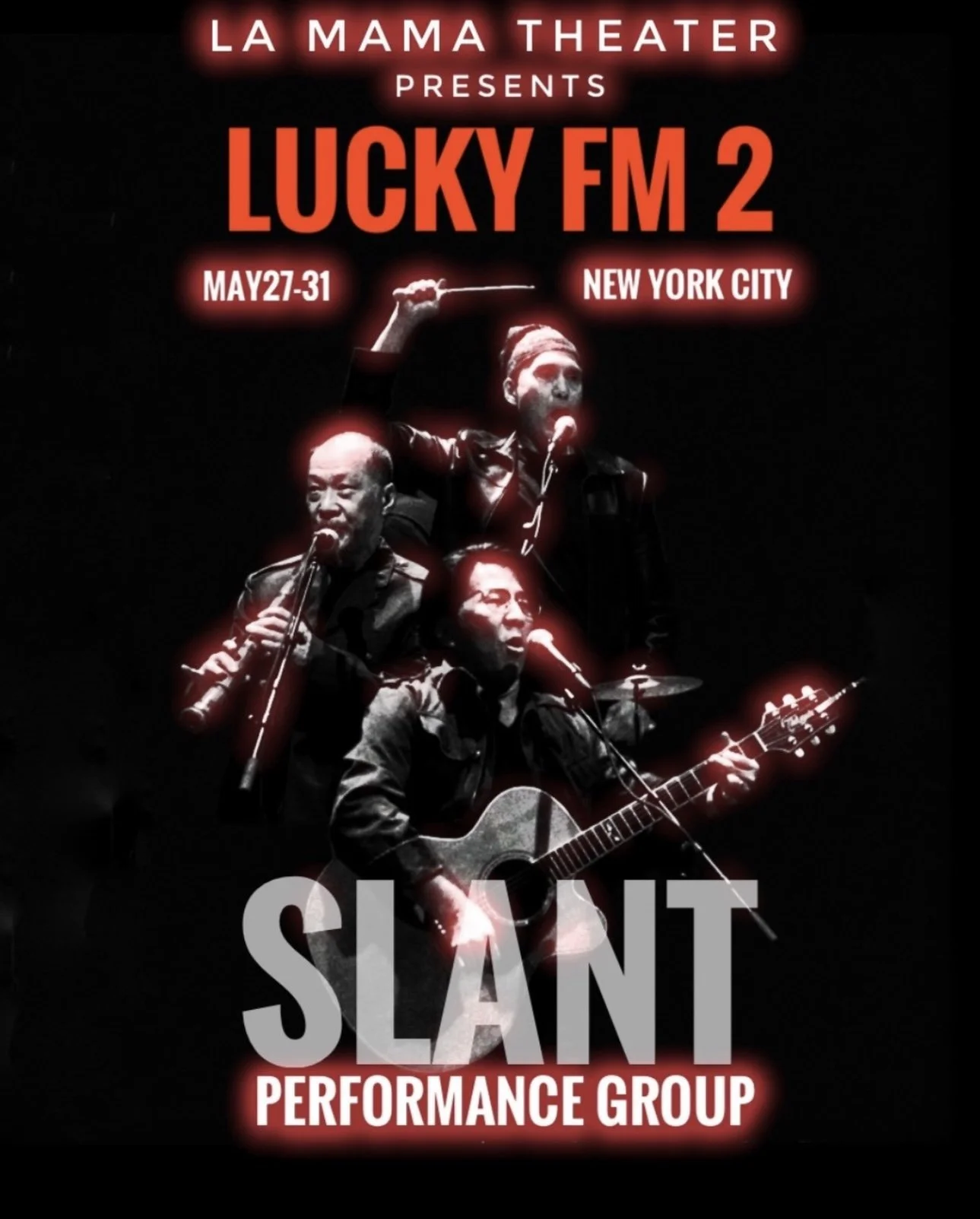
Slant Shares AAPI Histories Through Music at La Mama
Slant returns to The Club to dig deeper and wider into the liminal space between past and present with Lucky FM 2.
Lucky FM 2
Wednesday, May 27 at 7:30 p.m. SOLD OUT
Thursday, May 28 at 7:30 p.m.
Friday, May 29 at 7:30 p.m.*
Saturday, May 30 at 6:00 p.m.
Sunday, May 31 at 3:00 p.m.
The Club @ La Mama Experimental Theatre Club – 74A E. 4th Street (between 2nd Avenue and Bowery)
Admission: $30 Adults | $25 Students/Seniors | $10 La MaMa Members
Slant returns to The Club to dig deeper and wider into the liminal space between past and present with Lucky FM 2. Through the underground radio’s telethon portal, Slant journeys through AANHPI histories with bamboo flutes, drums, and guitars, telling stories of the Japanese American concentration camps, the International Hotel, Vincent Chin, and today. Performed viscerally through music, dance, and humor, Slant finds unity amidst chaos in a celebration of community.
All seating is general admission.
Tonight’s performance is sold out, but there are four more dates from which to choose! To purchase tickets, please visit La Mama’s website.
*Friday’s performance is also available online. Livestream tickets are $15-$45, and you can purchase them by clicking here.
About Slant
Slant is the trio ensemble of Rick Ebihara, Wayland Quintero, and Perry Yung. In 1995, Slant premiered Big Dicks, Asian Men to counter Hollywood stereotypes by deconstructing race-baiting toxic masculinity through music, humor, and dance. The production received rave critical reviews and led to touring across America and international appearances in the former Yugoslavia and Lijiang, China. This was followed by other works throughout the 2000s that featured farcical themes punctuated by outlandish and poignant moments that audiences flocked to see at La MaMa and across the U.S.
Enjoying JapanCulture•NYC? This site is supported by our community, and a $5/month membership helps offset the costs of keeping it running so we can continue spotlighting the people and events that make our community shine. Please click here to join.
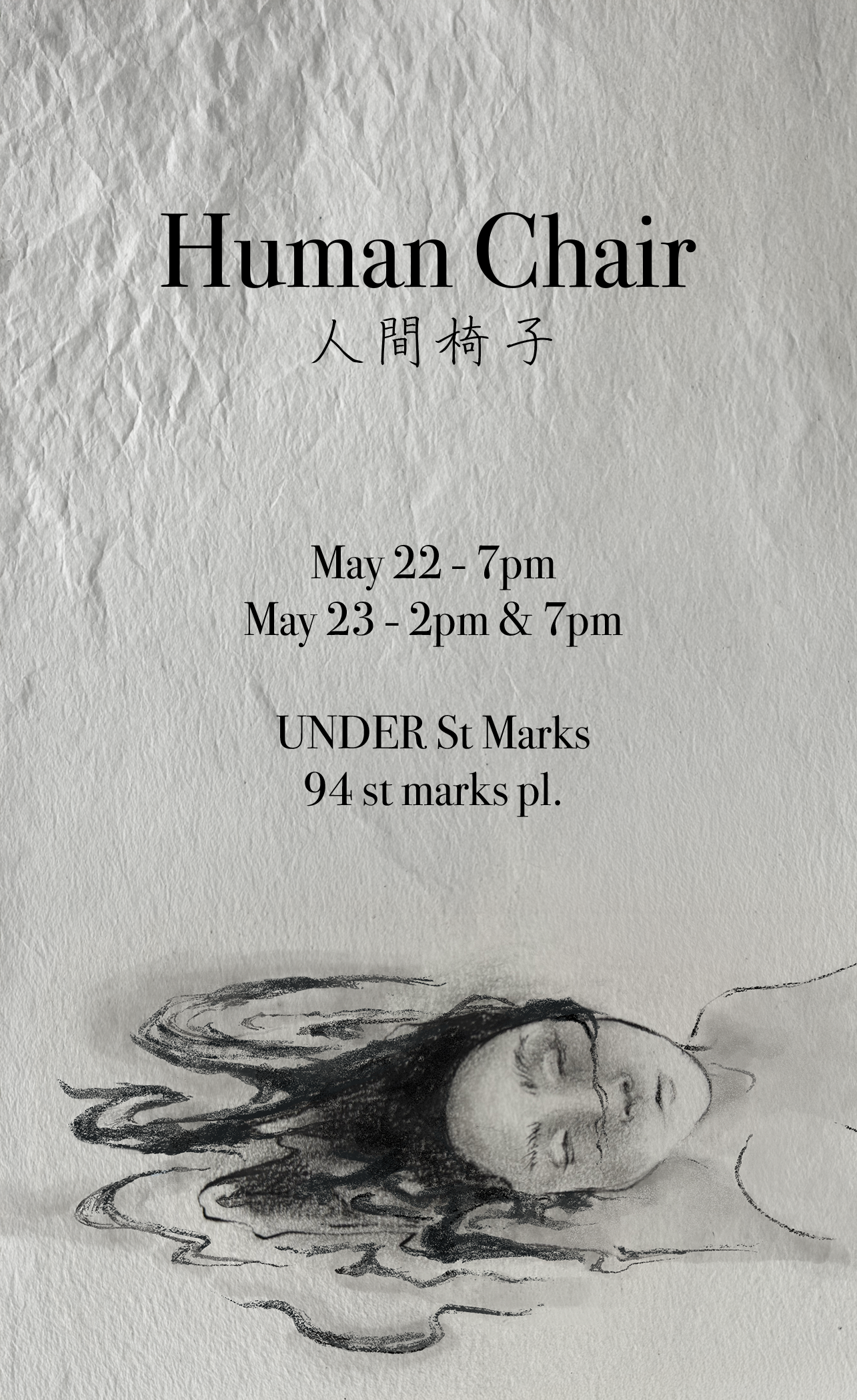
Adaptation of Edogawa Rampo’s HUMAN CHAIR
What does it mean to be utterly consumed by longing for another?
HUMAN CHAIR
Friday, May 22 at 7:00 p.m.
Saturday, May 23 at 2:00 p.m. and 7:00 p.m.
UNDER St. Marks – 94 St. Marks Place (between 1st Avenue and Avenue A)
Admission: $20 (plus $2.50 fee)
Illustration by @zoroze.art
What does it mean to be utterly consumed by longing for another? In this unsettling dance-theatre work, performed by Yusuke Mori and Zo Roze, a craftsman's obsession takes a form both intimate and grotesque: He sews himself inside the furniture of the woman he desires.
Adapted from the classic story by Edogawa Rampo, Japan's master of the macabre whose pen name is itself a winking tribute to his idol Edgar Allan Poe, HUMAN CHAIR transforms the story's dark, suffocating premise into something visceral and physical.
Performed in Japanese with English subtitles. Runtime is 80 minutes. For more information and to purchase tickets, please visit Frigid New York’s website.
Enjoying JapanCulture•NYC? This site is supported by our community, and a $5/month membership helps offset the costs of keeping it running so we can continue spotlighting the people and events that make our community shine. Please click here to join.
Japan Village’s annual Summer Festival is a free Japanese event that brings together nearly 8,000 attendees for a day of food, games, and cultural performances.