
Celebrate Ainu Culture in NYC
Celebrate Ainu culture with presentations, demonstrations, workshops, and film screenings at Japan Society
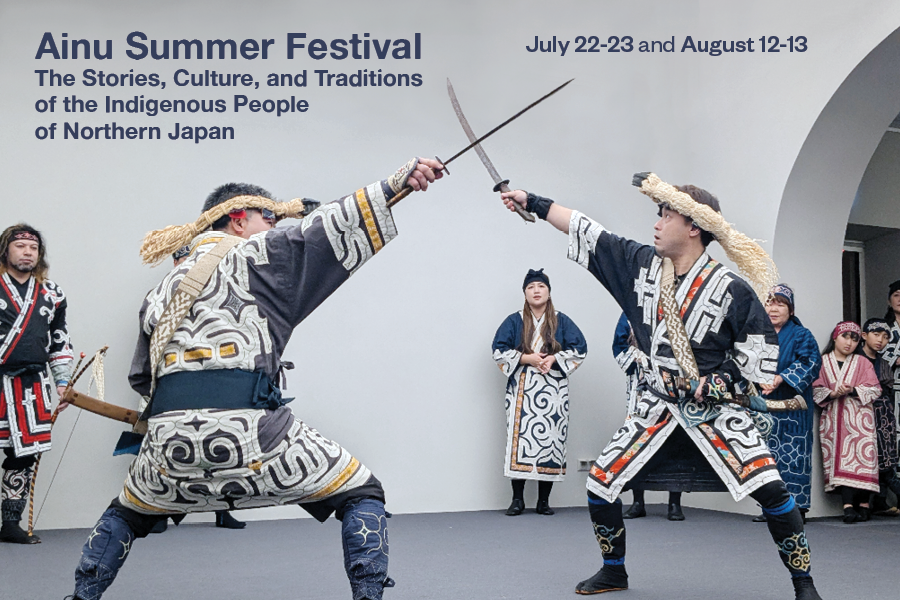
Ainu Summer Festival: The Stories, Culture, and Traditions of the Indigenous People of Northern Japan
Wednesday, July 22 and Thursday, July 23
Wednesday, August 12 and Thursday, August 13
Japan Society – 333 E. 47th Street (between 1st and 2nd Avenues)
For the first time, Japan Society is bringing more than 25 Ainu performers, artisans, and educators to the United States. Years in the making, this exciting series of events is a collaboration between Japan Society and the town of Biratori in Hokkaido. The events are co-programmed by filmmaker Naomi Mizoguchi, director of the film Ainu: Indigenous People of Japan.
The Ainu have a long history of persecution and erasure in their homeland, but their culture is now being revived with a renewed interest in their traditional art forms and cuisine.
Presentations and Demonstrations
Sinot: The Dances of the Sar River
Wednesday, July 22 and Wednesday, August 12 at 7:00 p.m.
Discover the cultural significance of traditional Ainu dance and its strong connection with nature. Followed by a reception.
Ipe: The Culinary Heritage of the Ainu
Thursday, July 23 at 7:00 p.m.
Learn about the sustainable food culture of Hokkaido, featuring an on-stage cooking demonstration and a tasting of select Ainu foods.
Ikarkar & Itak: Ainu Embroidery and Language
Thursday, August 13 at 7:00 p.m.
Explore the history of Ainu fabric art and learn about the projects currently underway to preserve their critically endangered language.
Workshops
Inuye=an ro!: Woodcarving Workshop
Thursday, July 23 at 4:00 p.m.
Learn intricate Ainu carving techniques from the Nibutani Craft Cooperative Association and take home your own creation.
Ikarkar=an ro!: Embroidery Workshop
Wednesday, August 12 at 4:00 p.m.
Discover specific appliqué stitching designs passed down through generations and take home your own embroidery.
Itak=an ro!: Language Workshop
Wednesday, August 12 at 5:30 p.m.
Take part in an introductory class to help preserve the critically endangered Ainu language.
Sinot=an ro!: Ainu Dance Workshop
Thursday, August 13 at 4:00 p.m.
Join a rare, interactive session to learn the basics of Ainu dance directly from Biratori performers.
Screenings
Ainu: Indigenous People of Japan
Wednesday, July 22 at 5:30 p.m. SOLD OUT
Thursday, July 23 at 5:30 p.m.
Thursday, August 13 at 5:30 p.m.
Filmmaker Naomi Mizoguchi started visiting Biratori in 2008 and felt a great urgency to record the Ainu’s history, language, and culture on film. In this work, four Ainu elders tell their stories in one of the only films that present modern-day Ainu life. Followed by a Q&A with Mizoguchi.
Ticketing
Presentations, demonstrations, and workshops are $20 for the public, $17 for students and seniors, and $15 for Japan Society members.
A Series Pass with access to all presentations is $60 for the public, $50 for students and seniors, and $45 for Japan Society members. Workshops are not included in the Series Pass and must be purchased separately.
For more information and to purchase tickets, please visit Japan Society’s website. To purchase tickets for individual events, please click the specific event’s thumbnail.
JapanCulture•NYC followers can use discount code ARTSAINU50 for a 50% discount upon checkout for any of the main auditorium events:
Sinot: The Dances of the Sar River
Ipe: The Culinary Heritage of the Ainu
Ikarkar & Itak: Ainu Embroidery and Language
Please note: Workshops are not included in the discount.
Tickets for all Ainu: Indigenous People of Japan screenings are free with RSVP.
About the Ainu
The Ainu are an indigenous people who have lived in the northern part of the Japanese archipelago, particularly Hokkaido, for centuries. They have inherited their own unique culture, including the Ainu language, which is different from Japanese. In 1869, Japan incorporated the Island of Hokkaido into its territory and integrated the Ainu into Japanese culture. As a result, various Ainu traditions, customs, names, language, and history were lost as part of this assimilation in the early Meiji era.
In 2019, the Japanese Diet passed a law to recognize the Ainu as an Indigenous People with their own unique language, religion, and culture. Currently, efforts are underway to revitalize the Ainu culture and language, which UNESCO has designated as a critically endangered language. Key to this movement is the small village of Nibutani, part of the Town of Biratori. Nibutani is home to the highest percentage of Ainu residents in Japan, and it was home to Shigeru Kayano (1926-2006), a leader who worked to keep Ainu culture alive and the first Ainu politician to sit in the Diet of Japan.
Enjoying JapanCulture•NYC? This site is supported by our community, and a $5/month membership helps offset the costs of keeping it running so we can continue spotlighting the people and events that make our community shine. Please click here to join.
Midori Kashiwagi Free Dance Performance
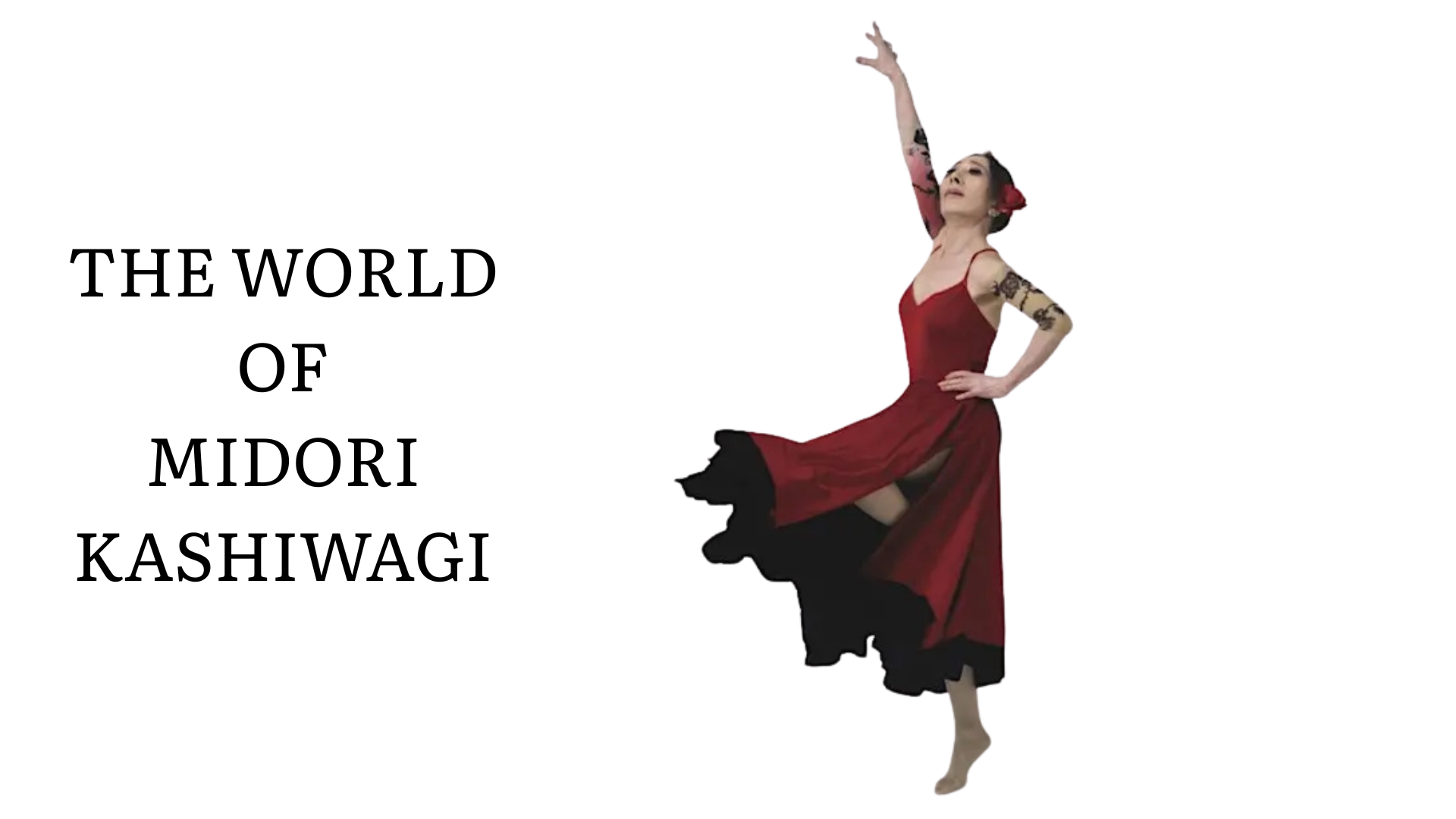
Watch Japanese dancer Midori Kashiwagi light up the stage with her amazing moves!
The World of Midori Kashiwagi
Wednesday, June 3, 2026 from 7:30 p.m. until 9:00 p.m. (Doors open at 7:00 p.m.)
L'Alliance New York Florence Gould Theater – 55 E. 59th Street (between Madison and Park Avenues)
Admission: Free
Watch Japanese dancer Midori Kashiwagi light up the stage with her amazing moves!
This in-person event promises a unique blend of passion and energy that you don’t want to miss. Feel the rhythm and experience the magic up close.
The concert is free, but reservations are required. To reserve your seat, please visit Mar Creation’s Eventbrite page.
Program
My Heart Still Belongs To You | 時が過ぎても
Carmen, the Femme Fatale | 魔性の女 カルメン
Production
Concept / Direction / Choreography: Midori Kashiwagi
Support Dancers: Emanuele Fiore, Scott Weber, Eiki Asai
Lighting: Michiko Mochizuki
Stage Manager: Michiho Shimasaki
Music: Keith Rubinstein
Costumes: Satomi Motoyanagi, Yoichi Iwato
Photography: Naoya Ikegami
Production: Mar Creation – Hiroshi Kono
About Midori Kashiwagi
Midori Kashiwagi began studying traditional Japanese dance at the age of six and became a certified Natori (master-level performer) of the Kashiwagi School at fifteen. After working as a commercial talent, Kashiwagi made her debut as an actress with Shochiku and later appeared in television dramas as a freelance performer.
She moved to New York for three years to further her dance studies, training in jazz dance under renowned teachers, including Fred Benjamin. After returning to Japan, she founded her own jazz dance studio.
Drawing upon her experience as an actress, Kashiwagi creates a distinctive artistic word that blends jazz dance, modern dance, and traditional Japanese dance in innovative and expressive productions.
Her five performances in New York received critical acclaim and were featured in The New York Times, The Village Voice, New York Yomiuri, NY Seikatsu, and Yomi Time. A documentary of her third performance, a collaboration with Madonna’s backup dancers, was co-produced by Shizuoka Daiichi Television and New York Marcom and was broadcast nationwide in Japan. In April 2024, she performed at Japan Society in New York
Kashiwagi presents an original production annually and continues to pursue ambitious creative collaborations, including performances with Hidetake Togi, puppet artist Hori Hiroshi, and composer Takashi Niigaki. To learn more, please visit her website.
Enjoying JapanCulture•NYC? This site is supported by our community, and a $5/month membership helps offset the costs of keeping it running so we can continue spotlighting the people and events that make our community shine. Please click here to join.

Slant Shares AAPI Histories Through Music at La Mama
Slant returns to The Club to dig deeper and wider into the liminal space between past and present with Lucky FM 2.
Lucky FM 2
Wednesday, May 27 at 7:30 p.m. SOLD OUT
Thursday, May 28 at 7:30 p.m.
Friday, May 29 at 7:30 p.m.*
Saturday, May 30 at 6:00 p.m.
Sunday, May 31 at 3:00 p.m.
The Club @ La Mama Experimental Theatre Club – 74A E. 4th Street (between 2nd Avenue and Bowery)
Admission: $30 Adults | $25 Students/Seniors | $10 La MaMa Members
Slant returns to The Club to dig deeper and wider into the liminal space between past and present with Lucky FM 2. Through the underground radio’s telethon portal, Slant journeys through AANHPI histories with bamboo flutes, drums, and guitars, telling stories of the Japanese American concentration camps, the International Hotel, Vincent Chin, and today. Performed viscerally through music, dance, and humor, Slant finds unity amidst chaos in a celebration of community.
All seating is general admission.
Tonight’s performance is sold out, but there are four more dates from which to choose! To purchase tickets, please visit La Mama’s website.
*Friday’s performance is also available online. Livestream tickets are $15-$45, and you can purchase them by clicking here.
About Slant
Slant is the trio ensemble of Rick Ebihara, Wayland Quintero, and Perry Yung. In 1995, Slant premiered Big Dicks, Asian Men to counter Hollywood stereotypes by deconstructing race-baiting toxic masculinity through music, humor, and dance. The production received rave critical reviews and led to touring across America and international appearances in the former Yugoslavia and Lijiang, China. This was followed by other works throughout the 2000s that featured farcical themes punctuated by outlandish and poignant moments that audiences flocked to see at La MaMa and across the U.S.
Enjoying JapanCulture•NYC? This site is supported by our community, and a $5/month membership helps offset the costs of keeping it running so we can continue spotlighting the people and events that make our community shine. Please click here to join.
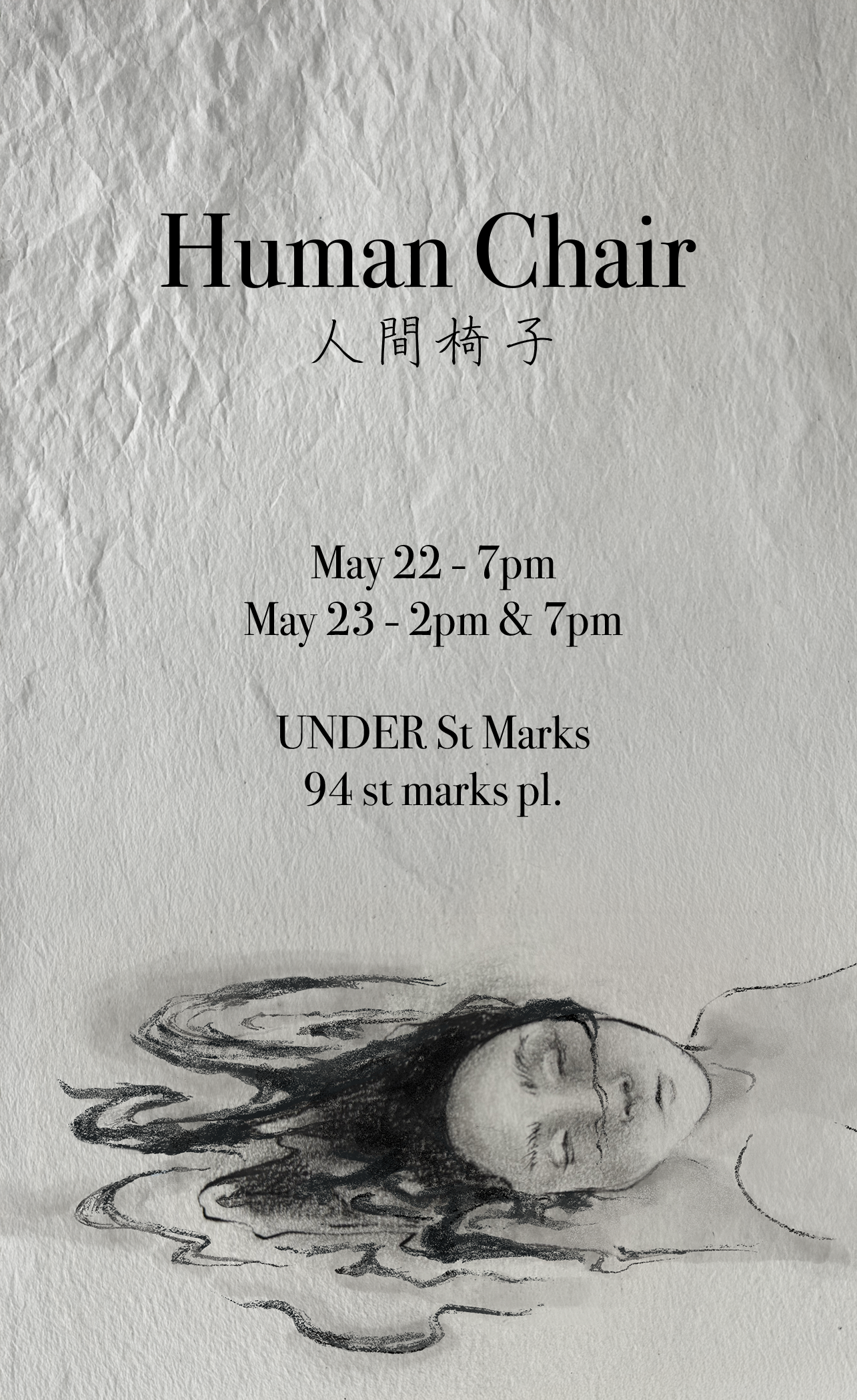
Adaptation of Edogawa Rampo’s HUMAN CHAIR
What does it mean to be utterly consumed by longing for another?
HUMAN CHAIR
Friday, May 22 at 7:00 p.m.
Saturday, May 23 at 2:00 p.m. and 7:00 p.m.
UNDER St. Marks – 94 St. Marks Place (between 1st Avenue and Avenue A)
Admission: $20 (plus $2.50 fee)
Illustration by @zoroze.art
What does it mean to be utterly consumed by longing for another? In this unsettling dance-theatre work, performed by Yusuke Mori and Zo Roze, a craftsman's obsession takes a form both intimate and grotesque: He sews himself inside the furniture of the woman he desires.
Adapted from the classic story by Edogawa Rampo, Japan's master of the macabre whose pen name is itself a winking tribute to his idol Edgar Allan Poe, HUMAN CHAIR transforms the story's dark, suffocating premise into something visceral and physical.
Performed in Japanese with English subtitles. Runtime is 80 minutes. For more information and to purchase tickets, please visit Frigid New York’s website.
Enjoying JapanCulture•NYC? This site is supported by our community, and a $5/month membership helps offset the costs of keeping it running so we can continue spotlighting the people and events that make our community shine. Please click here to join.

RAM & Tokyo to New York at Martha Graham Studio
Random Access Music and Tokyo to New York bring movement and sound together in a two-night event at the Martha Graham Studio Theater.
RAM & Tokyo to New York: Music & Dance
Friday, November 14, 2025 at 8:00 p.m.
Saturday, November 15, 2025 at 8:00 p.m.
Martha Graham Studio Theater – 55 Bethune Street
Tickets: $25 Adults | $10 Students
Random Access Music and Tokyo to New York bring movement and sound together in a two-night event at the Martha Graham Studio Theater.
This program celebrates the exchange between music and dance, featuring acclaimed dancer and choreographer Henning Rübsam in dynamic new collaborations with the composers and performers of RAM. The concert presents three world premieres commissioned by Random Access Music and Thomas Piercy—new works by Beata Moon, Frances White, and Andrea Casarrubios—together with recent compositions by Masatora Goya and Roger Stubblefield.
To purchase tickets, please visit simpletix.com. Cash and credit cards will be accepted at the door.
Featuring
Henning Rübsam – Dancer/choreographer
Hélène Taddei Lawson – Dancer/choreographer
Violetta Klimczewska – Dancer
Musicians
Lish Lindsey – Flutes
Thomas Piercy – Clarinet / hichiriki
Sabina Torosjan – Violin
Molly Aronson – Cello
Marina Iwao – Piano
Music by RAM Composers
Beata Moon
Masatora Goya
Allen Schulz
Frances White
Guest Composers
Andrea Casarrubios
Roger Stubblefield
"Fifteen Minutes of Fame" Composers
As part of the “Fifteen Minutes of Fame” project, audiences will also hear the premieres of 15 one-minute duos for hichiriki and low flutes.
Nantenaina Andriamorasata
Vahan Luder Artinian
David Bohn
Ross James Carey
Monica Chew
Philip Czapłowski
Douglas DaSilva
Paolo Geminiani
Simon Hutchinson
Sakiko Kosaka
Matt A. Mason
Gene Pritsker
Allen Schulz
Jane Wang
Dalen Wuest
Support JapanCulture•NYC by becoming a member! For $5 a month, you’ll help maintain the high quality of our site while we continue to showcase and promote the activities of our vibrant community. Please click here to begin your membership today!
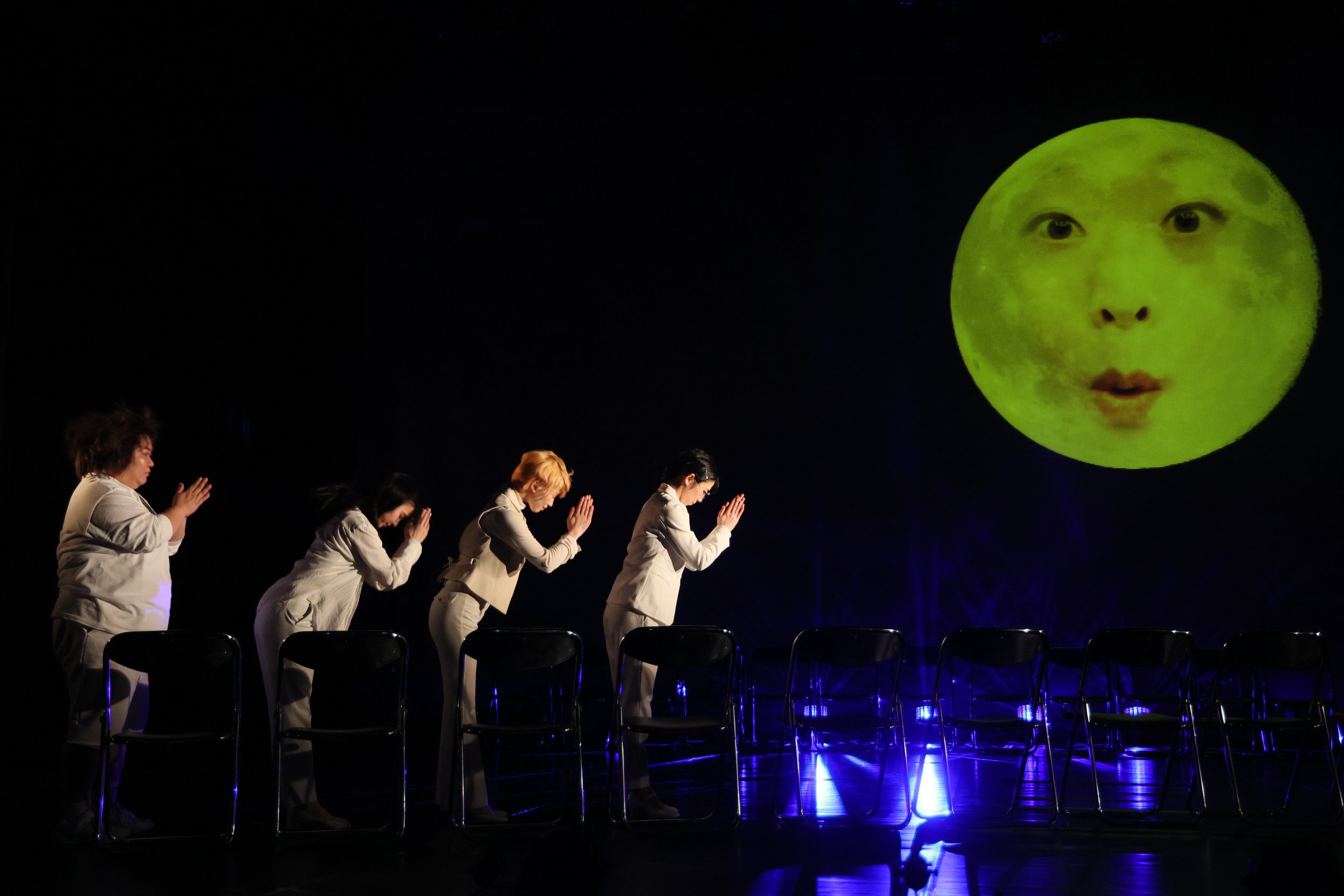
Japan Society Presents Dance Production Based on Mishima
Japan Society’s Fall 2025 Yukio Mishima Centennial Series: Emergences continues with the world premiere dance production of The Seven Bridges (Hashi-zukushi). A vibrant new work for all ages from the Tokyo-based dance company CHAiroiPLIN with choreography by company founder Takuro Suzuki is based on a lesser-known short story of the same title by Yukio Mishima.
The Seven Bridges
Saturday, November 15 at 7:30 p.m.
Sunday, November 16 at 2:30 p.m. — Followed by an Artist Q&A
Japan Society – 333 E. 47th Street (between 1st and 2nd Avenues)
Admission: $48 | $36 Japan Society members
Japan Society’s Fall 2025 Yukio Mishima Centennial Series: Emergences continues with the world premiere dance production of The Seven Bridges (Hashi-zukushi). A vibrant new work for all ages from the Tokyo-based dance company CHAiroiPLIN with choreography by company founder Takuro Suzuki is based on a lesser-known short story of the same title by Yukio Mishima.
The Seven Bridges. © Photo by HARU
About The Seven Bridges
CHAiroiPLIN (a tongue-in-cheek amalgamation of Charlie Chaplin’s name and the Japanese word chairoi, meaning “brown”) is acclaimed for converting great authors’ novels into disarmingly enchanting yet satirical performances, appropriate for all ages, told almost entirely through movement. In this work, founder and choreographer Takuro Suzuki and company take on Yukio Mishima’s suspenseful and humorous short story. Following a fanciful superstition that crossing seven bridges without conversing with anyone on a full moon night will make their wishes come true, four women occupying different positions of wealth and societal status set out on a journey under the watchful gaze of the Moon. As distractions and mishaps befall the women, their race to the end of the seventh bridge becomes increasingly fraught—who, if anyone, will be able to make it to the end, and for what kind of wish? With spirited, arresting and slapstick movement set to an impressive range of high-energy music encompassing Daft Punk, Balkan brass band Fanfare Ciocărlia, eccentric original songs performed live, and more, Suzuki and CHAiroiPLIN infuse unbridled charm into Mishima’s compact reflection on ritual and desire.
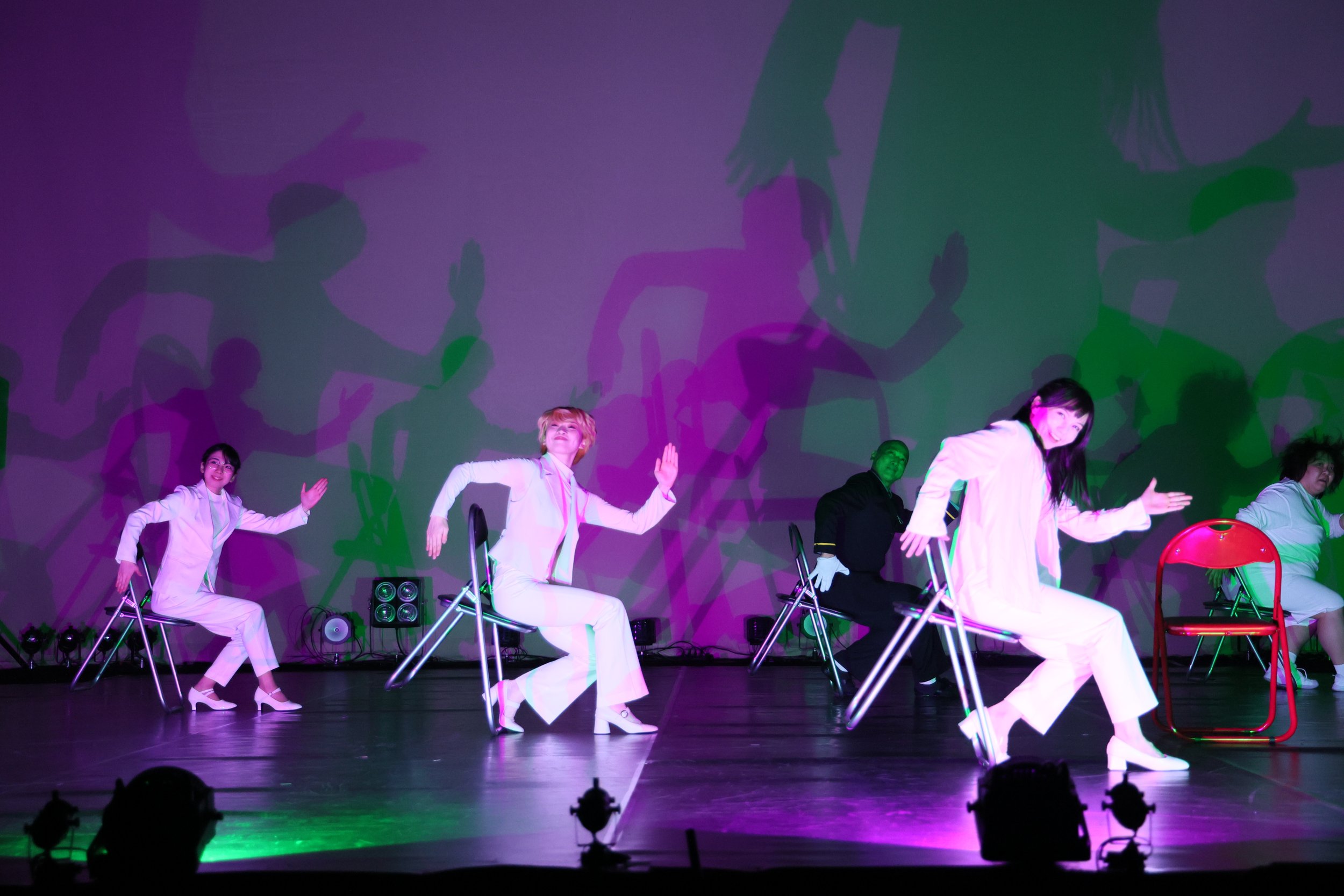
The Seven Bridges. © Photo by HARU
Yukio Mishima’s short story “The Seven Bridges” was originally published in Japan in 1956. Two years later, Mishima himself developed this story into a dance drama. While CHAiroiPLIN’s entirely original work reflects their own signature gleefully absurdist style, the company has deliberately adapted a narrative which Mishima himself envisioned as uniquely appropriate for the dance stage.
This program is presented by Japan Society as part of Carnegie Hall’s Spotlight on Japan. Recommended for ages 7+. Performance runs approximately 55 minutes. To purchase tickets, please visit Japan Society’s website. Ticketholders will also receive complimentary, same-day admission for one person to Chiharu Shiota: Two Home Countries, on view at Japan Society Gallery through January 11, 2026. To view the exhibition, please show ticket/receipt to the Welcome Desk for free admission before the performance.
About CHAiroiPLIN
CHAiroiPLIN is a Tokyo-based dance company founded by the dancer/choreographer Takuro Suzuki. Made up of a combination of theater performers and dancers, the company incorporates an expressive variety of forms fusing dance, dialogue, singing, onomatopoeia, and other creative elements. They aim to create highly entertaining and narrative-driven dance performances that can be enjoyed by audiences of all ages.
Since its establishment in 2007, CHAiroiPLIN has received numerous awards for its ongoing “Dancing Literature” series, which adapts modern and classical Japanese literature and plays ranging from novels to manga, rakugo (traditional comedic storytelling) and folktales, utilizing idiosyncratic and stylized body movements and expert choreography. Some notable productions include Fantasy Stone (based on Shigeru Mizuki’s manga), which was awarded the Audience Prize in the 1st Sengawa Drama Contest; Market, a winner of the NEXTREAM21 Dance Festival All Genre Dance Contest; and Friends (based on an absurdist play by the acclaimed Japanese dramatist Kobo Abe), a winner of the Grand Prize at the Young Directors Competition.

Takuro Suzuki © Courtesy of CHAiroiPLIN
About Takuro Suzuki
Takuro Suzuki was born in Niigata Prefecture in 1985. He studied theater, pantomime, and dance at Toho Gakuen College of Drama and Music, led by world-renowned Japanese director Yukio Ninagawa. After graduating, he continued to present public performances that spotlight new possibilities of combining dance and theater. He aims to create works incorporating a variety of dance, dialogues, singing, and Japanese onomatopoeia that can be enjoyed by children and adults alike.
Suzuki founded the dance company CHAiroiPLIN in 2007 and has been a primary member of the dance company CONDORS since 2011. He choreographs and has appeared in NHK’s hugely popular weekly children’s program Miitsuketa! (“Found it!”) and created choreography for the television programs Touken Ranbu and Bungo Stray Dogs. He is the recipient of numerous awards, including the New Artist Award from the Agency for Cultural Affairs Arts Festival, the Yokohama Dance Collection EX Honorable Mention and was a finalist for the Toyota Choreography Award. In 2015, he was selected as the 2015 Ambassador of Cultural Exchange in East Asia, and he received the New Artist Award in the Dance Division from the Minister of Education, Culture, Sports, Science, and Technology in 2024.
About Yukio Mishima
Born Kimitake Hiraoka, Yukio Mishima (1925-1970) was a Japanese author, poet, playwright, actor, model, Shintoist, ultra-nationalist, and leader of an attempted coup d'état that culminated in his suicide. Mishima is considered one of the most important postwar stylists of the Japanese language. He was nominated for the Nobel Prize in Literature five times in the 1960s. His works include the novels Confessions of a Mask, Life for Sale, and The Sailor Who Fell from Grace with the Sea as well as the plays My Friend Hitler, The Lady Aoi, and Madame de Sade.
To celebrate the 100th anniversary of Mishima’s birth, Japan Society has hosted a compelling roster of new productions and U.S. company premieres throughout the fall. More than half a century since Mishima’s last published work, he continues to inspire artists in the 21st century. Japan Society Artistic Director Yoko Shioya remarks, “This series revitalizes Mishima’s contributions to the world of the arts through a slate of brand-new commissions and premieres adapting his writings, as well as a historic U.S. debut for a revered Noh company. This series not only recognizes Mishima’s critical legacy, but the ongoing current influence of this essential post-war author on artists today.”
The Series launched in September with Yukio Mishima’s KINKAKUJI, a Japan Society world premiere commission adapted for the stage by Leon Ingulsrud and Major Curda from Mishima’s novel Kinkakuji (The Temple of the Golden Pavilion) with scenic design by internationally acclaimed visual artist Chiharu Shiota. The series continued in October with Le Tambour de Soie (The Silk Drum), co-created by Yoshi Oida and Kaori Ito, both headlining artists in France’s performing arts’ scene. This work mixes contemporary dance with exquisite movement adapted from Noh into a dark and seductive piece of dance-theater, based on Mishima’s adaptation on the traditional Japanese Noh classic Aya no Tsuzumi.
Following the world premiere of The Seven Bridges (Hashi-zukushi), the Series culminates with Mishima’s Muse – Noh Theater on December 4 through 6, featuring the momentous U.S. debut of the distinguished Hosho Noh School performing a set of plays which Mishima later adapted, including Aya no Tsuzumi, Aoi no Ue, and the original kyogen (comedic) play Busu, adapted by Mishima into a modern English comedy.
Support JapanCulture•NYC by becoming a member! For $5 a month, you’ll help maintain the high quality of our site while we continue to showcase and promote the activities of our vibrant community. Please click here to begin your membership today!
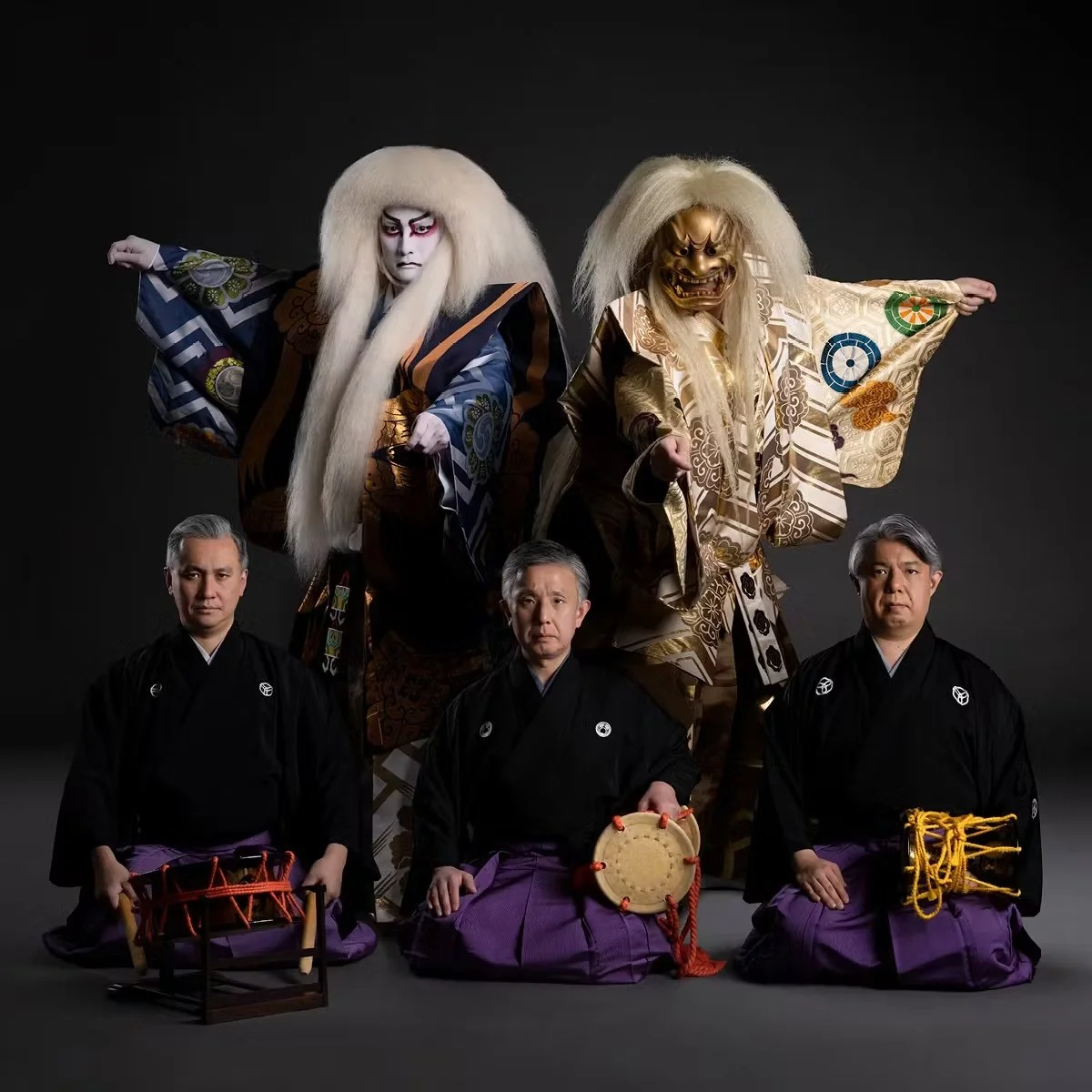
Kabuki, Noh, and More at Carnegie Hall
Discover the heritage and evolution of Noh and Kabuki theater, taiko drumming, the three-stringed shamisen, and more led by today’s foremost actors, musicians, and representatives of art forms that have been handed down and passionately studied for centuries.
An Evening of Traditional Japanese Arts
Friday, November 14 at 8:00 p.m.
Carnegie Hall | Stern Auditorium/Perelman Stage – 57th Street and 7th Avenue
Admission: $86.50 - $226
Carnegie Hall will be the site of a very special performance: An Evening of Traditional Japaense Arts. Discover the heritage and evolution of Noh and Kabuki theater, taiko drumming, the three-stringed shamisen, and more led by today’s foremost actors, musicians, and representatives of art forms that have been handed down and passionately studied for centuries.
Performers
Hirotada Kamei – Noh Musician
Denzaemon Tanaka – Kabuki Musician
Denjiro Tanaka – Kabuki Musician
Yoshimasa Kanze – Noh Actor
Takanobu Sakaguchi – Noh Actor
Saburota Kanze – Noh Actor
Hayato Nakamura – Kabuki Actor
Hiromitsu Agatsuma – Shamisen
Kouki Agatsuma – Shamisen
Masaru Tsuji – Wadaiko
Ryotaro Leo Ikenaga – Wadaiko
Suguha Otani – Japanese Dance
Yumi Kurosawa – Koto
Takuya Iwata – Shakuhachi
Yuichi Otsuki – Noh Actor
Manabu Takeichi – Noh Musician
Wakichi Kineya – Nagauta Singer
Chotatsuro Imafuji – Nagauta Shamisen
Gotaro Kineya – Nagauta Musician
Katsueiji Kineya – Nagauta Musician
Katsukuniharu Kineya – Nagauta Musician
Tatsujuro Imafuji – Nagauta Musician
Kan Fukuhara – Shinobue
The performance will last approximately two and a half hours with one 20-minute intermission. To purchase tickets, please visit Carnegie Hall’s website.
An Evening of Traditional Japanese Arts by Kosuke Yoshino
Sankyokai
Sankyokai (“Three Resonances”) is an ensemble dedicated to exploring new artistic possibilities through the sound of hayashi—the traditional musical accompaniment of Noh and Kabuki—by fusing the resonances of Japan’s two foremost traditional performing arts. Since its founding in 1997, the group has carried forward the spirit of classical performance while continuing to create sounds that transcend time.
The members are three brothers: Hirotada Kamei, head of the Kadono School of Noh Otsuzumi (large hand drum); Denzaemon Tanaka XIII, head of the Tanaka School of Kabuki music; and Denjiro Tanaka VII, also a Kabuki musician of the Tanaka School.
Their father, Tadao Kamei, was a Living National Treasure in Japan and head of the Kadono School of Noh drumming who performed at Carnegie Hall in 2016; their mother, Sataro Tanaka IX, was the head of the Tanaka School of Kabuki music. Born to parents who represented these two distinct classical traditions, the brothers literally embody the meeting point of Noh and Kabuki.
From early childhood, they grew up exploring boundaries seamlessly between the two worlds—Noh, with its 600-year-old spiritual rigor; and Kabuki, born 200 years later with its vivid theatricality. As they matured, each pursued his own professional path: the eldest, Hirotada, in Noh; the middle brother, Denzaemon, and the youngest, Denjiro, in Kabuki. Yet through years of training, they began to sense a shared desire: to discover a form of expression that could transition between these traditions without breaking their structure or form.
Out of this belief, Sankyokai was born. Three Resonances reflects both the trio’s instruments—Hirotada’s Otsuzumi, Denzaemon’s Kotsuzumi, and Denjiro’s Taiko—and their wish to create a unified resonance born from their individual spirits. From its inception, Sankyokai has sought to present the timeless allure of classical performance in a contemporary context, finding new vitality in the dialogue and contrast between Noh and Kabuki. Today, the three brothers continue their journey as performers, creators, and stewards of Japan’s classical heritage, carrying it forward into the future.
Glossary of Terms
If you are new to traditional Japanese arts, you may not be familiar with the terms in this post. Please refer to the brief primer below to get you up to speed.
Kabuki: Classical Japanese theater that combines singing, acting, and dramatic poses and is known for elaborate costumes and makeup. Although men have performed all the roles since the mid-17th century, kabuki was established by a woman, Izumo no Okuni, around the year 1603. In 2008, UNESCO inscribed kabuki in the Representative List of the Intangible Cultural Heritage of Humanity.
Noh: Japan’s oldest major theatrical art form, which has been performed since the 14th century. Based on literary tales, noh’s themes revolve around regret and spiritual transformation. Actors use masks to emphasize emotion and props such as folding fans to enhance the story.
Shamisen: Three-stringed, banjo-like instrument with a long neck and a distinct twangy sound. As one of the instruments providing accompaniment for kabuki, the shamisen enhances dramatic scenes and sets the mood. Originating in China, the Ryukyu Kingdom (what is now Okinawa Prefecture) introduced the instrument to mainland Japan in the mid-16th century.
Wadaiko: The traditional art of Japanese drumming, encompassing drums of a variety of sizes played by a group. Accompanying both kabuki and noh, wadaiko provides rhythm and sound effects and helps to create dramatic tension.
Japanese Dance: Known as Nihon buyo, traditional Japanese dance grew out of kabuki in the 17th century. It is a style of visual storytelling that incorporates refined movements and precise gestures.
Koto: The national instrument of Japan. The koto is a zither made of Paulownia wood and typically has 13 silk strings. Originally associated with gagaku, or court music, the koto is not standard in kabuki or noh.
Shakuhachi: Vertically held Japanese bamboo flute. First introduced from China in the 8th century, the shakuhachi was a staple in gagaku (court) music and later became used in Zen Buddhist meditation.
Nagauta: Genre of traditional Japanese music that literally means “long song.” Developed around the year 1740, nagauta is performed on shamisen to accompany kabuki. It is a lyrical style of music, focused more on expression rather than storytelling.
Shinobue: Japanese transverse bamboo flute with a high-pitched sound. In addition to its important role in kabuki and noh ensembles, the shinobue is integral to Shinto rituals as well as festivals and folk music.
Support JapanCulture•NYC by becoming a member! For $5 a month, you’ll help maintain the high quality of our site while we continue to showcase and promote the activities of our vibrant community. Please click here to begin your membership today!

Dance-Theater Piece Retells Akutagawa Short Story
Led by dancers Yusuke Mori and Alaisha Sharma, Spider’s Thread is a performance based on Ryunosuke Akutagawa’s well-known short story.
Spider’s Thread
Saturday, November 8 at 2:00 p.m. and 5:00 p.m.
Sunday, November 9 at 2:00 p.m.
CAVE – 58 Grand Street, Williamsburg, Brooklyn
Suggested donation: $15-$30
Led by dancers Yusuke Mori and Alaisha Sharma, Spider’s Thread is a performance based on Ryunosuke Akutagawa’s well-known short story. It is a simple tale based on Buddhist teachings in which a convict is given a slim passageway from eternal damnation. In this dance-theater piece, the story unfolds through an interwoven tapestry of narration and movement, with violin accompaniment by Aimée Niemann.
Spider’s Thread is produced and curated by Yusuke Mori as part of the LEIMAY Constellation Series, co-presented with LEIMAY at CAVE, in Williamsburg, Brooklyn, within WEAVE. The runtime of the show is 60 minutes. To RSVP and make a donation, please visit LEIMAY’s website.
Illustration by Linda Cheng
Follow the Cast
Yusuke Mori: @yusuky88
Alaisha Sharma: @alaisharma
Aimée Niemann: @Aiméetanzt
LEIMAY Foundation: @LEIMAYfoundation
Illustration by @lindacheng1985

From left: Yusuke Mori, Alaisha Sharma, and Aimée Niemann
About LEIMAY
A nonprofit organization that serves as the collaborative artistic practice of Ximena Garnica and Shige Moriya, LEIMAY presents interdisciplinary performances and exhibitions, educational activities, and community projects.
Support JapanCulture•NYC by becoming a member! For $5 a month, you’ll help maintain the high quality of our site while we continue to showcase and promote the activities of our vibrant community. Please click here to begin your membership today!

Dance and Poetry of Japan Workshop
Sachiyo Ito and Company presents the culmination performance of her Dance and Poetry of Japan Workshop on Tuesday, June 24.
Culmination Performance of Dance and Poetry of Japan Workshop
Tuesday, June 24 from11:00 a.m. until 12:00 p.m.
University Settlement's Neighborhood Center – 189 Allen Street (between Stanton and E. Houston Streets)
Admission: Free
Sachiyo Ito and Company presents the culmination performance of her Dance and Poetry of Japan Workshop on Tuesday, June 24. Participants will present the Japanese classical dance Yanagi no Wakaba (Young Leaves of Willows) and dances inspired by haiku and renku (linking verses). Special guest vocalist Beth Griffith will join to accompany the dances.
The program highlight is Sachiyo Ito’s work created for the Chinese community, titled Hiei Oroshi (Cold Wind from Mt. Hiei). Sung by Yong Jhong Jia from the Chinese Opera Theater with the Japanese melody, the work is choreographed to selected poems from Shajin-Shu, the collection of poems by Chinese poetesses.
The presentation will conclude with dance improvisations on haiku stanzas from the audience. Audiences are invited to bring their own haiku. A reception with refreshments will follow the program.
To reserve your spot, please send an email to sachiyoitoandcompany@gmail.com. (Please note: The venue has changed from 94 E. 1st Street to the current location of 189 Allen Street.)
Photo courtesy of Sachiyo Ito and Company
About the Dance and Poetry Workshop
Sachiyo Ito has conducted the free Dance and Poetry Workshop for the last ten years at several senior centers in Manhattan. Seniors from various cultural backgrounds who share a love for and interest in Japanese culture have attended.
The culmination concert showcases an example of artists’ efforts to unite the peoples of New York, known for its diversity in culture, ethnicity, and races.

Photo courtesy of Sachiyo Ito and Company
Sachiyo Ito’s Memoir on JapanCulture-NYC.com
Sachiyo Ito has been serializing her memoir on JapanCulture•NYC, each chapter revealing a different aspect of her early life in Tokyo and career in New York City.
Ito offers of a profound exploration of the experience of dedicating herself to traditional Japanese dance at an early age, arriving in New York City during the tumultuous ‘70s, and making a successful career in the arts. Each chapter offers a glimpse into the complexities that shaped her journey. It is a literary examination of not only Ito Sensei’s life, but of how New York City’s culture evolved over the decades and what sacrifices one must make to achieve a thriving career in the arts.
The memoir is an invitation to delve into the layers of a creative life and career that has spanned more than 50 years. As a work in progress, it is also an invitation for you to offer your feedback. Your insights will contribute to the evolution of this extraordinary work.
To read all the chapters, please click here. For more information about Sachiyo Ito, please visit her website, dancejapan.com.
Support JapanCulture•NYC by becoming a member! For $5 a month, you’ll help maintain the high quality of our site while we continue to showcase and promote the activities of our vibrant community. Please click here to begin your membership today!

AAPI Dance Festival
Kanon Sugino among the AAPI dancers performing for the Asian American Arts Alliance’s two-day festival
A4 AAPI Dance Festival at APAP
Saturday, January 11 from 1:45 p.m. until 3:45 p.m.
Sunday, January 12 from 4:15 p.m. until 6:15 p.m.
The Ailey Citigroup Theatre – 405 W. 55th Street
General Admission: $25 | Two-Day Pass: $30
The Nai-Ni Chen Dance Company and Asian American Arts Alliance (A4) present two afternoons of thrilling AAPI dance, with performances from the Nai-Ni Chen Dance Company, Jadin Wong Fellow Kanon Sugino, Jadin Wong Artist of Exceptional Merit Nikaio Bulan Sahar Thomashow (they/he) and KAŌS Dance Collective, Jadin Wong Artist of Exceptional Merit Luna Beller-Tadiar, Dana Tai Soon Burgess Dance Company, and J CHEN PROJECT.
The AAPI Dance Festival at APAP is a part of the Dance Managers Collective Showcase. For more information and to purchase tickets, please visit A4’s website.
Day 1 Program
1:45 p.m. – TBD by Nikaio Bulan Sahar Thomashow (they/he) and KAŌS Dance Collective
“As the Roots Undo” centers around the idea that the longer you stay in a new place, the more you distance yourself from the version of you that existed before. The original piece is meant to be a snapshot depicting the feeling of living through each seemingly identical day, understanding the necessity of adaptation in order to survive. The dancers see that they’re not alone and find strength in collective perseverance.
2:00 p.m. – “Mirage no Wana” by Kanon Sugino
This work is an exploration of Japanese culture, heritage, language, societal norms, body image, and mental health, portraying the multidimensionality of the culture and its people. Amidst the richness and beauty of Japan is a concealed toxic and self-deprecating culture.
Dancers: Manatsu Aminaga, Kira Shiina, and Kanon Sugino
2:15 p.m. – “Leaving Pusan” by Dana Tai Soon Burgess Dance Company
“Leaving Pusan” tells the story of Dana Tai Soon Burgess’s great grandmother’s emotional and physical departure from Korea in 1903. She voyaged to Oahu, Hawai'i, on the Gaelic, the first steamship that delivered Koreans to work on the sugar cane and pineapple plantations, and worked on the Del Monte plantation her entire life.
2:45 p.m. – “AAPI HEROES” (Excerpt) by J CHEN PROJECT
“AAPI HEROES” entertains and pays homage to the vibrant legacy of Asian American history. We follow our young explorer, Kai, on a captivating journey across time to discover iconic Asian American figures such as Anna May Wong, Hollywood’s first Chinese American star, and Bruce Lee, a legend in martial arts and philosophy. It also brings to life the mythic NuWa, Goddess of Creation, and the global K-POP phenomenon.
Dancers: Chieh Hsiung, Sumire Ishige, Maya Lam, and Carl Ponce Cubero
3:15 p.m. – Nai-Ni Chen Dance Company
Experience the artistry of Nai-Ni Chen Dance Company, celebrated for its authentic and diverse programs that spotlight AAPI dance and foster cross-cultural collaboration. This dynamic performance highlights the Company’s innovative approach to blending tradition with modernity:
“Lion in the City”
A thrilling reimagining of the beloved Lion Dance, celebrating the 50th Anniversary of Hip-Hop. Nai-Ni Chen’s collaboration with Rokafella and Kwikstep unites Chinese movement with urban dance in a joyous prayer for peace.“Tiger and Water Lilies”
Grace and power converge in this BalletMet commission, blending Asian traditions with contemporary ballet as dancers portray the duality of motion versus stillness.“Carousel”
Step into a dreamlike world inspired by European carousels and equestrian elegance, filled with whimsy and vibrant characters.“Unfolding”
A poetic collaboration with Korea’s Hanulsori troupe, inspired by shared cultural heritage and the timeless principles of Yin and Yang.

Day 2 Program
4:15 p.m. – “All the Pretty Visitors” by Nikaio Bulan Sahar Thomashow and KAŌS Dance Collective
In “All the Pretty Visitors,” we question: How are we the visitors – when our souls are tied to this land? Why must we be forced into shadows and shame – when our rejoice is just as sacred? We, the Aswang, dance in celebration and defiance – dance the dances of those we’ve devoured.
4:30 p.m. – “Mercury” by Luna Beller-Tadiar
In “Mercury,” a mercurial body becomes a substrate, a platform for shifting codes of use, uncannily animated by unseen forces. Undeniably live, yet, to a modern/colonial viewer, not quite human, this figure plies the continuities between brown colonized bodies, robots, NPCs, and AI. Inspired in part by “invisibilized” Filipino service labor, in this piece social worlds erupt into the nowhere, non-space of the virtual, making sensible the ghost in the machine.
4:45 p.m. – “Leaving Pusan” by Dana Tai Soon Burgess Dance Company
5:15 p.m. – “AAPI HEROES” (Excerpt) by J CHEN PROJECT
5:45 p.m. – Nai-Ni Chen Dance Company
Support JapanCulture•NYC by becoming a member! For $5 a month, you’ll help maintain the high quality of our site while we continue to showcase and promote the activities of our vibrant community. Please click here to begin your membership today!

Covenant Ballet’s Take on Dickens
Charles’ Carol: A New Work by Marla Hirokawa
Saturday, November 16 at 7:00 p.m.
Brooklyn College Claire Tow Theater – 2920 Campus Road, Brooklyn
Admission: $55 Reserved Seating | $45 Seniors and Students (with ID, limit 4) | $35 Groups of 10 or more
Charles Dickens's most popular, most beloved tale, A Christmas Carol, tells the story of Ebenezer Scrooge's transformation from miser to philanthropist after being visited by the spirits of Christmases Past, Present, and Future. The story has inspired hundreds of portrayals in film, television, ballet, and opera. Choreographer Marla Hirokawa will add her interpretation to this list—with a twist. The new ballet Charles’ Carol puts the Christmas story in the context of Dickens's own childhood poverty that shaped his empathy for the poor and paved the way for this timeless story to be penned.
Don't miss this retelling of Charles Dickens's A Christmas Carol as never seen before!
Twenty-four students from Hirokawa’s Covenant Ballet Theatre Academy, ages ten through eighteen, will take the stage alongside professional dancers, sets, and crew. Some dancers are performing live on a proscenium stage for the very first time. Show your support for these aspiring dancers and score your tickets to Charles Carol today! To make your purchase, please click here.
Support JapanCulture•NYC by becoming a member! For $5 a month, you’ll help maintain the high quality of our site while we continue to showcase and promote the activities of our vibrant community. Please click here to begin your membership today!

SACHIYO ITO & COMPANY OFFERING FREE LESSON IN JAPANESE DANCE
Free Trial Japanese Dance Lesson with Sachiyo Ito and Company
Saturday, September 28 from Noon until 1:00 p.m.
Sachiyo Ito and Company Studio – 405 W. 23rd Street at 9th Avenue
Admission: Free
Sachiyo Ito and Company at the 2024 Japan Parade. Photo by Jon Jung.
Japanese traditional dancer, instructor, and choreographer Sachiyo Ito is opening her Chelsea studio for a free trial lesson on Saturday, September 28!
What You’ll Learn
Basic movements and gestures of Japanese dance
How to use the dance fan (fan will be provided)
Kabuki dance repertory
What To Bring
Cotton socks
Yukata and obi (if you have them)
To register, please send an email to sachiyoitoandcompany@gmail.com. The deadline to register is Thursday, September 26.
Come dressed in your yukata or allow yourself enough time to get dressed at the studio before the lesson is scheduled to begin. If you need a yukata and/or an obi, please inform Sachiyo Ito and Company when you register.
To those experienced in stage performances, you will have an opportunity to join Sachiyo Ito and Company for 2025 spring performances such as cherry blossom festivals. Learn more about Sachiyo Ito and Company at dancejapan.com.
Enjoy the beauty and grace of Japanese dance!
Support JapanCulture•NYC by becoming a member! For $5 a month, you’ll help maintain the high quality of our site while we continue to showcase and promote the activities of our vibrant community. Please click here to begin your membership today!
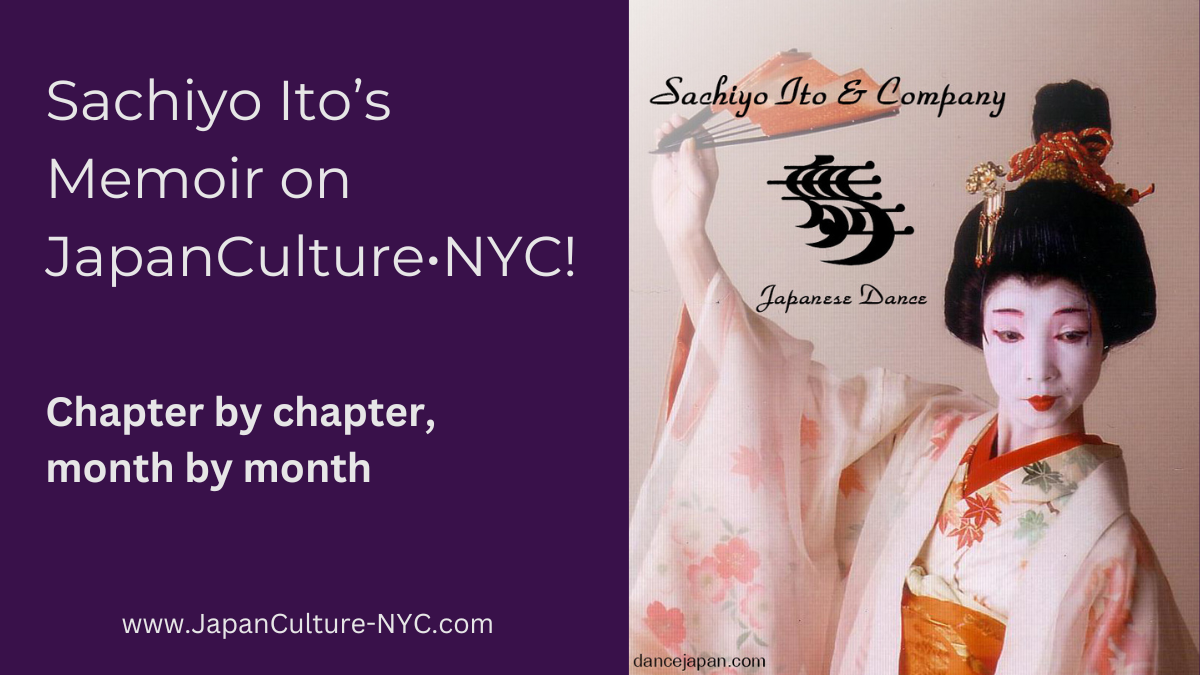
Sachiyo Ito's Memoir to Appear on JapanCulture•NYC
JapanCulture•NYC is pleased to announce that renowned dancer, dance educator, and choreographer Sachiyo Ito will serialize her memoir on this website. Beginning Thursday, January 11, we will present one chapter each month, revealing a different aspect of her early life in Tokyo and career in New York City in each installment.
Ito Sensei offers of a profound exploration of her experience of dedicating herself to traditional Japanese dance at an early age, arriving in New York City during the tumultuous ‘70s, and making a successful career in the arts. Each chapter offers a glimpse into the complexities that shaped her journey.
The memoir is an invitation to delve into the layers of a creative life and career that has spanned more than 50 years. As a work in progress, it is also an invitation for you to offer your feedback. Your insights will contribute to the evolution of this extraordinary work.
Join us on Thursday, January 11, as we begin this literary examination of not only Ito Sensei’s life, but of how New York City’s culture evolved over the decades and what sacrifices one must make to achieve a thriving career in the arts.
Support JapanCulture•NYC by becoming a member! For $5 a month, you’ll help maintain the high quality of our site while we continue to showcase and promote the activities of our vibrant community. Please click here to begin your membership today!

EXPLORE THE UNIVERSAL CONCEPTS OF CREATIONS & BEGINNINGS WITH “ONOKORO”
ONOKORO – creations/beginnings
Saturday, September 23 and Sunday, September 24 at 7:00 p.m.
Martha Graham Studio One – 55 Bethune Street (between Washington and West Streets), 11th Floor
Admission: $30 | $15 Seniors and Students
Tokyo to New York, in collaboration with Random Access Music, presents the upcoming production of ONOKORO – creations/beginnings. The show is a unique fusion of music and dance that explores the universal themes of creation and beginnings.
The one-hour, non-stop show will feature a captivating blend of contemporary compositions combining traditional Japanese instruments with Western classical instruments, performed by a stellar ensemble of musicians and dancers. The show will include modern dance, traditional Japanese Bugaku dance, a clarinet concerto with Gagaku ensemble, a hichiriki concerto with strings, and trios combining Western classical instruments with traditional Japanese instruments.
To purchase tickets, please visit Tonada Productions’s website.
Inspired by universal creation myths, ONOKORO – creations/beginnings immerses audiences in a flow of music, dance, and ritual that evokes timeless traditions through contemporary artistry. From “Ryoanji” (summoning the beginnings of sounds) to “Netori, Netori” (evoking the beginnings of organized sound and music), through to “Onokoro” (combining the Eastern and Western worlds of music and movement), modern dancer Miki Orihara, clarinetist and hichiriki player Thomas Piercy, Bugaku dancer Maki Yamamae, and their fellow performers will awaken the magic and majesty of the creations and beginnings that connect us all.
Under the artistic direction of Thomas Piercy and the choreography of Miki Orihara, ONOKORO – creations/beginnings features an exceptional lineup of composers, instrumentalists, and dancers. The program includes compositions by renowned composers John Cage, Gilbert Galindo, Masatora Goya, Bin Li, and Miho Sasaki. The performances will showcase the dance and choreography of Martha Graham protégé Orihara and Yamamae, as well as multi-instrumentalist Piercy on clarinet, hichiriki, and ohichiriki. Joining Orihara, Yamamae and Piercy are dancer Ghislaine van den Heuvel, ryuteki player Lish Lindsey, hichiriki player Joseph Jordan, sho player Harrison Hsu, koto player Masayo Ishigure, violinists Sabina Torosjan and Lara Lewison, violist Laura Thompson, cellist Daniel Hass, bassist Pablo Aslan, and pianist Marina Iwao.
ONOKORO – creations/beginnings is not only a celebration of artistic collaboration which combines the traditional with the contemporary, but it also unites diverse musical genres and dance forms to create a truly immersive experience. This event seamlessly blends and celebrates a harmonious convergence of cultures and is a testament to the diversity of musical expressions and cultures, underscoring the richness of human creativity when artistic worlds collide. It is a celebration of our shared human experience through the lens of dance and music.
Support JapanCulture•NYC by becoming a member! For $5 a month, you’ll help maintain the high quality of our site while we continue to showcase and promote the activities of our vibrant community. Please click here to begin your membership today!

THE FIRST SHOWCASE OF A.T. DANCE COMPANY
A.T. Dance Company
Sunday, September 3 at 12:30 p.m. and 4:00 p.m.
Robert Moss Theater at 440 Studios – 440 Lafayette Street, #3 (between Astor Place and E. 4th Street)
Admission: $34.12 (includes fees)
Led by artistic director Aya Takeno, A.T. Dance Company presents its first showcase. The stunning production is described as “a fusion of cultures and styles that will leave you breathless!” The show is a unique and special opportunity to experience the beauty of dance from two different countries, Japan and the US, and to explore the themes of culture, identity, and the human spirit.
Act I is a fusion of Japanese traditional music and dance. Be transported to another world as you watch the dancers move to the sound of taiko. In the second act, the audience will witness the collaboration of singers and dancers as they create a seamless blend of music and movement that will leave you wanting more.
To purchase tickets, please visit Aya Takeno’s Eventbrite page.
Performers
Artistic Director
Aya Takeno
Dancers
Aya Takeno
Maiko Harada
Mayu Yamashita
Tsubasa Nishioka
Kisara Nonaka
Yuliya Chitose
Sara Horiuchi
Singers
Aya Nakamura
Showji Kumamoto
About A.T. Dance Company
Aya Takeno established A.T. Dance Company with the goal of creating a supportive environment for dancers of all levels. As a professional dancer herself, she struggled with finding where and how to express her joy, passion, and love of dance. In the future, Takeno wants her dance company to be both artistic and sustainable, providing dancers with the opportunity to pursue their passion for dance while also supporting themselves financially. To Takeno, dance can be a powerful tool for personal transformation. For more information, please visit A.T. Dance Company’s website.
Support JapanCulture•NYC by becoming a member! For $5 a month, you’ll help maintain the high quality of our site while we continue to showcase and promote the activities of our vibrant community. Please click here to begin your membership today!

Sakura
Sakura
Saturday, April 22 at 6:00 p.m.
Goldish – 71 Murray Street (between W. Broadway and Greenwich Street)
Admission: $150
Ninja Ballet returns to New York City to grace the intimate space at Goldish, after a whirlwind tour in Mexico. In Sakura, artistic director Shoko Tamai hosts an Earth Day dance theatre celebration of the spring season, along with a traditional Japanese tea ceremony. Light refreshments will be served.
To purchase tickets, please visit Shoko Tamai’s Eventbrite page.

Photo by MANONCE
Performing Artists
Choreography — Shoko Tamai
Guest Dancer — Elisa Toro Franky
Shakuhachi — Adam Robinson
Drum (Music Arrangement) — Mal Stein
Artwork — Pedro Cuni
Tea Master — Yoshitsugu Nagano
About Ninja Ballet
Established 2017, Ninja Ballet is a fusion Eastern and Western dance methodology, practice, and performance. The company seeks to stimulate cross-cultural learning and environmental awareness through dance, music, and visual arts, while inspiring a new generation of enlightened movement artists. For more information, please visit their website.


Akiko tokuoka and the japanese aesthetics of voguing
Akiko Tokuoka was inspired by a non-Japanese person who was inspired by Japan.
Although the New York-based dancer was born and raised in Kyoto—a popular tourist destination and Japan’s cultural hub—she had no formal training in Japan’s traditional arts, such as tea ceremony, calligraphy, and Nihon buyo, traditional Japanese dance.
“I was not familiar with it at all,” she says.
She admits that her home country’s time-honored traditions have always been part of her DNA. But she had to come to New York before she could fully appreciate them.
Early Influences
“I loved Black culture, Black music, hip-hop when I was young,” she says. “When I was 16 years old, I started that kind of dance first.”
Iconic Japanese pop star Namie Amuro, to whom Tokuoka refers as “the Japanese Beyoncé,” was her biggest influence.
“She could really sing and dance well. And I wanted to be like her; that’s the reason I started dancing.”
Tokuoka came to New York to pursue a career in contemporary dance and to learn English. The longer she stayed in New York, however, the more she felt an interest in her country’s traditions awaken within her.
“I realized that I have to learn traditional Japanese things. I have to learn traditional Japanese dance,” she says. “This helped expand my career and my philosophy. I started studying under [acclaimed dancer/choreographer] Sachiyo Ito Sensei in 2010 and learned from her for four or five years.”
However, she never abandoned her original goal of performing in other genres, finding a balance between both worlds.
Scene from WAKASHU by Akiko Tokuoka (far right). Photo by John Mazlish.
Come On, Vogue
Tokuoka went to New York City night clubs, sometimes doing dance battles. She eventually segued from hip-hop to house music, which is characterized by faster beats and more steps. There, she discovered voguing, the Black and Latinx communities’ stylized form of dance that grew out of the LGBTQ ballrooms of Harlem and rose to prominence with Madonna and the 1990 documentary Paris Is Burning.
Almost two decades after the documentary put the spotlight on voguing, Tokuoka found a community among the “houses” that keep the vibrant voguing traditions alive. Going to clubs every week, Tokuoka gradually became familiar with the dancers as well as the dances. She was invited to audition to become a member of the House of Ninja more than 13 years ago, and she’s been a member ever since.
“I really love how they describe Japan through their movements,” says Tokuoka of her House of Ninja partners. “It expands my inspiration, too.”
The “mother” of the House of Ninja, the late Willi Ninja, was inspired by Japan. Known as the godfather of voguing, Willi Ninja is credited with perfecting the dance’s clean lines and poses. He appeared in Paris Is Burning, saying that he wants to take voguing to Japan and have it accepted there.
they’re not as different as you’d think
To the uninitiated, Nihon buyo and vogue may seem like two disparate dance forms. Tokuoka disagrees; she finds many similarities between them.
“To dance with kimono is a totally different thing compared to other dance styles because there is a limitation,” Tokuoka explains.
Because the kimono restricts movement of the legs, Tokuoka says traditional Japanese dancers use their hands a lot and emphasize the angles of the neck and torso.
“That part is voguing dance,” she says. “Voguing dance and dancing in Japanese kimono really match. . . Part of voguing dance is we [go from] pose to pose to pose. Also, when we perform Japanese cultural dance, we look like we’re posing for pictures.”
the birth of wakashu
Tokuoka brought those similarities to life with her show Wakashu: Timeless Beauty of the Third Gender, which premiered at The Secret Theatre in Woodside, Queens, and ran for two nights in mid-November 2022.

Scene from WAKASHU by Akiko Tokuoka (far right). Photo by John Mazlish.
With Wakashu, Tokuoka seamlessly blended delicate elements of Japanese culture and energetic voguing to a fluid, beautiful, and expressive performance. She and her fellow dancers—her House of Ninja collaborators Javier Madrid (aka ICONIC Javier Ninja) and John-Deric Mitchell (aka Star Ninja)—wore kimono and hakama, gestured with Japanese fans, performed a tea ceremony, and wistfully watched cherry blossoms in full bloom until their petals scattered to the ground. All the while, they danced to koto and shamisen music, overlaid with house beats, moving powerfully across the stage, striking poses, and blurring the lines between a contemporary dance form and one that’s hundreds of years old.
“I did my best to create a show that has Japanese elements,” says Tokuoka, although she also says she did not “consciously combine” Nihon buyo with voguing. She forms the idea of the show first, and “the choreography comes naturally.”

Scene from WAKASHU by Akiko Tokuoka (far right). Photo by John Mazlish.
From concept to stage, Tokuoka spent only three months developing Wakashu. She received a grant from the Queens Council on the Arts in late June and had to present her work before the end of the year. Creating a new work from the beginning, securing a venue, holding rehearsals, and travelling to Japan to attend a wedding after the premiere made for a pressure-packed second half of 2022. But bringing together people who know her as a traditional Japanese dancer and those from her voguing world made it worthwhile.
Teaching japanese people about japanese traditions
“This is my mission. Every time I go back to Japan, they forget [Japanese traditions]. People in Japan don’t notice [Japanese traditions] at all . . . They are chasing other countries’ culture all the time. They love Hollywood movies; they love K-pop. They’re chasing other stuff—that’s what I see—instead of rooting themselves in what they already have.”
Wakashu embodies her mission of reminding her fellow countrymen of Japan’s ancient aesthetics, even with contemporary twists and turns thrown in.

The cast of WAKASHU bows to the diverse crowd
more on akiko tokuoka
When she’s not creating her own productions, Akiko Tokuoka performs with other companies. She appeared in The Brooklyn Nutcracker, which incorporated various world dances into the classical Christmas ballet, and she was a part of the Japanese comedy game show BATSU! New York in the East Village. You can follow Tokuoka on Instagram at @nyc.performanceartist.
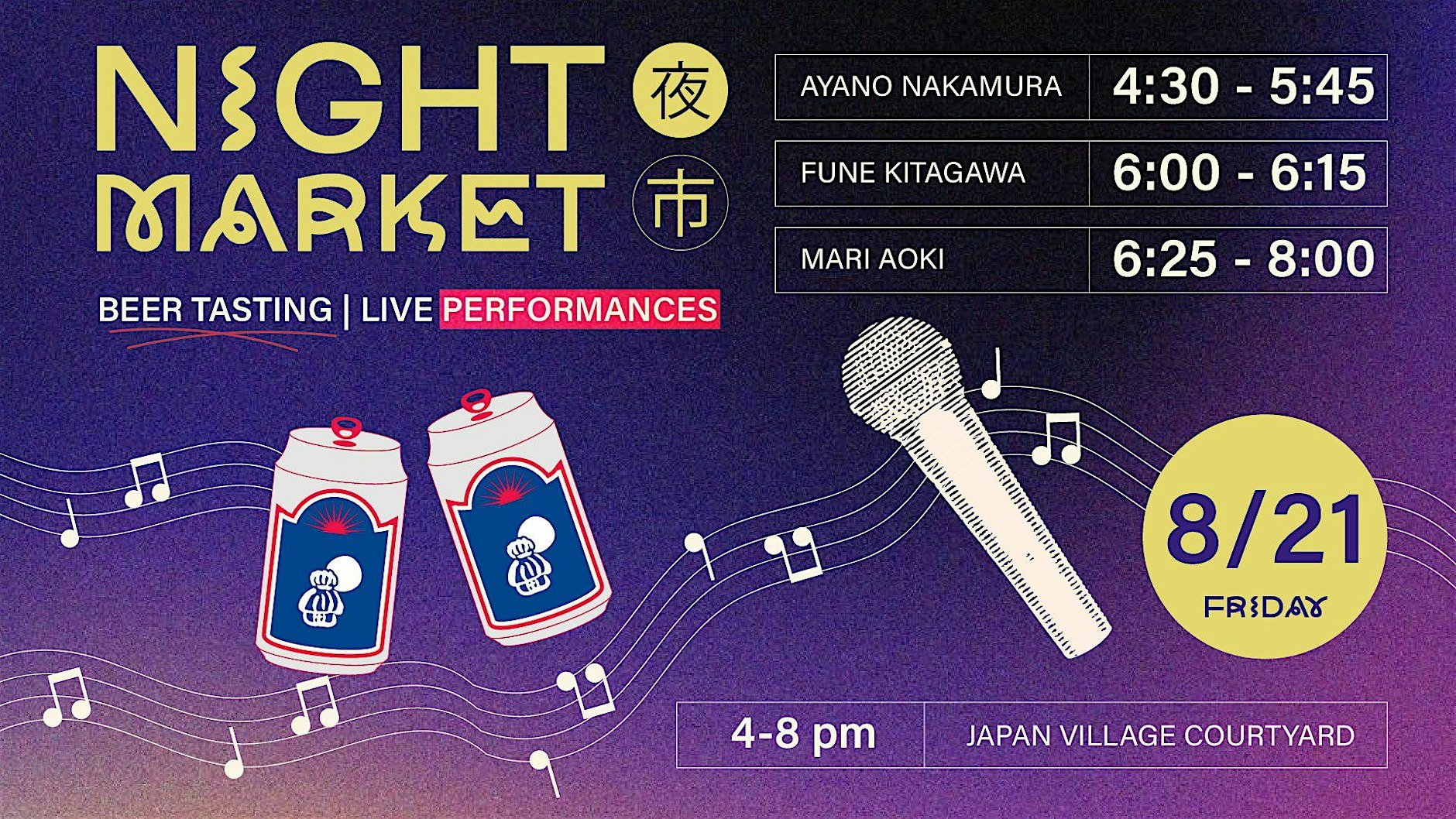
Japan Village’s annual Summer Festival is a free Japanese event that brings together nearly 8,000 attendees for a day of food, games, and cultural performances.