
Jake Shimabukuro Returns to NYC
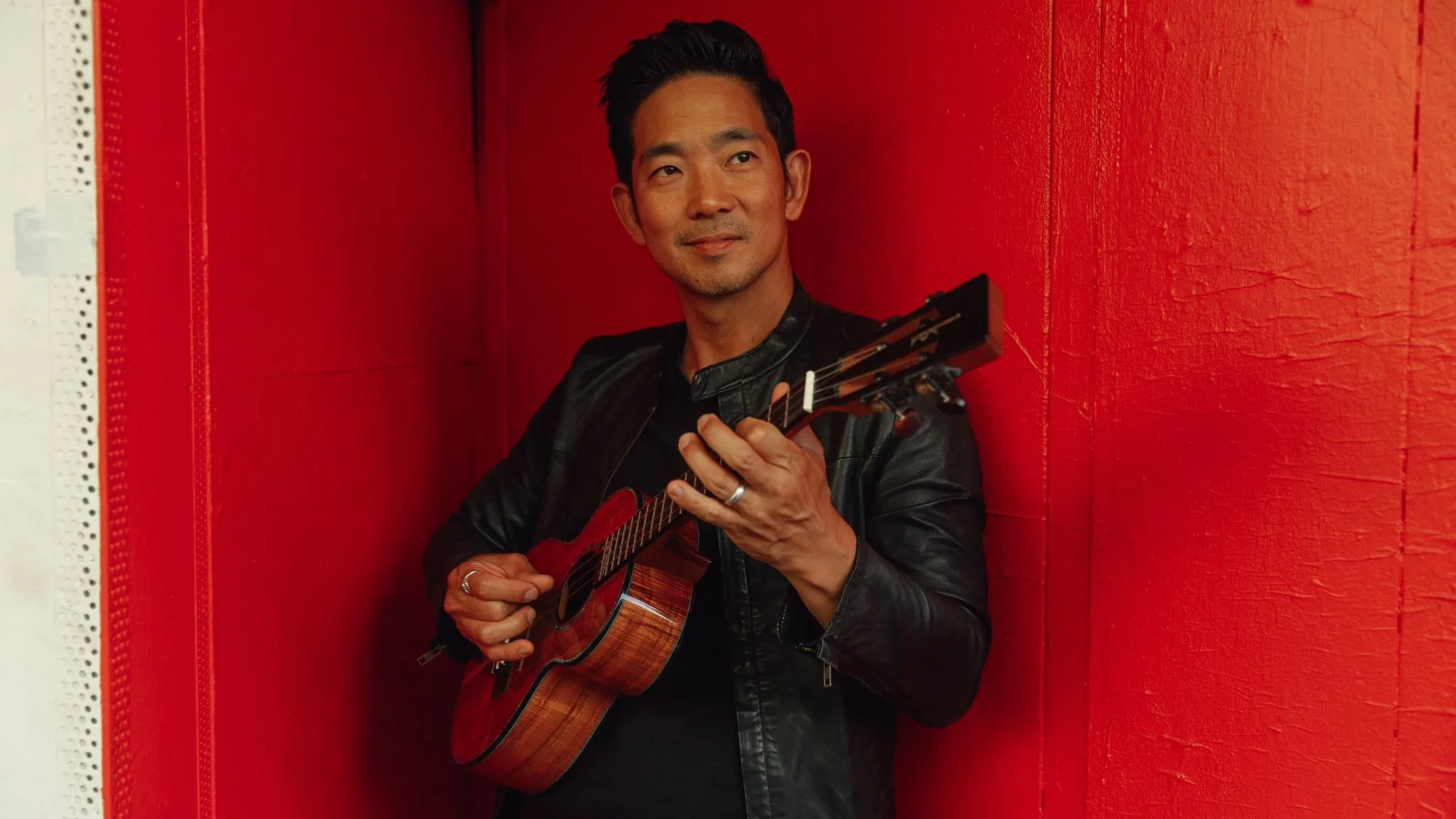
Ukulele virtuoso Jake Shimabukuro brings his innovative blend of rock, jazz, blues, and traditional Hawaiian music to NYC with a performance at Sony Hall.
Jake Shimabukuro
Friday, August 21 at 7:00 p.m. | Doors at 6:00 p.m.
Sony Hall – 235 W. 46th Street (between 7th and 8th Avenues)
Admission: $47 VIP Seating | $37 General Admission & Standing Room
Ukulele virtuoso Jake Shimabukuro brings his innovative blend of rock, jazz, blues, and traditional Hawaiian music to NYC with a performance at Sony Hall.
Tickets
To purchase tickets, please visit Sony Hall’s website. This is a general-admission event with cabaret-style seating available on a first come, first served basis. Sony Hall requires a minimum order of $20 per person at tables. This all-ages show will have a full dinner menu as well as a prix fixe menu available.
About Jake Shimabukuro
Honolulu, Hawaii, native Jake Shimabukuro began playing the ukulele at age four, developing a technique that expanded the capabilities of the instrument. He became a household name after his rendition of George Harrison’s “While My Guitar Gently Weeps” went viral on YouTube. The musician was near Strawberry Fields in Central Park, recording an interview for the New York-based show Ukulele Disco in 2006. Since then, Shimabukuro has released more than 20 albums, collaborated with countless legendary musicians, and toured globally. Learn more about him at his website.
Enjoying JapanCulture•NYC? This site is supported by our community, and a $5/month membership helps offset the costs of keeping it running so we can continue spotlighting the people and events that make our community shine. Please click here to join.
Slant Shares AAPI Histories Through Music at La Mama
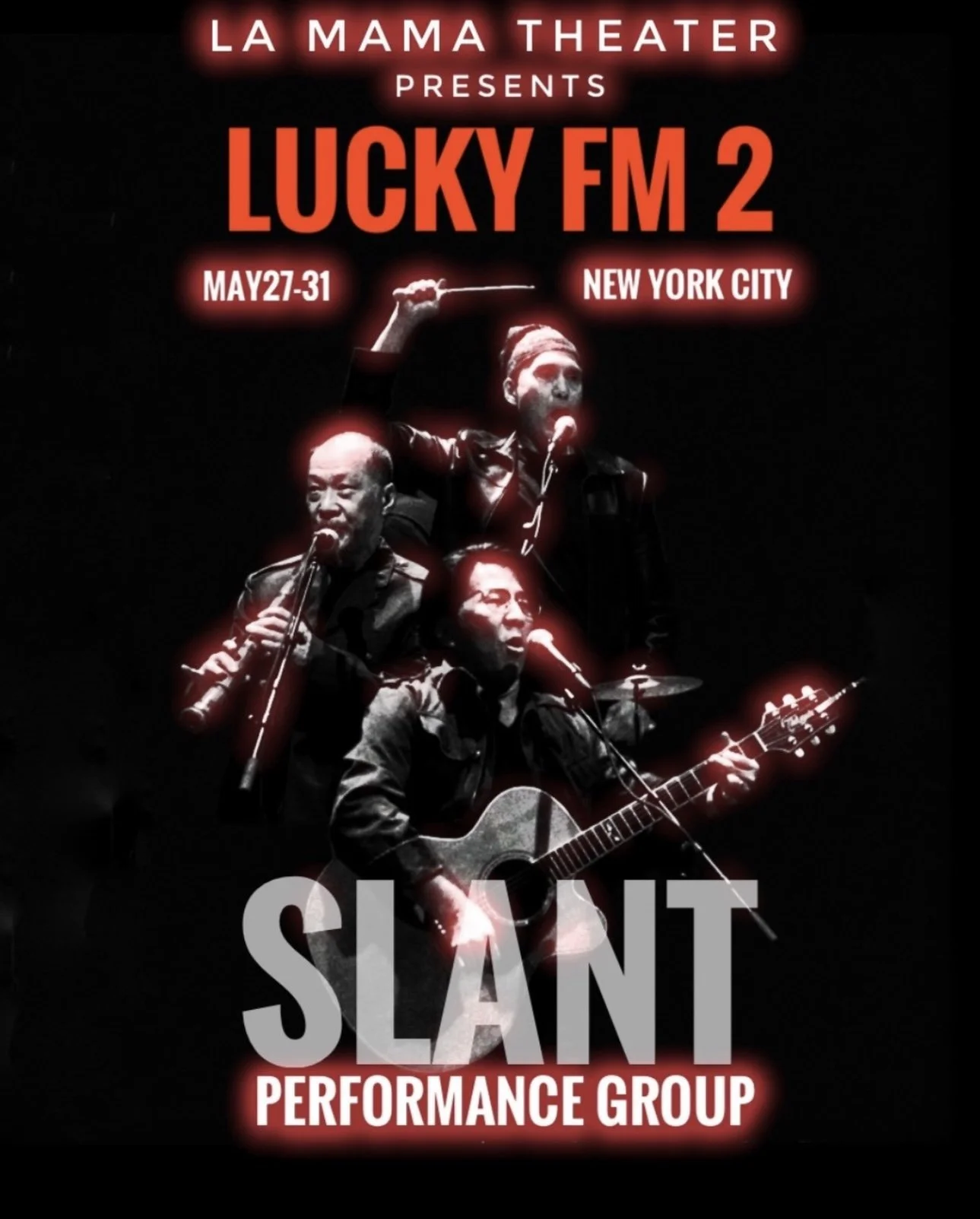
Slant returns to The Club to dig deeper and wider into the liminal space between past and present with Lucky FM 2.
Lucky FM 2
Wednesday, May 27 at 7:30 p.m. SOLD OUT
Thursday, May 28 at 7:30 p.m.
Friday, May 29 at 7:30 p.m.*
Saturday, May 30 at 6:00 p.m.
Sunday, May 31 at 3:00 p.m.
The Club @ La Mama Experimental Theatre Club – 74A E. 4th Street (between 2nd Avenue and Bowery)
Admission: $30 Adults | $25 Students/Seniors | $10 La MaMa Members
Slant returns to The Club to dig deeper and wider into the liminal space between past and present with Lucky FM 2. Through the underground radio’s telethon portal, Slant journeys through AANHPI histories with bamboo flutes, drums, and guitars, telling stories of the Japanese American concentration camps, the International Hotel, Vincent Chin, and today. Performed viscerally through music, dance, and humor, Slant finds unity amidst chaos in a celebration of community.
All seating is general admission.
Tonight’s performance is sold out, but there are four more dates from which to choose! To purchase tickets, please visit La Mama’s website.
*Friday’s performance is also available online. Livestream tickets are $15-$45, and you can purchase them by clicking here.
About Slant
Slant is the trio ensemble of Rick Ebihara, Wayland Quintero, and Perry Yung. In 1995, Slant premiered Big Dicks, Asian Men to counter Hollywood stereotypes by deconstructing race-baiting toxic masculinity through music, humor, and dance. The production received rave critical reviews and led to touring across America and international appearances in the former Yugoslavia and Lijiang, China. This was followed by other works throughout the 2000s that featured farcical themes punctuated by outlandish and poignant moments that audiences flocked to see at La MaMa and across the U.S.
Enjoying JapanCulture•NYC? This site is supported by our community, and a $5/month membership helps offset the costs of keeping it running so we can continue spotlighting the people and events that make our community shine. Please click here to join.

RAM & Tokyo to New York at Martha Graham Studio
Random Access Music and Tokyo to New York bring movement and sound together in a two-night event at the Martha Graham Studio Theater.
RAM & Tokyo to New York: Music & Dance
Friday, November 14, 2025 at 8:00 p.m.
Saturday, November 15, 2025 at 8:00 p.m.
Martha Graham Studio Theater – 55 Bethune Street
Tickets: $25 Adults | $10 Students
Random Access Music and Tokyo to New York bring movement and sound together in a two-night event at the Martha Graham Studio Theater.
This program celebrates the exchange between music and dance, featuring acclaimed dancer and choreographer Henning Rübsam in dynamic new collaborations with the composers and performers of RAM. The concert presents three world premieres commissioned by Random Access Music and Thomas Piercy—new works by Beata Moon, Frances White, and Andrea Casarrubios—together with recent compositions by Masatora Goya and Roger Stubblefield.
To purchase tickets, please visit simpletix.com. Cash and credit cards will be accepted at the door.
Featuring
Henning Rübsam – Dancer/choreographer
Hélène Taddei Lawson – Dancer/choreographer
Violetta Klimczewska – Dancer
Musicians
Lish Lindsey – Flutes
Thomas Piercy – Clarinet / hichiriki
Sabina Torosjan – Violin
Molly Aronson – Cello
Marina Iwao – Piano
Music by RAM Composers
Beata Moon
Masatora Goya
Allen Schulz
Frances White
Guest Composers
Andrea Casarrubios
Roger Stubblefield
"Fifteen Minutes of Fame" Composers
As part of the “Fifteen Minutes of Fame” project, audiences will also hear the premieres of 15 one-minute duos for hichiriki and low flutes.
Nantenaina Andriamorasata
Vahan Luder Artinian
David Bohn
Ross James Carey
Monica Chew
Philip Czapłowski
Douglas DaSilva
Paolo Geminiani
Simon Hutchinson
Sakiko Kosaka
Matt A. Mason
Gene Pritsker
Allen Schulz
Jane Wang
Dalen Wuest
Support JapanCulture•NYC by becoming a member! For $5 a month, you’ll help maintain the high quality of our site while we continue to showcase and promote the activities of our vibrant community. Please click here to begin your membership today!
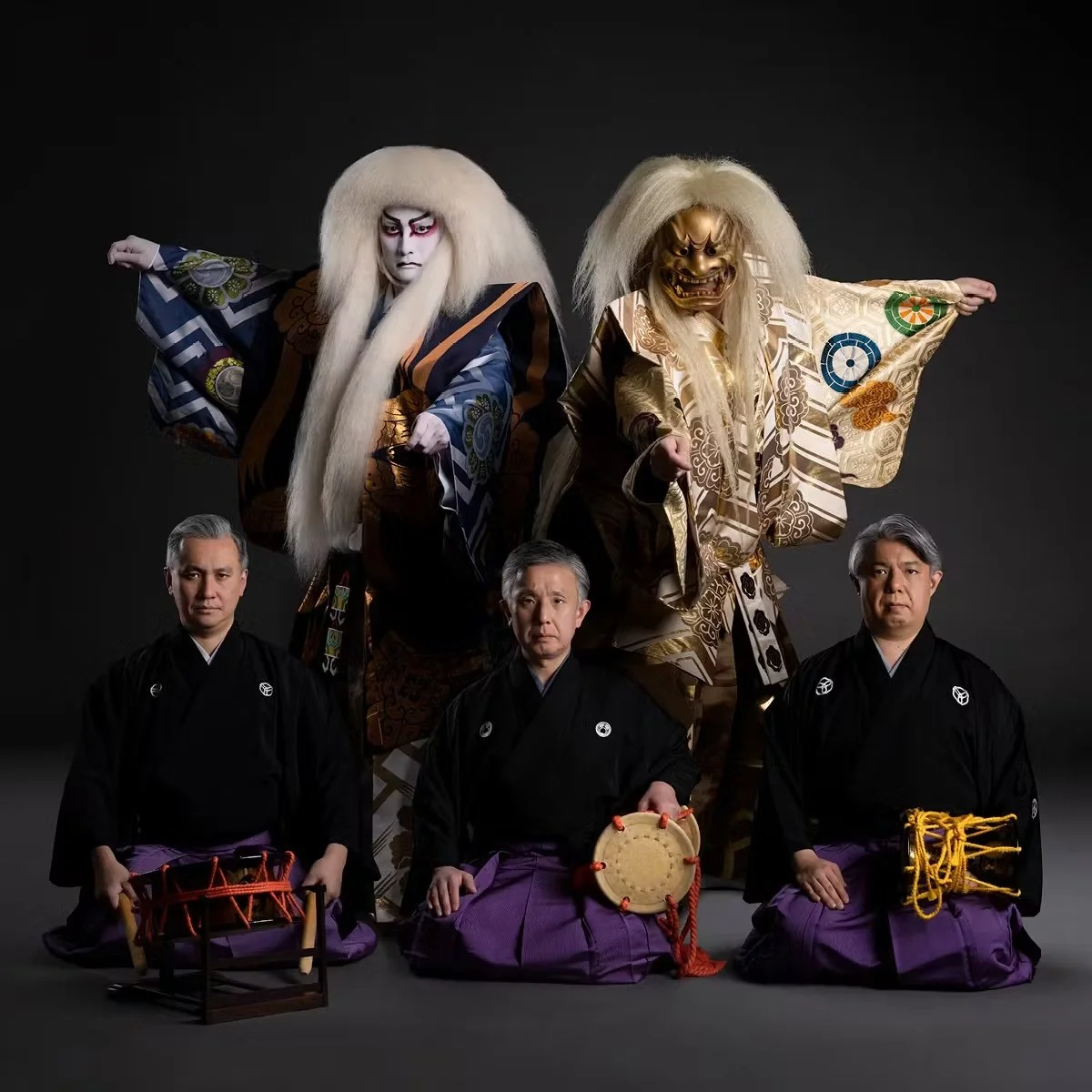
Kabuki, Noh, and More at Carnegie Hall
Discover the heritage and evolution of Noh and Kabuki theater, taiko drumming, the three-stringed shamisen, and more led by today’s foremost actors, musicians, and representatives of art forms that have been handed down and passionately studied for centuries.
An Evening of Traditional Japanese Arts
Friday, November 14 at 8:00 p.m.
Carnegie Hall | Stern Auditorium/Perelman Stage – 57th Street and 7th Avenue
Admission: $86.50 - $226
Carnegie Hall will be the site of a very special performance: An Evening of Traditional Japaense Arts. Discover the heritage and evolution of Noh and Kabuki theater, taiko drumming, the three-stringed shamisen, and more led by today’s foremost actors, musicians, and representatives of art forms that have been handed down and passionately studied for centuries.
Performers
Hirotada Kamei – Noh Musician
Denzaemon Tanaka – Kabuki Musician
Denjiro Tanaka – Kabuki Musician
Yoshimasa Kanze – Noh Actor
Takanobu Sakaguchi – Noh Actor
Saburota Kanze – Noh Actor
Hayato Nakamura – Kabuki Actor
Hiromitsu Agatsuma – Shamisen
Kouki Agatsuma – Shamisen
Masaru Tsuji – Wadaiko
Ryotaro Leo Ikenaga – Wadaiko
Suguha Otani – Japanese Dance
Yumi Kurosawa – Koto
Takuya Iwata – Shakuhachi
Yuichi Otsuki – Noh Actor
Manabu Takeichi – Noh Musician
Wakichi Kineya – Nagauta Singer
Chotatsuro Imafuji – Nagauta Shamisen
Gotaro Kineya – Nagauta Musician
Katsueiji Kineya – Nagauta Musician
Katsukuniharu Kineya – Nagauta Musician
Tatsujuro Imafuji – Nagauta Musician
Kan Fukuhara – Shinobue
The performance will last approximately two and a half hours with one 20-minute intermission. To purchase tickets, please visit Carnegie Hall’s website.
An Evening of Traditional Japanese Arts by Kosuke Yoshino
Sankyokai
Sankyokai (“Three Resonances”) is an ensemble dedicated to exploring new artistic possibilities through the sound of hayashi—the traditional musical accompaniment of Noh and Kabuki—by fusing the resonances of Japan’s two foremost traditional performing arts. Since its founding in 1997, the group has carried forward the spirit of classical performance while continuing to create sounds that transcend time.
The members are three brothers: Hirotada Kamei, head of the Kadono School of Noh Otsuzumi (large hand drum); Denzaemon Tanaka XIII, head of the Tanaka School of Kabuki music; and Denjiro Tanaka VII, also a Kabuki musician of the Tanaka School.
Their father, Tadao Kamei, was a Living National Treasure in Japan and head of the Kadono School of Noh drumming who performed at Carnegie Hall in 2016; their mother, Sataro Tanaka IX, was the head of the Tanaka School of Kabuki music. Born to parents who represented these two distinct classical traditions, the brothers literally embody the meeting point of Noh and Kabuki.
From early childhood, they grew up exploring boundaries seamlessly between the two worlds—Noh, with its 600-year-old spiritual rigor; and Kabuki, born 200 years later with its vivid theatricality. As they matured, each pursued his own professional path: the eldest, Hirotada, in Noh; the middle brother, Denzaemon, and the youngest, Denjiro, in Kabuki. Yet through years of training, they began to sense a shared desire: to discover a form of expression that could transition between these traditions without breaking their structure or form.
Out of this belief, Sankyokai was born. Three Resonances reflects both the trio’s instruments—Hirotada’s Otsuzumi, Denzaemon’s Kotsuzumi, and Denjiro’s Taiko—and their wish to create a unified resonance born from their individual spirits. From its inception, Sankyokai has sought to present the timeless allure of classical performance in a contemporary context, finding new vitality in the dialogue and contrast between Noh and Kabuki. Today, the three brothers continue their journey as performers, creators, and stewards of Japan’s classical heritage, carrying it forward into the future.
Glossary of Terms
If you are new to traditional Japanese arts, you may not be familiar with the terms in this post. Please refer to the brief primer below to get you up to speed.
Kabuki: Classical Japanese theater that combines singing, acting, and dramatic poses and is known for elaborate costumes and makeup. Although men have performed all the roles since the mid-17th century, kabuki was established by a woman, Izumo no Okuni, around the year 1603. In 2008, UNESCO inscribed kabuki in the Representative List of the Intangible Cultural Heritage of Humanity.
Noh: Japan’s oldest major theatrical art form, which has been performed since the 14th century. Based on literary tales, noh’s themes revolve around regret and spiritual transformation. Actors use masks to emphasize emotion and props such as folding fans to enhance the story.
Shamisen: Three-stringed, banjo-like instrument with a long neck and a distinct twangy sound. As one of the instruments providing accompaniment for kabuki, the shamisen enhances dramatic scenes and sets the mood. Originating in China, the Ryukyu Kingdom (what is now Okinawa Prefecture) introduced the instrument to mainland Japan in the mid-16th century.
Wadaiko: The traditional art of Japanese drumming, encompassing drums of a variety of sizes played by a group. Accompanying both kabuki and noh, wadaiko provides rhythm and sound effects and helps to create dramatic tension.
Japanese Dance: Known as Nihon buyo, traditional Japanese dance grew out of kabuki in the 17th century. It is a style of visual storytelling that incorporates refined movements and precise gestures.
Koto: The national instrument of Japan. The koto is a zither made of Paulownia wood and typically has 13 silk strings. Originally associated with gagaku, or court music, the koto is not standard in kabuki or noh.
Shakuhachi: Vertically held Japanese bamboo flute. First introduced from China in the 8th century, the shakuhachi was a staple in gagaku (court) music and later became used in Zen Buddhist meditation.
Nagauta: Genre of traditional Japanese music that literally means “long song.” Developed around the year 1740, nagauta is performed on shamisen to accompany kabuki. It is a lyrical style of music, focused more on expression rather than storytelling.
Shinobue: Japanese transverse bamboo flute with a high-pitched sound. In addition to its important role in kabuki and noh ensembles, the shinobue is integral to Shinto rituals as well as festivals and folk music.
Support JapanCulture•NYC by becoming a member! For $5 a month, you’ll help maintain the high quality of our site while we continue to showcase and promote the activities of our vibrant community. Please click here to begin your membership today!

Celebrating the Music of James Nyoraku Schlefer
Kammerraku Encore: music for shakuhachi, koto, shamisen, and string quartet at Tenri Cultural Institute in NYC
Kammerraku Encore
Saturday, March 22 at 7:30 p.m.
Tenri Cultural Institute – 43A W. 13th Street (between 5th and 6th Avenues)
Admission: $25 in Advance | $30 at the Door
Kyo-Shin-An Arts and Arts at TCI present Kammerraku Encore, KSA's first celebration of the music of shakuhachi Grand Master James Nyoraku Schlefer.
This program of audience favorites features the always extraordinary Arianna Quartet and the world premiere of Schlefer’s delightfully irreverent Bamboo Dances for shakuhachi and string quartet. To purchase tickets, please visit Schlefer’s website.
Performers
Sumie Kaneko – Shamisen and voice
Yoko Reikano Kimura – Koto and voice
James Nyoraku Schlefer – Shakuhachi
Arianna String Quartet
John McGrosso and Jane Price, violins; Joanna Mendoza, viola; Kurt Baldwin, cello
PROGRAM
Moon through the Pines by James Nyoraku Schlefer
koto, shamisen, shakuhachiBamboo Dances by James Nyoraku Schlefer – World Premiere
shakuhachi and string quartet
Moveoverture
Jubislidy (aka Slickback)
Valse Macabre
Chacachacarera
Bogakuraku
Jiggy Gigue
Galoopy
Interludy
RacherachenitsaTommy – a musical fantasy based on a true story by James Nyoraku Schlefer
shakuhachi, koto, shamisen and string quartet
Support JapanCulture•NYC by becoming a member! For $5 a month, you’ll help maintain the high quality of our site while we continue to showcase and promote the activities of our vibrant community. Please click here to begin your membership today!

Monday Michiru Returns to Joe’s Pub
Japanese American songstress (and the daughter of legendary jazz pianist Toshiko Akiyoshi) returns to Joe’s Pub this week for a performance. Photo by Takashi Matsuzaki
Monday Michiru
Thursday, March 6 at 7:00 p.m. (doors open at 6:00 p.m.)
Joe’s Pub – 425 Lafayette Place (at Astor Place)
Admission: $36
Japanese American songstress Monday Michiru returns to Joe's Pub presenting her unique style of original music inspired by soul, jazz, Brazilian, and other urban flavors supported by some of New York's top musicians. Joining her on stage are Misha Tsiganov, Sean Harkness, Fima Ephron, Adrian Harpham, and Sumie Kaneko.
There is a two-drink or one-food item minimum per person. To purchase tickets, please go to publictheater.org.

Photo by Takashi Matsuzaki
About Monday Michiru
Named to reflect both her Japanese and American Italian heritages, Monday Michiru started her musical endeavors with studying classical flute then expanded to singing and songwriting. The daughter of famed jazz musicians Toshiko Akiyoshi and Charlie Mariano and stepdaughter of venerable flautist Lew Tabackin, Michiru easily adapted the language of jazz heard at home into her other musical influences, which range from soul to urban club to Brazilian and more.
Her 1987 debut in Japan was not in music but as an actress, which garnered her Best New Actress awards that allowed her to expand her career by acting in movies, theater, and television, as well as hosting her own video programs and modeling for major commercial ads.
Since her solo record debut in 1991, Michiru has consistently released albums as a solo artist as well as a featured guest on international projects. Her musical style runs the gamut from house to jazz to Latin to soul, an indefinable hybrid that is undeniably hers. To learn more, please visit her website.
Support JapanCulture•NYC by becoming a member! For $5 a month, you’ll help maintain the high quality of our site while we continue to showcase and promote the activities of our vibrant community. Please click here to begin your membership today!

Japanese German Pianist to Make NY Phil Debut
Alice Sara Ott Performs Ravel
Thursday, April 4 at 7:30 p.m.
Friday, April 5 at 11:00 a.m.
Saturday, April 6 at 8:00 p.m.
Wu Tsai Theater, David Geffen Hall – 10 Lincoln Center Plaza
Admission: $115 to $263 (plus fees)
In her New York Philharmonic debut, Japanese German pianist Alice Sara Ott performs Ravel’s lush, jazz-influenced G-major Piano Concerto. The program, led by Karina Canellakis, who is also making her NY Phil debut, begins with Webern’s remarkably spare, yet haunting Six Pieces. The concert’s two-tone poems look past earthly life: Richard Strauss’s meditation on the death of an artist and Scriabin’s mystical and rhapsodic Poem of Ecstasy.
Alice Sara Ott from NY Phil’s website
Program
Webern – Six Pieces for Orchestra, Op. 6 (1928 version)
R. Strauss – Tod und Verklärung (Death and Transfiguration)
Ravel – Piano Concerto in G major
Scriabin – Le Poème de l’extase (The Poem of Ecstasy)
To purchase tickets, please visit NY Phil’s website.
Star Pianists
This concert is part of NY Phil’s Star Pianists series. Experience breathtaking virtuosity, timeless melodies, and exciting premieres with this season’s star pianists. The series features captivating performances of classical and contemporary works all season long.
About Alice Sara Ott
Thirty-five-year-old Alice Sara Ott was born in Munich. Her father is a German engineer, and her mother is a Japanese pianist. In a 2022 article in music website Interlude, Ott says of her Japanese heritage, “My whole life was spent questioning: Am I German? Am I Japanese? What am I? I found my answer when I became a musician because in music, nationality doesn’t matter at all.” Learn more about Ott through her website and Instagram.
Support JapanCulture•NYC by becoming a member! For $5 a month, you’ll help maintain the high quality of our site while we continue to showcase and promote the activities of our vibrant community. Please click here to begin your membership today!

Duo YUMENO to Pay Tribute to Late Japanese Composer
Music of Changes: Tribute to Toshi Ichiyanagi
Saturday, January 27 from 7:30 p.m. until 9:00 p.m.
Tenri Cultural Institute – 43A W. 13th Street (between5th and 6th Avenues)
Admission: $30
Duo YUMENO—Yoko Reikano Kimura on koto and shamisen and Hikaru Tamaki on cello—and special guest pianist Vicky Chow will pay homage to the legendary composer Toshi Ichiyanagi. Ichiyanagi, who passed away in 2022, was a protégé of John Cage during the 1960s and had a profound influence on the post-war Japanese music landscape.
Presented by Duo YUMENO, the program will explore Ichiyanagi’s music, written for both traditional Japanese and Western instruments, and will celebrate his six-decade-long career. Highlights include Paraphrase for shamisen and cello (2019), which was commissioned by the duo; Time Sequence (1976), a dazzling piano solo in the minimalist style; and Linked Poems of Autumn (1990), Ichiyanagi’s tribute to the Japanese koto-song tradition that features texts by the haiku poet Matsuo Bashō. It’s sure to be an evening of provocative and brilliant contemporary music at Tenri Cultural Institute.
To purchase tickets, please visit Eventbrite.com.
Support JapanCulture•NYC by becoming a member! For $5 a month, you’ll help maintain the high quality of our site while we continue to showcase and promote the activities of our vibrant community. Please click here to begin your membership today!

EXPLORE THE UNIVERSAL CONCEPTS OF CREATIONS & BEGINNINGS WITH “ONOKORO”
ONOKORO – creations/beginnings
Saturday, September 23 and Sunday, September 24 at 7:00 p.m.
Martha Graham Studio One – 55 Bethune Street (between Washington and West Streets), 11th Floor
Admission: $30 | $15 Seniors and Students
Tokyo to New York, in collaboration with Random Access Music, presents the upcoming production of ONOKORO – creations/beginnings. The show is a unique fusion of music and dance that explores the universal themes of creation and beginnings.
The one-hour, non-stop show will feature a captivating blend of contemporary compositions combining traditional Japanese instruments with Western classical instruments, performed by a stellar ensemble of musicians and dancers. The show will include modern dance, traditional Japanese Bugaku dance, a clarinet concerto with Gagaku ensemble, a hichiriki concerto with strings, and trios combining Western classical instruments with traditional Japanese instruments.
To purchase tickets, please visit Tonada Productions’s website.
Inspired by universal creation myths, ONOKORO – creations/beginnings immerses audiences in a flow of music, dance, and ritual that evokes timeless traditions through contemporary artistry. From “Ryoanji” (summoning the beginnings of sounds) to “Netori, Netori” (evoking the beginnings of organized sound and music), through to “Onokoro” (combining the Eastern and Western worlds of music and movement), modern dancer Miki Orihara, clarinetist and hichiriki player Thomas Piercy, Bugaku dancer Maki Yamamae, and their fellow performers will awaken the magic and majesty of the creations and beginnings that connect us all.
Under the artistic direction of Thomas Piercy and the choreography of Miki Orihara, ONOKORO – creations/beginnings features an exceptional lineup of composers, instrumentalists, and dancers. The program includes compositions by renowned composers John Cage, Gilbert Galindo, Masatora Goya, Bin Li, and Miho Sasaki. The performances will showcase the dance and choreography of Martha Graham protégé Orihara and Yamamae, as well as multi-instrumentalist Piercy on clarinet, hichiriki, and ohichiriki. Joining Orihara, Yamamae and Piercy are dancer Ghislaine van den Heuvel, ryuteki player Lish Lindsey, hichiriki player Joseph Jordan, sho player Harrison Hsu, koto player Masayo Ishigure, violinists Sabina Torosjan and Lara Lewison, violist Laura Thompson, cellist Daniel Hass, bassist Pablo Aslan, and pianist Marina Iwao.
ONOKORO – creations/beginnings is not only a celebration of artistic collaboration which combines the traditional with the contemporary, but it also unites diverse musical genres and dance forms to create a truly immersive experience. This event seamlessly blends and celebrates a harmonious convergence of cultures and is a testament to the diversity of musical expressions and cultures, underscoring the richness of human creativity when artistic worlds collide. It is a celebration of our shared human experience through the lens of dance and music.
Support JapanCulture•NYC by becoming a member! For $5 a month, you’ll help maintain the high quality of our site while we continue to showcase and promote the activities of our vibrant community. Please click here to begin your membership today!
Japan Village’s annual Summer Festival is a free Japanese event that brings together nearly 8,000 attendees for a day of food, games, and cultural performances.